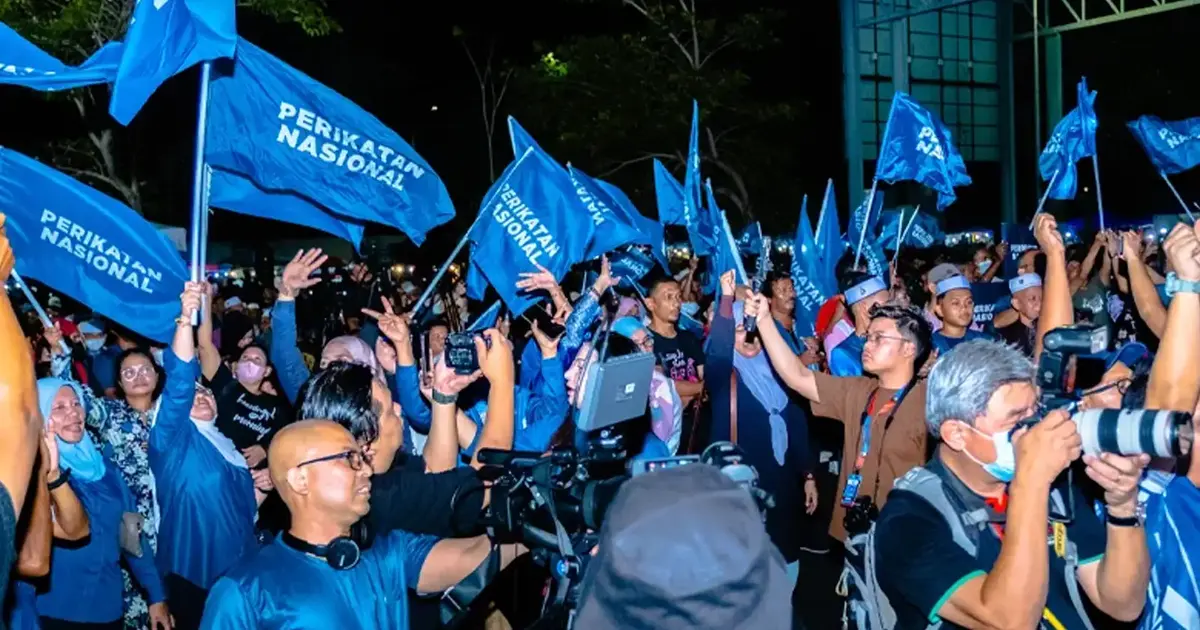
Malaysia's political landscape faces fresh turbulence with the addition of Wawasan and Pejuang to Perikatan Nasional, analysts warn, as the expanded coalition sets the stage for contested battles over Malay-majority constituencies. The entry of these new components threatens to reconfigure internal power dynamics within PN, potentially eroding the electoral foundation that Bersatu has painstakingly constructed since the coalition's formation.
The core concern centres on overlap in voter targeting and geographic representation. Perikatan Nasional, already comprising PAS, Bersatu, and smaller parties, now faces the prospect of multiple allies vying for identical electoral territory. When coalitions grow without corresponding expansion in winnable seats, the mathematics inevitably favour conflict. Analysts point out that Bersatu, which has been the linchpin holding PN together and delivering votes in crucial heartland areas, stands to lose ground if resources, campaign focus, and seat allocations become distributed among a wider membership.
The dynamics of seat distribution in Malaysian politics have historically been a source of coalition friction. Unlike past arrangements where coalition partners could clearly demarcate territorial responsibilities, the arrival of Wawasan and Pejuang creates ambiguity. Both parties, by their positioning and target demographics, appeal substantially to Malay voters who form PN's core base. This overlap inevitably generates competition rather than complementarity, forcing coalition leadership to make difficult allocation decisions that will disappoint at least one party in every contested scenario.
Bersatu's position warrants particular scrutiny in this context. The party has invested significantly in rebuilding credibility after defections, leadership changes, and the aftermath of the collapse of the previous alliance structure. Its strongholds in states like Kedah, Terengganu, and parts of Perak represent hard-won electoral assets. The injection of new coalition partners creates immediate pressure to justify seat allocations and risks demoralizing grassroots structures if territories they control are reassigned or undermined by competing PN component campaigns.
Wawasan and Pejuang's motivations for joining PN appear tied to securing positions in government and accessing state machinery benefits. However, their entry necessarily means they must contest seats if they wish to demonstrate meaningful contribution to coalition coffers. This requirement directly collides with existing PN positioning, particularly in constituencies where Bersatu, PAS, or other existing partners already maintain organizational presence and voter relationships.
The Malay voter constituency, which remains the largest and most politically volatile segment in Malaysia, responds to nuanced messages about identity, religious governance, and economic welfare. When multiple coalition parties target these same voters with potentially different emphasis or messaging, confusion and vote-splitting risks increase substantially. Rather than presenting a unified platform, the expanded PN risks appearing fragmented and internally competitive in the eyes of constituents trying to understand coalition coherence.
Historical precedent offers cautionary lessons. Previous coalition expansions in Malaysian politics frequently generated internal tensions that eventually contributed to dissolution or realignment. The Barisan Nasional experienced declining cohesion as it grew larger without corresponding electoral growth. Similar patterns emerged within Pakatan Harapan during its 2018-2022 term in federal government. The PN trajectory suggests comparable pressures may intensify rather than dissipate as membership expands.
State-level politics compound these concerns considerably. Perikatan Nasional controls several state governments, and seat allocation disputes at the federal level inevitably cascade into state assembly constituencies. In Kedah and Terengganu particularly, where Bersatu holds significant strength, the introduction of new coalition partners creates spillover complications for state-level positioning and resource distribution. Deputy chief minister and assemblyman seats become additional flashpoints in internal negotiation.
Government patronage and resource allocation mechanisms add another layer of complexity. Coalition parties expect that participation in PN brings access to development funds, contract opportunities, and political appointment leverage. As new components join, expectations for such benefits multiply without corresponding increase in available resources. This mismatch between expectations and actual distribution inevitably generates resentment and accusations of unfair treatment, weakening coalition solidarity precisely when external pressures from competing coalitions mount.
The timing of these additions also matters significantly. General election campaigns demand rapid decision-making about seat allocation, often with insufficient time for negotiated consensus. Wawasan and Pejuang joining PN just creates potential for last-minute disputes that could undermine campaign effectiveness and project disunity to voters. Coalition coordination becomes substantially more complicated when additional parties require accommodation in candidate selection and campaign resource allocation.
For Malaysian voters, particularly those from Malay-majority communities that PN courts intensively, the expanded coalition presents a more confusing choice architecture. Instead of clear representation through traditional coalition partners, voters face uncertainty about which PN component will actually contest their constituency and represent their interests in parliament. This uncertainty can suppress turnout or fragment support in unpredictable ways.
Looking forward, coalition management will test PN leadership's political acumen considerably. Effective navigation requires mechanisms for pre-emptive dispute resolution, transparent seat allocation frameworks, and genuine benefit-sharing that satisfies all components. Without such architecture, the competitive dynamics analysts predict could transform from manageable tensions into irreparable fractures, leaving PN substantially weakened heading into electoral contests.

