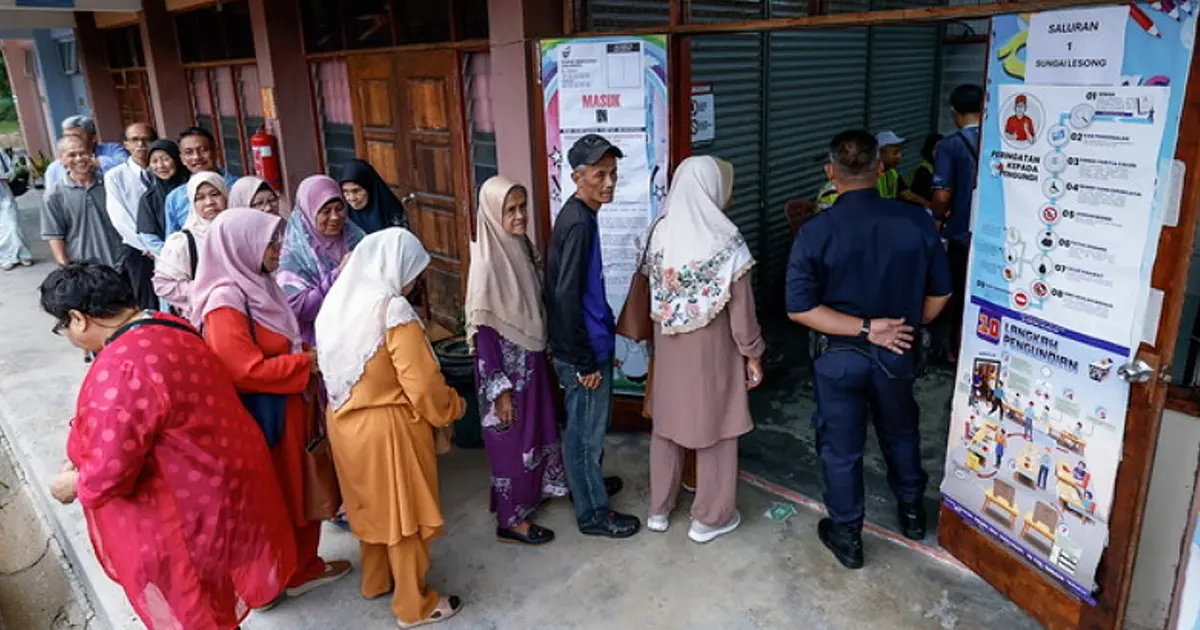
Political organisations seeking to mobilise support among Malaysia's Malay electorate risk exhausting their intended audience through overreliance on divisive identity-based rhetoric, according to Awang Azman Pawi, a scholar at Universiti Malaya's faculty of politics. His assessment reflects growing concern among observers that the recurring emphasis on religious matters, royal institution discourse, and ethno-communal positioning—collectively referred to as the 3Rs—may be counterproductive if deployed excessively without substantive policy alternatives.
The analyst's observation arrives at a moment when Malaysian politics remains intensely fragmented along competing visions of national identity. Since the 2022 general election, multiple political coalitions have articulated their platforms partly through appeals to Malay-Muslim sensibilities, a demographic cohort comprising roughly three-fifths of the national population. However, Awang Azman's commentary suggests that voters within this bloc may be developing resistance to perpetual campaigns centred on sociocultural grievances rather than economic remedy.
The concept of 'emotional fatigue' implies a psychological depletion resulting from sustained exposure to high-stakes identity politics. When political messaging consistently activates concerns about religious preservation, monarchical authority, or communal advancement without pairing these appeals with concrete economic improvements, voters may gradually disengage or lose faith in the efficacy of such campaigns. This dynamic becomes particularly relevant in a Malaysian context where plural political forces compete intensely for Malay-Muslim support, each claiming authentic custodianship of the community's interests.
Across Southeast Asia, political parties have long leveraged ethnonationalist appeals to consolidate voter bases. Yet scholars increasingly document a pattern whereby populations, even those traditionally responsive to identity-based messaging, eventually demand substantive governance outcomes. Thailand's successive election cycles have revealed voter frustration with military-backed movements despite their nationalist framing; Indonesia's 2024 elections showed competing Islamic-oriented candidates struggling to differentiate themselves ideologically, ultimately forcing greater emphasis on economic competence. Malaysia may be experiencing a comparable inflection point.
The cost of living crisis stands as perhaps the most tangible arena where parties can demonstrate governing competence. Inflation has eroded purchasing power across income brackets, affecting transportation, food, utilities, and housing—domains where government policy and budgetary allocation create immediate, measurable consequences. Unlike abstract debates regarding religious jurisprudence or royal protocol, inflation strikes all households regardless of ideological orientation. A family struggling to afford protein or petrol evaluates leadership primarily through the lens of economic relief rather than symbolic affirmations of communal identity.
Awang Azman's analysis implies that parties will ultimately be assessed according to their concrete achievements in managing inflation, generating employment opportunities, and ensuring affordable access to essential services. This represents a fundamental shift in evaluative criteria, one driven not by declining religiosity or altered ethnic consciousness but rather by the material pressures facing ordinary households. Even voters deeply committed to Islamic governance or Malay advancement expectations will tolerate little excuse for failure in delivering economic stability.
The political ramifications extend beyond rhetorical strategy. If Malay voters indeed experience emotional fatigue from relentless 3R discourse, parties may find their traditional messaging less mobilising than previously. Ground-level campaign efforts, social media narratives, and institutional communications might prove less effective if audiences have become desensitised or skeptical of identity-focused appeals. This would necessitate genuine pivots toward policy platforms addressing inflation, wage stagnation, and wealth inequality—areas requiring technical expertise and bureaucratic implementation rather than ideological posturing.
Malaysia's experience with the 3Rs framework has deep historical roots. Post-independence nation-building explicitly incorporated Islam, the monarchy, and Malay communal interests as constitutional pillars. Successive governments have invoked these elements to legitimise authority and construct national coherence. However, constitutional permanence does not necessarily translate to electoral durability when deployed as a substitute for addressing immediate human welfare. Voters may simultaneously uphold the 3Rs as foundational to national identity whilst rejecting politicians who cite these principles whilst failing to ameliorate economic hardship.
The emerging pattern suggests a bifurcation in Malay political consciousness: simultaneous commitment to traditional identity markers alongside intensifying demands for competent economic stewardship. Parties attempting to exploit this tension by offering identity affirmation without economic substance risk alienating precisely the constituencies they seek to mobilise. Conversely, movements demonstrating both cultural sensitivity and tangible economic achievement may unlock electoral advantages heretofore unattainable through identity politics alone.
Regional implications merit attention as well. Across Southeast Asia, populist and ethnonationalist movements have gained prominence partly by weaponising identity anxieties. If Malaysian voters increasingly prioritise bread-and-butter concerns over sociocultural appeals, this could signal broader shifts in regional political behaviour. It would suggest that even in societies with pronounced communal identities, economic performance remains the ultimate arbiter of political legitimacy. For Malaysia's political class, the message is unambiguous: identity messaging must be paired with demonstrable, sustained improvements in citizens' material circumstances. Failure to accomplish this integration risks precisely the voter disengagement and fatigue that Awang Azman warns against.

