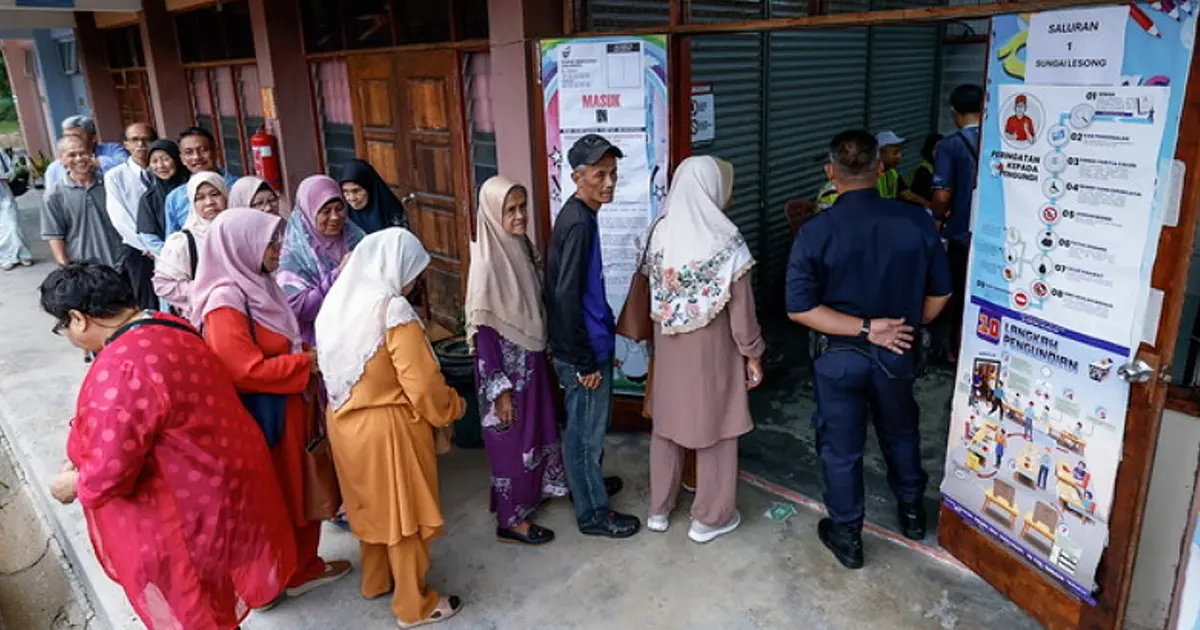
Political parties risk wearing down Malay voters through excessive focus on 3R-related matters, according to Awang Azman Pawi, a political analyst at Universiti Malaya. The constant engagement with these contentious issues may result in what he describes as 'emotional fatigue' among an electorate already grappling with mounting pressures in their daily lives. This warning carries significant weight as Malaysia approaches critical electoral cycles, where Malay-Muslim voters comprise the largest demographic bloc in the country's political calculus.
The cumulative effect of prolonged discourse around 3R issues—a reference to matters tied to race, religion, and royalty—poses a distinct challenge to political strategists across the spectrum. While these topics have historically been potent mobilisers of voter sentiment, Awang Azman's observation suggests that saturation may be producing diminishing returns. The constant recycling of these narratives, absent substantive resolution or movement forward, risks creating a sense of weariness rather than engagement among voters who feel these conversations are disconnected from their immediate concerns.
What fundamentally matters to electorate evaluation, the analyst emphasises, is how political parties demonstrate performance on the ground. This extends beyond rhetorical positioning to concrete outcomes that touch the lives of ordinary Malaysians. Governance effectiveness, institutional competence, and the ability to translate campaign promises into real improvements become the true measure by which voters ultimately assess their leaders. In an environment where multiple parties compete for the same voter base, this shift toward performance-based evaluation could significantly reshape political dynamics.
The cost of living crisis stands as perhaps the most pressing illustration of this principle. Over the past several years, Malaysian households have contended with escalating expenses across essential categories—food, fuel, utilities, and transportation costs have all climbed substantially. For middle and lower-income families, these increases translate directly into reduced purchasing power and constrained budgets. A party's capacity to address this challenge through tangible policy measures, whether through targeted subsidies, inflation controls, or wage improvements, will likely become the primary lens through which voters judge performance.
Awang Azman's analysis reflects a broader pattern observable across Southeast Asia, where voters increasingly demand that political leaders move beyond identity-based messaging to deliver material improvements. Malaysia's complex multicultural composition means that while 3R matters retain cultural significance, they cannot substitute for economic competence. Voters in Kelantan, Terengganu, or other strongholds expect their representatives to manage finances prudently, create employment opportunities, and ensure that basic necessities remain affordable.
The tension between identity politics and pocketbook issues presents a strategic dilemma for Malaysian political leaders. Overreliance on 3R narratives without accompanying economic solutions may alienate voters who perceive their concerns as secondary to broader ideological agendas. Conversely, ignoring cultural and religious sensitivities altogether risks opening flanks to competitors who will exploit such perceived neglect. The optimal approach requires calibrating messaging to acknowledge these concerns while simultaneously demonstrating concrete commitment to improving living standards.
Regional comparisons offer instructive lessons. Across Southeast Asia, governing parties that maintained office typically combined cultural nationalism with economic delivery. Those that relied predominantly on identity politics while failing to address cost of living concerns or managing inflation eventually faced electoral punishment. Thailand's various administrations, Indonesia's regional governments, and the Philippines' political landscape all demonstrate this pattern with varying intensity and frequency.
For Malaysian political parties, particularly those competing for Malay-Muslim voter support, the implication is clear: the next electoral cycle will likely be determined less by who articulates 3R positions most forcefully and more by who credibly promises and delivers relief from economic pressures. This shift does not mean these issues will disappear from political discourse, but rather that they must be positioned within a broader governance framework that prioritises voter welfare.
The analyst's observation also hints at potential opportunities for political realignment. Parties capable of combining cultural authenticity with economic pragmatism may attract voters fatigued by endless cycle of identity-based campaigns. Coalition partners and potential political alliances will increasingly be evaluated on whether their combined platforms offer genuine solutions to household financial strain rather than merely recycled rhetorical positions on historical grievances or constitutional arrangements.
Looking ahead, the electoral fortunes of Malaysian parties will hinge significantly on their ability to pivot from perpetual 3R discourse toward demonstrable economic management. Whether through budgeting competence, inflation control measures, employment generation, or strategic subsidy allocation, voters will demand evidence of commitment to improving their material circumstances. Emotional fatigue from endless identity politics may ultimately open space for whichever political force successfully frames itself as the competent steward of economic welfare.

