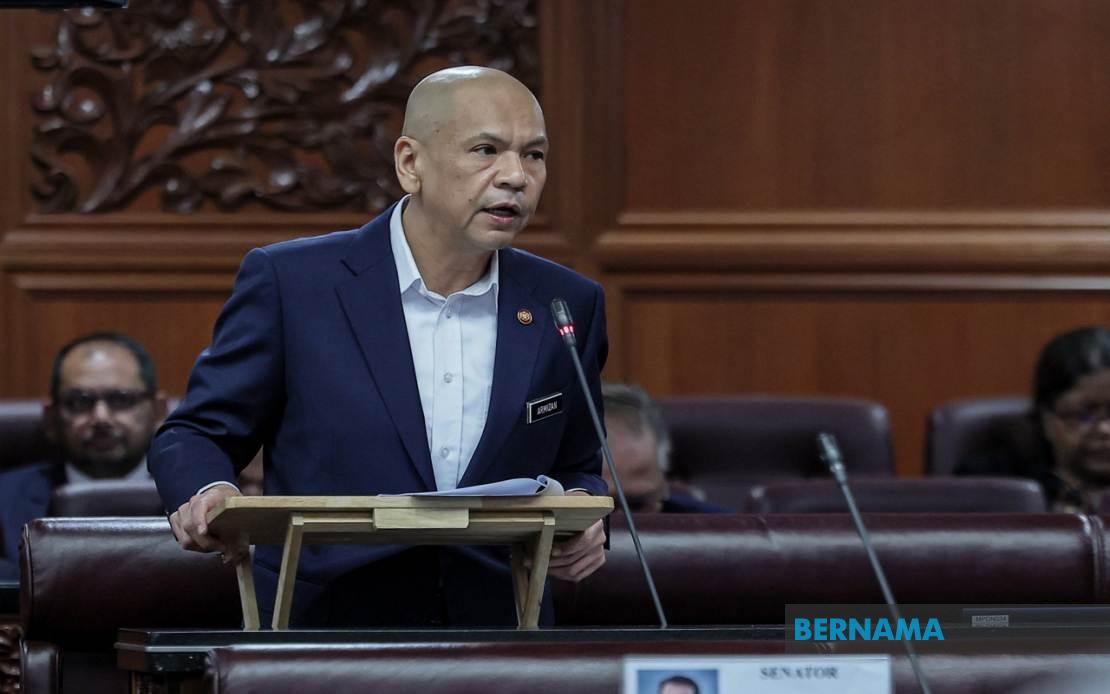
Parliament has taken a significant step toward modernising Malaysia's competition framework with the tabling of two complementary amendment bills that will substantially reshape how the country's competition regulator operates. The Competition (Amendment) Bill 2026 and the Competition Commission (Amendment) Bill 2026, both overseen by the Domestic Trade and Cost of Living Ministry, were introduced for first reading in the Dewan Rakyat on June 23, with Minister Datuk Armizan Mohd Ali tabling the legislation. Both bills are scheduled to progress to second reading during the current parliamentary session, signalling the government's intention to move these reforms forward relatively swiftly.
The substantive changes proposed by the Competition (Amendment) Bill 2026 represent a meaningful expansion of the Malaysia Competition Commission's regulatory toolkit and enforcement capabilities. At its core, the bill seeks to invigorate several key provisions within the Competition Act 2010, with particular emphasis on broadening and clarifying the investigative and enforcement powers available to MyCC. These enhancements come as competition authorities globally have grappled with increasingly complex market structures and sophisticated anti-competitive conduct, making updated legal frameworks essential for effective regulation.
A particularly significant aspect of the proposed reforms involves recalibrating the scope of competition law itself. Clause 3 of the amendment bill would expand the regulatory perimeter from commercial activities alone to encompass all economic activities within Malaysia's economy. This represents a fundamental philosophical shift, potentially bringing government-linked entities, quasi-government agencies, and other non-commercial economic actors within MyCC's purview. For Malaysia's business community and consumers alike, this expansion could mean more comprehensive oversight of sectors previously falling outside active competition scrutiny, though it also raises questions about implementation complexity and resource allocation for the regulator.
The bill strengthens MyCC's information-gathering capabilities through Clause 7, which grants the commission authority to request information or documents from any individual or government entity when conducting market reviews under the Act. This provision addresses a longstanding challenge faced by competition authorities in obtaining necessary data from reluctant parties, particularly government bodies. The practical implications extend across multiple sectors—from telecommunications and energy to transportation and financial services—where understanding market dynamics requires access to information that may currently be difficult to obtain through conventional channels.
Enforcement mechanisms receive equally comprehensive attention through Clause 13, which introduces criminal liability for individuals who intentionally destroy, conceal, deface, or alter data or materials with the purpose of misleading MyCC or obstructing its investigative and enforcement work. This represents a hardening of the legal framework against evidence tampering and obstruction, bringing Malaysia's competition law closer to the standards found in more mature enforcement regimes. Such provisions become particularly important as investigations grow more complex and digital evidence becomes central to proving anti-competitive conduct.
Beyond amendments to the substantive competition law, the parallel Competition Commission (Amendment) Bill 2026 refines the operational and governance structure of MyCC itself. Clause 8 explicitly clarifies the commission's advisory mandate, formally recognising its role in counselling the minister, public authorities, and regulatory bodies on competition matters spanning policies, procedures, and programmes. This clarification potentially elevates MyCC's status as a source of expert guidance within government circles, though it also requires the commission to balance its advocacy function with its role as an impartial enforcer.
Governance enhancements contained in the bills address the internal organisation and accountability of MyCC. Clause 10 of the Competition Commission (Amendment) Bill would permit MyCC to delegate functions and powers to its chairman, committees, officers, and employees—a flexibility that larger institutions typically require to operate efficiently across their expanding remits. The bill also modifies appointment procedures for MyCC officers, with Subclause 12(a) proposing that the commission itself make such appointments on recommendation from the chief executive officer rather than following existing processes. Advocates contend this change enhances transparency and accountability, though questions may emerge regarding recruitment standards and professional independence.
The Decision-making architecture within MyCC receives attention through proposed amendments targeting the procedural framework governing how the commission operates internally. Streamlining these mechanisms could accelerate case resolution and reduce delays that have occasionally frustrated stakeholders awaiting enforcement decisions. However, authorities must balance speed with rigour, ensuring that quicker processes do not compromise the quality of analysis underpinning major enforcement actions that can substantially impact Malaysian businesses.
These reforms sit within a broader regional context. Other Southeast Asian economies have similarly upgraded their competition frameworks in recent years, reflecting global recognition that outdated laws struggle to address modern anti-competitive practices. Thailand, Indonesia, and Singapore have each undertaken competition law modernisation, with varying emphasis on digital markets, merger control, and leniency programmes. Malaysia's amendments, while not cutting-edge in global terms, position the country's regime more competitively within the region and signal commitment to contemporary enforcement standards.
For Malaysian businesses, particularly those operating across multiple sectors or engaging in cross-border transactions within Southeast Asia, these amendments carry material implications. Expanded regulatory scope means previously unexamined activities may now attract scrutiny, requiring compliance adjustments. For consumers and the broader economy, stronger MyCC enforcement could enhance competitive intensity and potentially exert downward pressure on prices and upward pressure on service quality in concentrated markets. Conversely, businesses legitimately concerned about over-regulation may worry about increased compliance costs, particularly smaller enterprises lacking dedicated competition law expertise.
The second reading phase will likely generate substantive parliamentary debate around specific provisions, with business groups, consumer advocates, and affected regulatory bodies potentially submitting input. This represents an opportunity for fine-tuning the bills before passage, though the government's apparent momentum suggests fundamental rejection of the framework remains unlikely. Implementation will ultimately determine whether these legislative improvements translate into more effective competition protection or simply create additional bureaucratic requirements without proportionate benefits.

