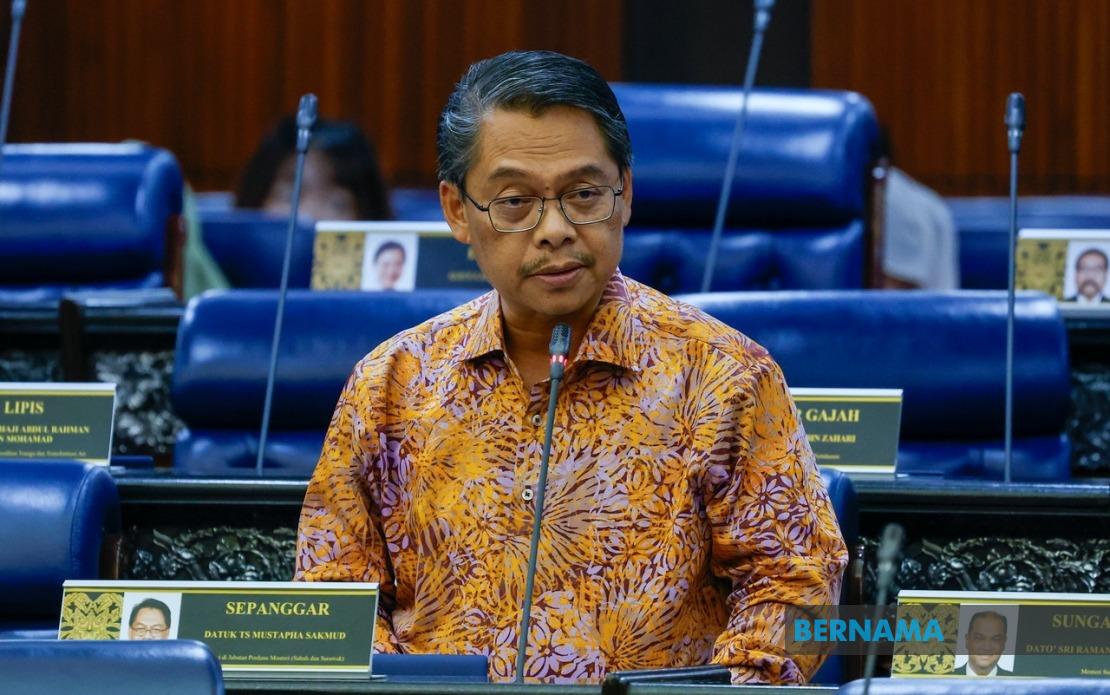
Negotiations on the Malaysia Agreement 1963 have progressed substantially, with the federal government confirming that 13 of the 29 matters under formal discussion have now been fully resolved. Minister in the Prime Minister's Department (Sabah and Sarawak Affairs) Datuk Mustapha Sakmud disclosed this milestone during parliamentary questioning on June 25, underscoring the long-term commitment to implementing the historic accord that established the federation of Malaysia. The revelation comes as momentum builds around efforts to address longstanding grievances in Sabah and Sarawak, two states that joined Malaysia more than six decades ago with specific constitutional guarantees.
Beyond the 13 fully settled matters, five additional issues have crossed the threshold into partial or interim resolution following decisions reached at a Technical Committee meeting on March 2. This intermediate category represents progress on contentious topics that require further negotiation or alignment between federal and state authorities before a final agreement can be formalised. The distinction between full and interim resolutions is significant: interim status suggests that stakeholders have identified a workable framework or principle, though implementation details or political conditions remain to be finalised. For Sabah and Sarawak residents, this gradual advancement signals that issues affecting their livelihoods and constitutional rights are receiving sustained official attention.
Four of the five interim matters relate directly to state employment and public administration. These include expansion of state public service positions under Article 112 of the Federal Constitution, a provision that governs how many civil service roles may be filled by state governments rather than federal authorities. Related to this employment framework are discussions surrounding health and education services, areas where state-federal coordination significantly impacts service delivery to rural and urban communities alike. Additionally, the concept of Borneonisation of the Federal public service in Sabah and Sarawak—a push to increase the proportion of locals in federal government positions within the two states—forms a crucial component of the interim resolutions. This principle, rooted in the original MA63 agreements, aims to ensure that Sabah and Sarawak residents have meaningful representation in federal agencies operating on their soil.
The eleven outstanding matters continue to command attention from multiple government agencies. The Sabah and Sarawak Affairs Division, functioning as secretariat to the negotiation process, maintains active coordination with stakeholders across federal and state governments. This administrative scaffolding reflects the institutional complexity inherent in MA63 discussions: resolving each matter requires consensus among layers of bureaucracy, constitutional experts, and political representatives with sometimes competing interests. The slow but continuous progress suggests that while political will exists to honour the agreement, the technical and legal obstacles are formidable.
A particularly intractable issue remains the question of parliamentary representation for Sabah and Sarawak. The two states have long sought to increase their combined quota of seats in the Dewan Rakyat to 35 per cent of the total house membership, a demand grounded in population growth and the principle of equal representation. However, Mustapha explained that this matter remains unresolved and requires negotiation within strict constitutional boundaries. Electoral redelineation—the redrawing of constituency boundaries and adjustment of seat allocations—falls exclusively within the purview of the Election Commission and can only be undertaken after the completion of an eight-year electoral cycle. The current framework, drawn from the 13th Schedule and Article 113 of the Federal Constitution, thus imposes a structural constraint on how quickly any seat-sharing arrangement can be altered.
The parliamentary seats issue is further complicated by the constitutional amendment requirement. Article 46 of the Federal Constitution governs the composition of the Dewan Rakyat, and any substantive change to the distribution of seats between federal and state territories demands a two-thirds majority vote in the lower house. This supermajority threshold, established as a safeguard for constitutional stability, means that seat reallocation cannot proceed through ordinary legislation. For Sabah and Sarawak representatives, this requirement underscores a broader truth: advancing their constitutional interests depends not only on sustained negotiation but also on securing backing from federal lawmakers beyond their delegations. The political arithmetic of reaching two-thirds support, combined with the Election Commission's procedural timetable, effectively places parliamentary seat redistribution on a timeline measured in years rather than months.
The MA63 negotiations reflect broader dynamics within Malaysian federalism. The agreement, signed in 1963, enshrined specific powers, financial arrangements, and safeguards for Sabah and Sarawak as conditions of their accession to the federation. Yet the intervening decades have seen gradual erosion or reinterpretation of certain provisions, prompting calls from state leaders and civil society organisations for comprehensive reassessment. The current technical committee process represents an institutional attempt to restore clarity and agreement where ambiguity or drift has occurred. By breaking the negotiation into 29 discrete matters, the government has rendered the complex task more manageable, allowing experts to drill into specific constitutional, administrative, and financial questions.
For Malaysian readers, particularly those in Sabah and Sarawak, the progress on MA63 carries tangible implications. Resolved matters touching on public employment, health, and education mean that state governments may gain greater autonomy in staffing and service administration. Borneonisation of the federal service could yield more local hiring and career advancement within federal agencies based in Kota Kinabalu and Kuching. Enhanced state control over civil service expansion under Article 112 might allow Sabah and Sarawak to tailor their administrative workforce to local priorities. These administrative shifts, though less visibly dramatic than electoral redistribution, shape the daily experience of governance and economic opportunity in the two states.
The interim status of several matters suggests that while foundational agreement exists, implementation remains conditional. Key stakeholders may have endorsed a principle—say, increasing Borneonisation targets—without yet settling operational details such as timelines, recruitment quotas, or training standards. This phased approach reflects political pragmatism: securing partial commitment now preserves momentum and builds incrementally toward comprehensive implementation, rather than allowing disputes over minor details to derail the entire negotiation. For federal and state authorities, it signals a strategy of consolidating gains while keeping discussion open on harder questions.
The eleven unresolved matters likely encompass the most contentious issues, those where federal and state positions diverge most sharply or where constitutional interpretation remains disputed. These may include further financial arrangements, residual powers of Sabah and Sarawak legislatures, or resource management questions. The decision to continue monitoring these matters through the BHESS secretariat indicates governmental commitment to persistence rather than abandonment. However, the absence of interim resolutions on these topics hints at deeper structural disagreements that technical discussion alone may not overcome.
Moving forward, observers of Malaysian federalism should monitor both the technical committee's progress on the remaining 11 matters and the broader political environment. Electoral cycles, changes in state or federal government composition, or shifts in public opinion could accelerate or impede MA63 negotiations. The parliamentary seats issue, in particular, will require political champions willing to expend capital on constitutional amendment. As Sabah and Sarawak populations continue to grow and their economic contributions to the federation evolve, the pressure to revisit MA63 terms will likely intensify. The current negotiation process, though incremental, represents a formal acknowledgment that the agreement remains alive and subject to reinterpretation—a foundation upon which future progress may be built.

