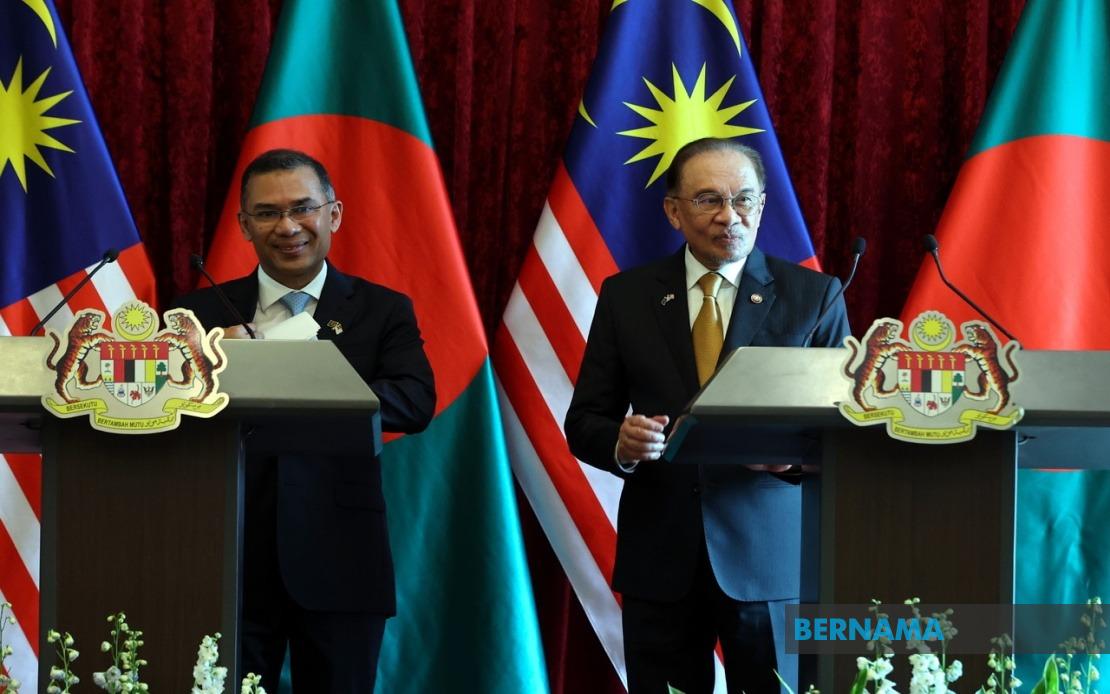
Malaysia and Bangladesh have confirmed their alignment on several contentious international issues, with Prime Minister Datuk Seri Anwar Ibrahim emphasising the two countries' shared commitment to the Palestinian cause during discussions with Bangladesh Prime Minister Tarique Rahman in Putrajaya on Monday. The convergence of positions reflects broader coordination among Muslim-majority nations on Middle Eastern affairs, signalling a deepening partnership that extends beyond bilateral trade and cultural ties into the realm of foreign policy and international advocacy.
During their joint press conference, Anwar outlined the areas where Kuala Lumpur and Dhaka maintain common ground. Both governments express solidarity with the Palestinian people and have consistently voiced concern over the humanitarian situation in Gaza. The Prime Minister also highlighted their shared perspective on developments in the broader Gulf region and the stance towards Iran, indicating that the two capitals coordinate their diplomatic messaging on these sensitive geopolitical matters that directly impact Muslim-majority nations and their regional interests.
The emphasis on coordinated foreign policy reflects Malaysia's broader diplomatic strategy under Anwar's leadership, which has prioritised strengthening ties with fellow Muslim nations whilst maintaining pragmatic engagement with global partners across ideological and geographic lines. Bangladesh, as a significant regional power and fellow Organisation of Islamic Cooperation member, represents a natural ally for Malaysia in advocating shared positions on Palestinian rights and regional peace initiatives. This alignment also underscores how both nations navigate complex international dynamics where Western powers, regional hegemonies, and non-aligned movements intersect.
Anwar stressed that Malaysia and Bangladesh would persist in engaging with international partners to advance peaceful outcomes across these contested regions. This framing positions the two nations as constructive actors rather than mere critics, suggesting they intend to work through diplomatic channels and multilateral forums to influence outcomes. The language of continued engagement implies both countries recognise the limitations of unilateral action and seek to build consensus with other nations sharing similar concerns about Palestinian self-determination, humanitarian crises, and regional stability.
The visit itself carries particular significance as it marks Tarique Rahman's first official journey abroad since assuming office in February, a symbolic choice that reflects the priority Bangladesh places on South Asian and broader Asian relationships. By selecting Malaysia as an early destination for a state visit, the Bangladesh Prime Minister signals her government's intent to strengthen ties with Southeast Asian partners and participate actively in regional diplomatic networks. This inaugural visit demonstrates that Bangladesh views its relationship with Malaysia as sufficiently important to warrant early diplomatic engagement at the highest levels.
Anwar's public acknowledgement of family ties and brotherly relations during the press conference emphasises the cultural and historical bonds underpinning the formal diplomatic relationship. Malaysia hosts a significant Bengali-speaking community and maintains strong people-to-people connections with Bangladesh, factors that provide a foundation for government-to-government cooperation. The Prime Minister's welcoming remarks reflect the emotional dimension of diplomacy, particularly within the Islamic world where notions of ummah and shared faith often inform foreign policy rhetoric and relationship-building.
The timing of this visit occurs amid evolving geopolitical dynamics in Asia and the Middle East. Both nations continue to observe developments in Gaza with concern, whilst remaining attentive to great power competition in their respective regions and the Indian Ocean. Malaysia and Bangladesh, as maritime nations with significant economic interests in global trade routes, share practical concerns about regional stability that transcend ideological considerations. Their alignment on these issues therefore reflects not merely rhetorical solidarity but substantive shared interests in preventing escalation and maintaining the conditions necessary for prosperous commerce and strategic autonomy.
The joint commitment to engaging international partners distinguishes this diplomatic positioning from more confrontational stances adopted by some nations. Rather than threatening isolation or economic sanctions, both governments suggest they will work constructively within international organisations and diplomatic forums to advocate their positions. This approach aligns with Malaysia's historical preference for multilateralism and ASEAN-style consensus-building, though applied to broader global challenges beyond Southeast Asia's traditional purview.
For Malaysian observers, the bilateral visit reinforces Kuala Lumpur's role as a meaningful actor in regional diplomacy and its capacity to serve as a bridge between Southeast Asia and South Asia. The coordination on Palestinian and Iranian issues also reflects Malaysia's consistent foreign policy stance under successive administrations, providing continuity in advocacy even as domestic political circumstances shift. Bangladesh's affirmation of these shared positions validates Malaysia's diplomatic approach and suggests that the positions represent genuine consensus among key Muslim-majority nations rather than isolated Malaysian preferences.
Looking forward, the bilateral relationship appears poised for deepening cooperation across multiple domains. The political alignment demonstrated during this visit likely will translate into enhanced coordination within multilateral forums such as the Organisation of Islamic Cooperation, the United Nations, and potentially regional groupings where both nations participate. Enhanced coordination on international issues of mutual concern typically accompanies expanded economic partnerships and people-to-people exchanges, suggesting that this diplomatic convergence may catalyse broader engagement between Malaysia and Bangladesh across trade, education, and cultural sectors.

