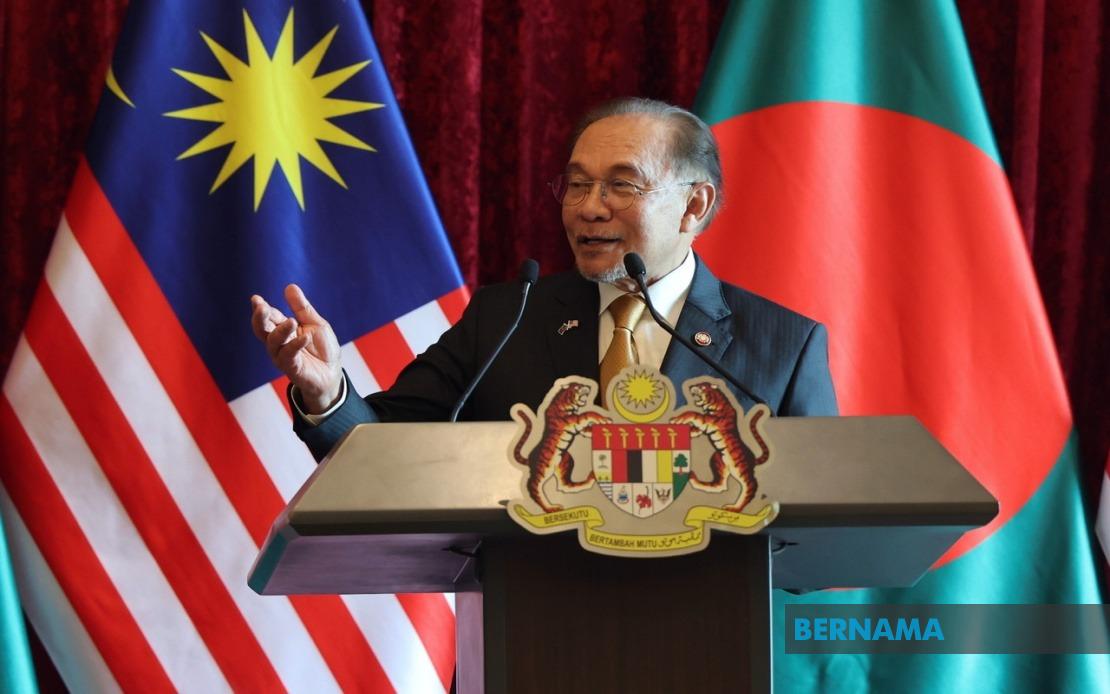
Prime Minister Datuk Seri Anwar Ibrahim and visiting Bangladesh Prime Minister Tarique Rahman have committed to rekindling high-level institutional dialogue between the two nations, signalling a fresh phase in their bilateral relationship. During Tarique's two-day official visit to Putrajaya, both leaders pledged to resurrect the Joint Commission Meeting and Bilateral Consultations, mechanisms that have languished for some time, underscoring a mutual determination to elevate engagement beyond ad-hoc exchanges. This institutional refresh comes as Malaysia and Bangladesh seek to establish more structured frameworks for managing their relationship across multiple dimensions, from political coordination to economic cooperation.
The revival of these formal mechanisms addresses a longstanding gap in the countries' diplomatic architecture. The Joint Commission Meeting serves as the principal vehicle for steering bilateral relations at the highest level, while Bilateral Consultations provide a dedicated channel for addressing specific sectoral concerns. Their reactivation signals that both governments view their partnership as significant enough to warrant sustained, institutionalised attention. For Malaysia, this is particularly relevant given the scale of Bangladeshi presence in the country and the economic implications of robust diplomatic channels. The timing also reflects broader Southeast Asian dynamics, where major nations are sharpening bilateral tools to navigate complex regional and global challenges.
Central to this renewed engagement is the question of labour migration, a cornerstone of Malaysian-Bangladeshi relations. Bangladesh has long sought expanded worker quotas for its nationals seeking employment in Malaysia, where Bangladeshi migrants constitute a substantial and visible segment of the foreign workforce. The joint statement acknowledges this proposal while tempering expectations, confirming that Malaysia will evaluate requests strictly according to its current foreign labour policy framework. Rather than blanket approvals, the government assesses each quota application individually, ensuring that hiring genuinely reflects verified employer needs and respects sectoral capacity limits. This cautious approach reflects Malaysia's ongoing concerns about labour market saturation and the need to protect local employment opportunities.
Yet both nations have chosen to move beyond the tension inherent in these competing interests by establishing a dedicated Joint Working Group on migration. This body will undertake a comprehensive review of the existing Memorandum of Understanding governing worker recruitment, with the explicit mandate to develop a modernised agreement responsive to contemporary requirements in both countries. The focus on updating the MoU is significant, as it suggests both sides recognise that frameworks negotiated years ago may no longer adequately address current realities, from changing employer demands in Malaysia to evolving worker demographics and skills profiles in Bangladesh.
The emphasis on fair, transparent and non-discriminatory recruitment processes carries particular weight given recurring controversies surrounding migrant worker placement in Malaysia. Both governments have committed to ensuring that any approved quotas utilise only credible and qualified recruitment agencies, a standard that directly counters the underground and exploitative practices that have historically plagued migrant labour flows. For Bangladesh, this commitment provides assurance that its nationals will access legitimate employment pathways. For Malaysia, it reduces the risk of irregular migration and the associated social costs. This alignment on process integrity suggests that institutional strengthening can deliver mutual benefits beyond mere diplomatic courtesy.
The recognition of people-to-people connectivity represents another dimension of this enhanced engagement. Both leaders acknowledged that Bangladeshi expatriates in Malaysia serve as cultural ambassadors and economic actors who reinforce bilateral bonds through their daily participation in Malaysian society. Many send remittances home, engage with their community networks, and contribute to knowledge transfer between the countries. By framing migration not merely as a labour supply issue but as a people-to-people phenomenon worthy of deliberate cultivation, both governments signal a more sophisticated understanding of how diaspora communities strengthen international relations. This perspective extends beyond transaction-focused concerns about worker numbers to encompass broader questions of social integration and mutual understanding.
The institutional architecture being revived also has implications for addressing broader bilateral and multilateral issues of mutual concern. The joint statement references commitment to dialogue on matters of shared interest, language that typically encompasses security, trade, regional stability and multilateral forum coordination. Within Southeast Asia's complex geopolitical environment, having functional high-level mechanisms between major nations reduces misunderstandings and enables rapid response to emerging challenges. For Malaysia, strengthened institutional ties with Bangladesh enhance its diplomatic capacity to engage across the Indian Ocean region, where Bangladesh plays an increasingly significant role in regional affairs, from maritime security to connectivity initiatives.
From a Malaysian perspective, this diplomatic initiative reflects pragmatic statecraft. Bangladesh remains a major source of migrant workers, skilled and unskilled, across multiple sectors of the Malaysian economy. Rather than managing this relationship through ad-hoc labour negotiations or reactive responses to migration crises, establishing permanent institutional mechanisms allows for proactive problem-solving. The renewal of these bodies also demonstrates Malaysia's commitment to structured engagement with all major labour-source countries, an approach that strengthens the country's reputation as a serious and reliable destination for foreign workers while simultaneously protecting national interests through careful regulation.
The evolution of the bilateral MoU on worker migration deserves close attention, as it will likely become a model for Malaysia's engagement with other labour-source nations. An updated agreement reflecting best practices in ethical recruitment, worker protection and transparent quota management could set new standards across the region. Bangladesh, as one of the world's largest labour exporters, has considerable leverage in such negotiations and can ensure that Malaysian standards align with its own objectives for protecting overseas workers. The working group mechanism provides space for detailed negotiations on sensitive issues that might prove difficult to resolve through top-level political dialogue alone.
Looking forward, the success of this institutional renewal will depend on both governments' capacity to follow through with substantive meetings and concrete outcomes. The commitment to resume the Joint Commission Meeting and Bilateral Consultations, while symbolically important, requires genuine engagement to yield tangible results. The establishment of the Joint Working Group on migration provides a near-term opportunity to demonstrate this commitment through development of an updated MoU that satisfies both nations' legitimate interests. Should these mechanisms function effectively, they could serve as a template for how Malaysia manages relationships with other significant partners, emphasising the value of regular, structured dialogue over intermittent high-level visits.

