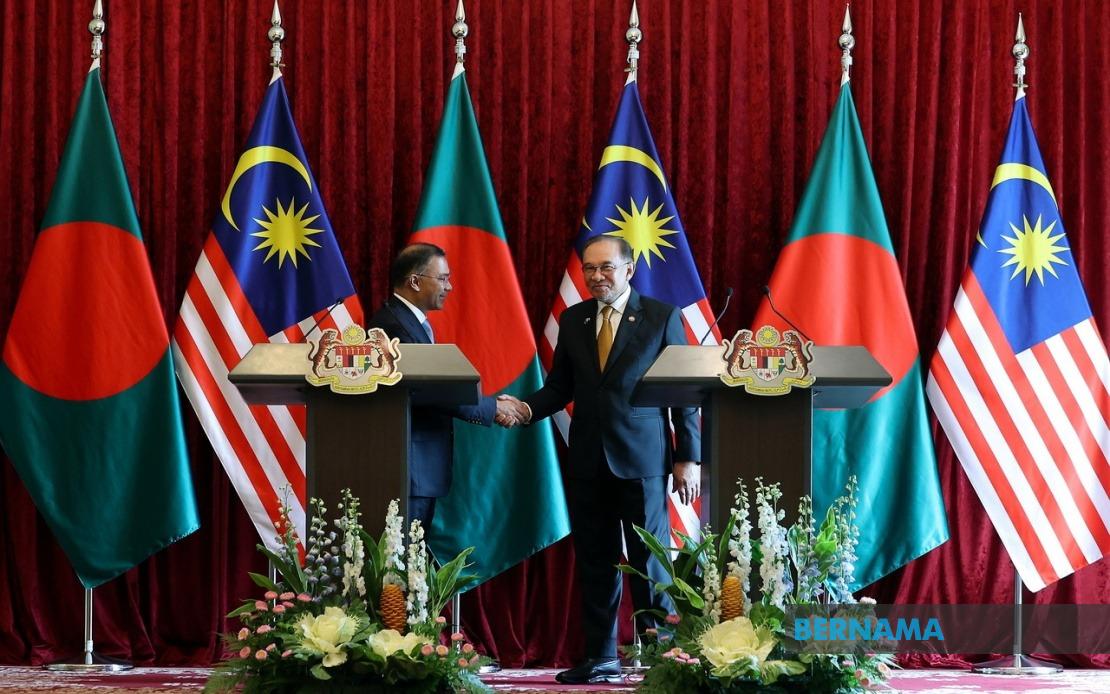
Malaysia and Bangladesh have jointly declared their determination to eliminate the exploitation and mistreatment of migrant workers, signalling a renewed focus on labour standards between two nations with deep economic ties. At a bilateral meeting in Putrajaya on June 22, Prime Minister Datuk Seri Anwar Ibrahim and visiting Bangladesh Prime Minister Tarique Rahman underscored their shared commitment to reforming how workers are recruited and treated across sectors critical to Malaysia's economy.
Anwar acknowledged the paradox facing both countries: while foreign workers remain essential to Malaysia's continued economic development, the labour migration system has generated persistent humanitarian concerns and scandals that demand urgent action. The Malaysian premier stressed that economic necessity cannot justify poor treatment or exploitation, and that both governments must move decisively to establish recruitment frameworks that are genuinely transparent and accountable to both nations' standards and interests.
The recruitment of foreign workers has long been a contentious issue in Malaysia, with investigations and media reports regularly documenting cases of wage theft, unsafe working conditions, and restrictions on worker mobility. These problems affect not only the workers themselves but also damage Malaysia's international reputation and create diplomatic friction with source countries. By publicly committing to reform alongside the Bangladesh Prime Minister, Anwar signalled that addressing these issues is now a diplomatic priority rather than a domestic labour matter to be managed quietly.
In his remarks, Anwar emphasized that protecting the interests of individual workers and safeguarding their families back home must become central to how Malaysia structures its labour recruitment. This represents a shift in framing: rather than treating migrant workers primarily as economic inputs, the Malaysian government is positioning worker welfare as a shared national interest and a measure of both countries' commitment to responsible governance. The statement carries implications for how Malaysia might revise its labour laws and enforcement mechanisms in coming months.
Bangladesh, which sends hundreds of thousands of workers to Malaysia across construction, manufacturing, agriculture, and domestic service sectors, has long pressed for improvements in how its nationals are treated abroad. At the press conference, Tarique Rahman raised the related issue of labour market access, requesting that Malaysia consider increasing recruitment quotas for Bangladeshi workers and reopening sectors of its labour market that have been temporarily restricted. This dual-track approach—demanding better protections while seeking expanded opportunities—reflects the economic importance of Malaysia as a destination for Bangladeshi workers seeking higher wages than available at home.
The timing of this agreement comes as Malaysia faces labour shortages in several sectors following pandemic-related recruitment freezes and tightened entry requirements. However, both governments appear to have concluded that reopening labour channels must be coupled with stronger safeguards rather than a return to previous practices. This conditional approach could serve as a model for how Malaysia manages labour recruitment with other source countries, potentially raising standards across the system.
The exploitation of migrant workers has emerged as a significant issue for Malaysia's standing in regional and international forums. Countries including Bangladesh, Indonesia, and Myanmar have periodically restricted or suspended worker exports to Malaysia in response to documented abuses. By engaging in this high-level dialogue and making public commitments, both Anwar and Tarique are positioning themselves as leaders willing to tackle a problem that affects millions of families and shapes perceptions of governance in both nations.
Implementing more transparent recruitment will require concrete steps: standardized contracts that workers can understand before departure, stronger vetting of Malaysian employers, independent monitoring of working conditions, and effective channels for workers to report violations without fear of retaliation or deportation. Malaysia has introduced some reforms in recent years, but enforcement remains uneven and many employers continue to operate with minimal oversight.
For Malaysian businesses reliant on foreign labour—particularly in construction, plantations, manufacturing, and domestic work—the bilateral agreement signals that the regulatory environment will likely tighten. While this may increase compliance costs, it could also reduce the operational risks and reputational damage associated with labour violations. Forward-thinking employers may view stronger standards as an opportunity to differentiate themselves and attract more reliable workforce partnerships.
The agreement also carries significance for how Malaysia positions itself within Southeast Asia and globally on labour rights. Nations such as Singapore and Thailand have faced international pressure over migrant worker treatment; Malaysia's commitment to transparency and fair recruitment, if properly implemented, could enhance its competitive standing and demonstrate that economic development and worker protection are compatible objectives.
Both governments will need to move beyond bilateral declarations to measurable outcomes. This might include establishing joint monitoring mechanisms, harmonizing contract standards, creating dedicated dispute resolution processes, and ensuring that workers have access to legal aid and support services. Bangladesh may also expect Malaysia to address specific complaints from its nationals currently working in Malaysia, particularly in sectors where abuses have been documented.
The commitment made in Putrajaya reflects a broader recognition that labour migration, while economically valuable, requires careful governance to remain sustainable and legitimate. As Malaysia's demographic profile shifts and labour shortages persist, the ability to attract and retain migrant workers will depend increasingly on demonstrating genuine commitment to their welfare. By making this declaration jointly with Bangladesh, Anwar has tied Malaysia's credibility on the issue to concrete follow-up action.

