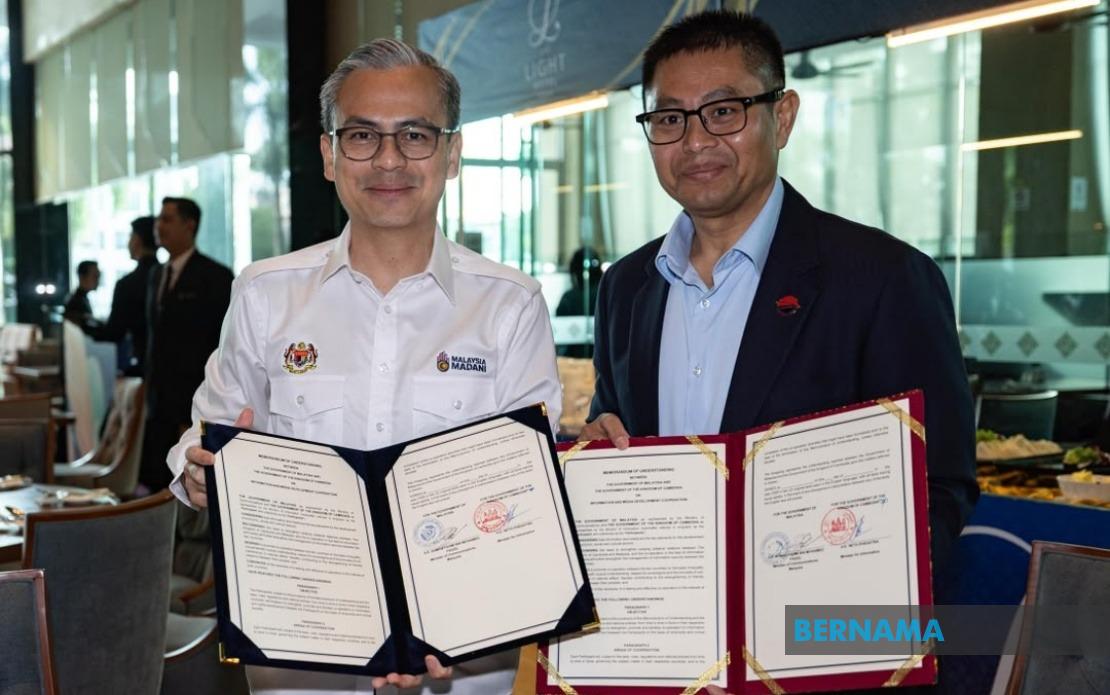
Malaysia and Cambodia have taken another step forward in their bilateral relationship by formalising a comprehensive memorandum of understanding on information and media development. Communications Minister Datuk Fahmi Fadzil and Cambodian Information Ministry's Under Secretary of State Prak Thaveak Amida inked the agreement at the Light Hotel in Butterworth on June 20, with Amida representing Information Minister Neth Pheaktra. The accord marks a deliberate effort to deepen institutional connections between two neighbouring nations seeking to modernise their respective media landscapes amid rapid technological change in Southeast Asia.
The scope of the new partnership is expansive, encompassing multiple facets of contemporary media operations. The framework facilitates regular exchange of news and information between Malaysian and Cambodian outlets, establishes protocols for radio and television broadcasting cooperation, and creates pathways for coordination in the printing and publishing sectors. Beyond these traditional media functions, the agreement explicitly addresses emerging challenges including media cybersecurity—an increasingly critical concern as news organisations across the region face sophisticated digital threats—and outlines mechanisms for sharing information policy expertise and regulatory best practices. This multi-sectoral approach reflects recognition that modern media systems operate across integrated platforms rather than in isolated silos.
Human capital development features prominently within the agreement, suggesting both nations recognise that technological advancement alone cannot ensure media sector growth without sustained investment in professional training and knowledge transfer. The partnership commits to facilitating the exchange of media professionals, journalists, and technical specialists between Malaysia and Cambodia, enabling working journalists and broadcasters to learn emerging practices and technologies. Film and documentary production represents another collaborative domain, acknowledging Southeast Asia's growing creative industries and the potential for co-productions that could reach audiences across national borders. Innovation in media and broadcasting is explicitly mentioned, creating a formal channel through which both countries can explore emerging technologies and novel distribution methods.
The timing of this agreement coincides with broader regional trends toward stronger ASEAN media connectivity. As digital platforms transcend geographical boundaries and international news flows reshape information landscapes, bilateral frameworks become mechanisms through which nations can maintain editorial independence while building institutional relationships. For Malaysia, the accord offers opportunities to position itself as a media hub with established practices that smaller regional neighbours may find instructive. For Cambodia, formalising cooperation signals commitment to professional media development at a moment when media freedom concerns remain significant across much of Southeast Asia.
The partnership also reflects pragmatic recognition of shared challenges in the digital age. Media outlets in both countries face similar pressures from declining traditional advertising revenues, the rise of social media as news sources, and the proliferation of disinformation. By establishing formal channels for cooperation on cybersecurity and regulatory matters, the agreement enables both nations to address these threats collaboratively rather than in isolation. This cooperative approach may prove particularly valuable in combating cross-border disinformation campaigns that affect multiple countries simultaneously.
The signing occurred during Malaysia's National Journalists' Day (HAWANA) 2026 celebrations, itself a significant indicator of the institutional weight Malaysia places on media relations. The sixth edition of HAWANA, hosted at the PICCA convention centre in Butterworth, brought together approximately one thousand media professionals from Malaysia and abroad. This provided an appropriate forum for formalising Cambodia cooperation, as Prime Minister Datuk Seri Anwar Ibrahim was scheduled to officiate the event at three o'clock in the afternoon. The convergence of the MoU signing with a major national media gathering ensured visibility among industry stakeholders and government figures alike.
The presence of senior officials underscored institutional commitment to the initiative. Penang Chief Minister Chow Kon Yeow, Communications Ministry Secretary-General Datuk Abdul Halim Hamzah, Malaysian National News Agency (Bernama) Chairman Datuk Seri Wong Chun Wai, and Bernama Chief Executive Officer Datin Paduka Nur-ul Afida Kamaludin were among those expected to attend the ceremony. This high-level participation demonstrates that media cooperation is not treated as peripheral to bilateral relations but rather as integral to contemporary governance and national interests.
The agreement's emphasis on knowledge exchange and best practice sharing carries particular significance for Malaysian policymakers. As the communications sector navigates pressures to balance media freedom with regulatory oversight, examining how Cambodia and other regional partners approach comparable challenges provides comparative insights. Similarly, Cambodia can benefit from Malaysia's longer experience with digital media regulation and cybersecurity frameworks, though care must be taken that cooperation does not become a mechanism through which more restrictive practices spread across borders.
From an economic perspective, the MoU creates potential opportunities for Malaysian media companies to expand into Cambodia and for co-venture possibilities in content production and distribution. The broadcasting and publishing sectors represent significant economic contributors in Malaysia, and formalised government cooperation can reduce barriers to market entry and facilitate partnerships with Cambodian counterparts. For journalists and media professionals, the agreement theoretically enables greater professional mobility and opportunities for cross-cultural storytelling that could benefit audiences in both nations.
The cooperation framework also positions both countries within broader ASEAN media development narratives. As the regional bloc seeks greater integration and understanding, media partnerships play crucial roles in building mutual comprehension and countering external narratives about Southeast Asia. By strengthening institutional media ties, Malaysia and Cambodia contribute to an ASEAN information space that is more internally cohesive and better positioned to engage with international media actors from positions of collective strength.
Looking forward, the practical realisation of this MoU will depend substantially on implementation mechanisms and resource allocation. Establishing regular coordination committees, identifying specific projects for collaboration, and allocating budget for professional exchanges and training programmes will determine whether the agreement becomes transformative or remains largely ceremonial. The upcoming months will reveal whether both governments translate signed commitments into substantive institutional changes that meaningfully strengthen media sectors in Malaysia and Cambodia alike.

