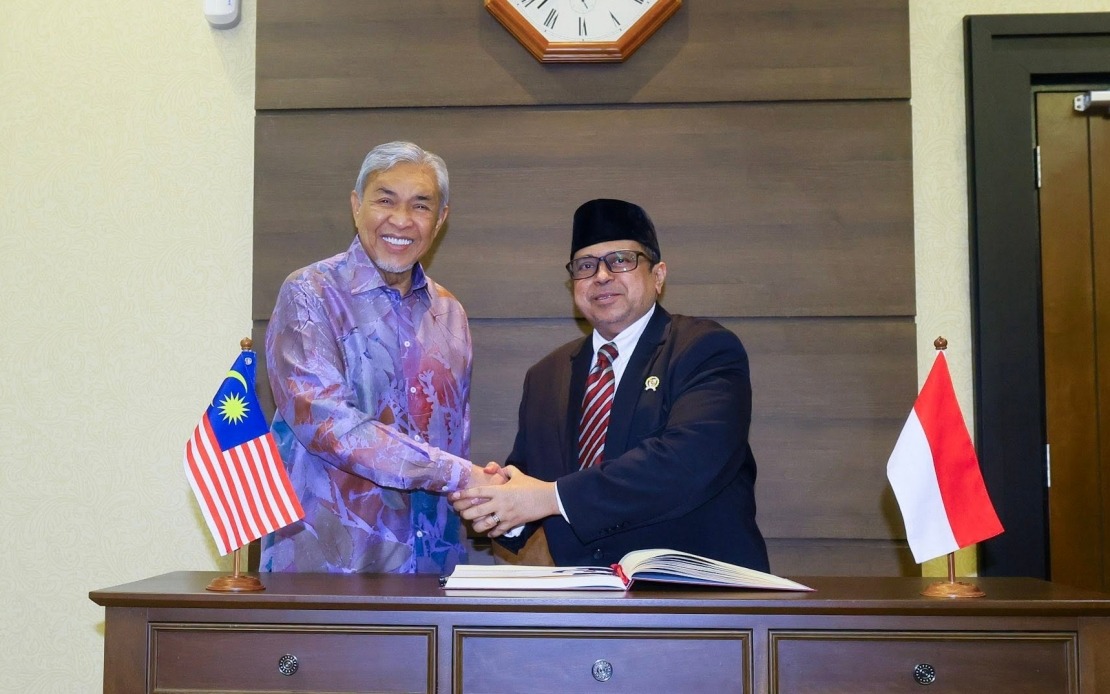
Malaysia and Indonesia are set to intensify their partnership across the halal industry, trade, rural development and human capital sectors, according to Deputy Prime Minister Datuk Seri Dr Ahmad Zahid Hamidi. The announcement came following a formal meeting at Parliament involving Indonesia's Ambassador to Malaysia Raden Datuk Mohammad Iman Hascarya Kusumo and Dr Ahmad Haikal Hassan, head of Indonesia's Halal Product Assurance Organising Body (BPJPH), signalling the bilateral commitment to leveraging both nations' complementary strengths in this strategic sector.
The discussions centred on several concrete institutional mechanisms designed to elevate halal cooperation beyond traditional trade arrangements. Foremost among these is the establishment of the Malaysia-Indonesia Halal Council (MIHC), envisioned as a formal platform for coordinating policies, standards and commercial initiatives between the two neighbours. This body will operate in tandem with broader regional and global frameworks, namely the ASEAN Halal Council and the World Halal Development Council, creating a tiered governance structure for halal ecosystem development.
These proposed councils represent a strategic response to the increasingly competitive global halal market, where standardisation and mutual recognition of certifications have become critical competitive advantages. By harmonising halal standards through institutional cooperation, Malaysia and Indonesia can reduce trade friction, lower compliance costs for businesses operating across borders, and collectively strengthen their influence in international halal commerce. The framework reflects growing recognition that unilateral approaches to halal certification and market access are insufficient in an interconnected regional economy.
The timing of this initiative is significant given the scale of the global halal market, which has expanded dramatically over the past decade. Malaysia, as home to the Islamic Financial Services Board and long established as a halal certification hub, brings institutional expertise and established networks. Indonesia, as the world's largest Muslim-majority nation with a substantial domestic halal industry and manufacturing base, offers market scale and production capacity. Their combined reach extends across ASEAN and beyond, positioning them to shape international halal standards that benefit their respective enterprises.
Ahmad Zahid, who chairs the Malaysia Halal Industry Development Council, emphasised that the longstanding bilateral relationship between Kuala Lumpur and Jakarta provides a foundation for deepened cooperation. This historical context is important: the two nations have collaborated on various fronts for decades, and extending that partnership into the halal domain builds on existing trust and diplomatic channels. Such continuity reduces implementation risks and allows both governments to move quickly from agreement to concrete action.
The focus on trade expansion reflects economic realities facing both nations. As regional economies mature and compete for market share in higher-value sectors, halal commerce offers genuine growth opportunities. Malaysian halal exporters gain access to Indonesia's domestic market of over 270 million people, while Indonesian producers benefit from Malaysia's established certification infrastructure and export networks. For enterprises in both countries, particularly small and medium-sized businesses, easier cross-border commerce under harmonised standards can unlock significant commercial potential.
Beyond commerce, the proposed cooperation encompasses rural development and human capital initiatives. These dimensions suggest the partnership aims to address development disparities within both nations, particularly in less urbanised areas where food production, agricultural processing and small-scale manufacturing form the economic backbone. By coordinating rural development strategies, both countries can share best practices in supporting farmers and small producers to meet international halal standards, ultimately strengthening their respective food security positions.
The establishment of a World Halal Development Council carries particular significance for Southeast Asia's global positioning. As Muslim-majority and Muslim-significant nations respectively, Malaysia and Indonesia have incentive to shape international halal governance rather than simply conform to standards set elsewhere. This proactive stance potentially influences how non-Muslim countries approach halal certification and market access, benefiting not only these two nations but the broader Islamic world.
Implementation will require careful coordination between government agencies, industry bodies, and private sector stakeholders. Malaysia's existing halal certification institutions—particularly the Department of Islamic Development Malaysia (JAKIM)—will likely play central roles, as will Indonesia's BPJPH. Private sector engagement will be essential; businesses operating across both markets must have confidence that harmonised standards reduce rather than increase compliance burdens. Clear communication about the scope, timeline and practical benefits of these councils will be crucial to securing buy-in from enterprises that will ultimately drive halal trade expansion.
The initiative also reflects broader ASEAN integration trends. As the regional bloc advances economic cooperation through initiatives like the ASEAN Economic Community, sector-specific partnerships in areas like halal commerce contribute to deeper market integration. A successful Malaysia-Indonesia halal framework could serve as a template for other bilateral or multilateral arrangements within ASEAN, potentially creating a region-wide competitive advantage in global halal markets.
For Malaysian readers, this development carries tangible implications. The halal industry represents a significant economic sector encompassing food production, cosmetics, pharmaceuticals, fashion and tourism. Smoother cooperation with Indonesia, a major trading partner, should benefit Malaysian halal exporters and create opportunities for businesses throughout the supply chain. Conversely, Indonesian products meeting harmonised standards may increase competition in Malaysia's domestic market, though this competitive pressure can drive quality improvements and innovation.
The broader context involves positioning Southeast Asia as a global halal leader at a time when Islamic finance, ethical consumption and religious compliance are gaining prominence in international commerce. By institutionalising cooperation through these councils, Malaysia and Indonesia signal serious commitment to capturing growing market demand from Muslim-majority populations worldwide and from consumers globally who value certified, ethically-produced goods.

