%22%2F%3E%3C%2Fpattern%3E%3C%2Fdefs%3E%3Crect%20width%3D%22100%25%22%20height%3D%22100%25%22%20fill%3D%22url(%23ph5pnz4g)%22%2F%3E%3Crect%20width%3D%22100%25%22%20height%3D%22100%25%22%20fill%3D%22url(%23ph5pnz4p)%22%2F%3E%3Ctext%20x%3D%2250%25%22%20y%3D%2250%25%22%20text-anchor%3D%22middle%22%20dominant-baseline%3D%22central%22%20fill%3D%22rgba(255%2C255%2C255%2C0.95)%22%20font-family%3D%22Georgia%2C%20'Times%20New%20Roman'%2C%20serif%22%20font-weight%3D%22700%22%20font-size%3D%22170%22%20letter-spacing%3D%22-0.02em%22%3EMalaysia%3C%2Ftext%3E%3C%2Fsvg%3E)
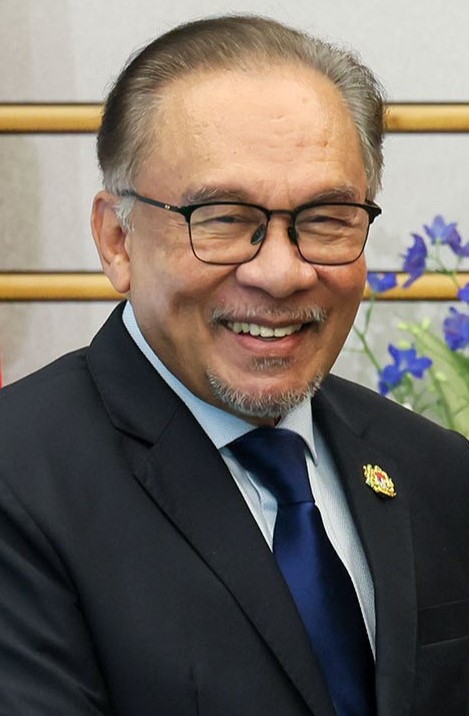
Prime Minister Datuk Seri Anwar Ibrahim has identified sweeping opportunities for Malaysia and the Republic of Tatarstan to deepen cooperation across multiple economic and cultural sectors following high-level talks in Kazan. The bilateral meeting with Tatarstan's leader Rustam Minnikhanov took place shortly after Anwar's arrival in the Russian city on Tuesday, as part of Malaysia's two-day working visit to attend the ASEAN-Russia Commemorative Summit.
The energy sector emerged as a priority discussion point, reflecting Tatarstan's position as one of Russia's major oil-producing regions. Anwar emphasised that Malaysia sees considerable potential in developing partnership with Tatarstan across the entire hydrocarbon value chain, specifically highlighting downstream operations, refining capacity and petrochemical development. This focus underscores Malaysia's strategic interest in diversifying energy partnerships beyond traditional suppliers and accessing Russian expertise in advanced petroleum processing—an area where Malaysian downstream capabilities have grown significantly in recent years.
Beyond energy, Anwar and Minnikhanov explored a broad spectrum of potential collaboration. Trade and investment frameworks formed part of the discussion, though specifics remain to be developed through subsequent technical engagement. The two leaders also identified education, tourism, technology advancement and talent development as sectors where mutual benefit could be realised. For Malaysia, such partnerships could open access to Russian technological innovation and scientific expertise, while offering Malaysian educational institutions and tourism operators regional expansion opportunities.
The halal industry featured prominently in Anwar's remarks, reflecting Malaysia's positioning as a global halal standards leader and certification body. Tatarstan, as a Muslim-majority region within Russia with significant Islamic heritage, represents a natural market for Malaysian halal expertise and certification services. This dimension of cooperation carries particular weight given Malaysia's strategic focus on elevating the halal economy and positioning itself as the global gateway for halal commerce and investment.
Anwar highlighted the Kazan Forum as a potential vehicle for strengthening business engagement between the two countries. The discussion extended to fostering innovation ecosystems, digital economy opportunities and strategic investments that could attract Malaysian capital and expertise to Tatarstan, or vice versa. The Russian region's status as a developing innovation hub positions it as a potential recipient of Malaysian technology and investment, particularly in digital sectors where Malaysia has demonstrated growing competence.
Geographically positioned at the confluence of the Volga and Kazanka rivers approximately 800 kilometres east of Moscow, Kazan serves as Tatarstan's capital and largest city, with a population near 1.3 million. The city occupies a unique position in Russian geography and culture, often described as the country's "third capital" after Moscow and Saint Petersburg. Its status as a major centre of Islamic scholarship, culture and innovation made it a fitting venue for this bilateral engagement and broader ASEAN-Russia dialogue.
Anwar specifically commended Kazan's recent recognition as the Islamic World Cultural Capital 2026 by the Islamic World Educational, Scientific and Cultural Organisation. This designation reflects the city's centuries-old Islamic heritage and its contemporary role as a bridge between Eastern European and Islamic cultures. For Malaysia, which champions itself as a moderate Islamic voice in the developing world, Kazan's positioning offers valuable partnership opportunities and alignment on shared values regarding religious tolerance and cultural coexistence.
The Prime Minister also expressed appreciation for President Vladimir Putin's establishment of the Strategic Vision Group, characterising it as an important mechanism for dialogue between Russia and the Islamic world. This framing suggests Malaysia views the group as a useful channel for broader engagement with Russia on issues of mutual concern to Islamic and Western-aligned nations, potentially opening diplomatic avenues beyond traditional economic partnerships.
Anwar travelled to Kazan alongside a ministerial delegation including Investment, Trade and Industry Minister Datuk Seri Johari Abdul Ghani and Economy Minister Akmal Nasrullah Mohd Nasir, alongside officials from the Prime Minister's Office and Foreign Ministry. This high-level representation underscores Malaysia's strategic seriousness regarding Russia engagement. The ASEAN-Russia Commemorative Summit itself represents the apex of institutional dialogue between the regional grouping and Russia, operating as the highest-level engagement platform between both parties.
The bilateral partnership framework between ASEAN and Russia stretches back three decades, having been formally established in 1991. Russia achieved full Dialogue Partner status within ASEAN in 1996, a status subsequently elevated to Strategic Partnership in 2018. This elevation reflects both sides' commitment to expanding cooperation across political and security dimensions, economic integration and socio-cultural exchange. For Malaysia, deepening ties with Russia through ASEAN mechanisms offers opportunities to influence regional engagement strategies while pursuing bilateral opportunities.
Kazan's millennium-spanning history has positioned it as one of Russia's foremost centres of Islamic culture and heritage, factors that resonate with Malaysia's own positioning as a Muslim-majority nation bridging East and West. The city's role as a crossroads of civilisations and religions mirrors Malaysia's self-conception as a moderate Islamic nation engaging constructively with the international community. These shared cultural and philosophical alignments potentially provide deeper foundations for cooperation than purely economic considerations alone.
The timing of this bilateral engagement within the broader ASEAN-Russia Summit framework allows Malaysia to pursue targeted partnerships while contributing to regional security and economic dialogues. For Malaysian businesses and investors, the discussions signal potential new avenues for market entry and technology acquisition in the Russian market, while Tatarstan gains access to Malaysian expertise in Islamic commerce, certification and regional market development across Southeast Asia.