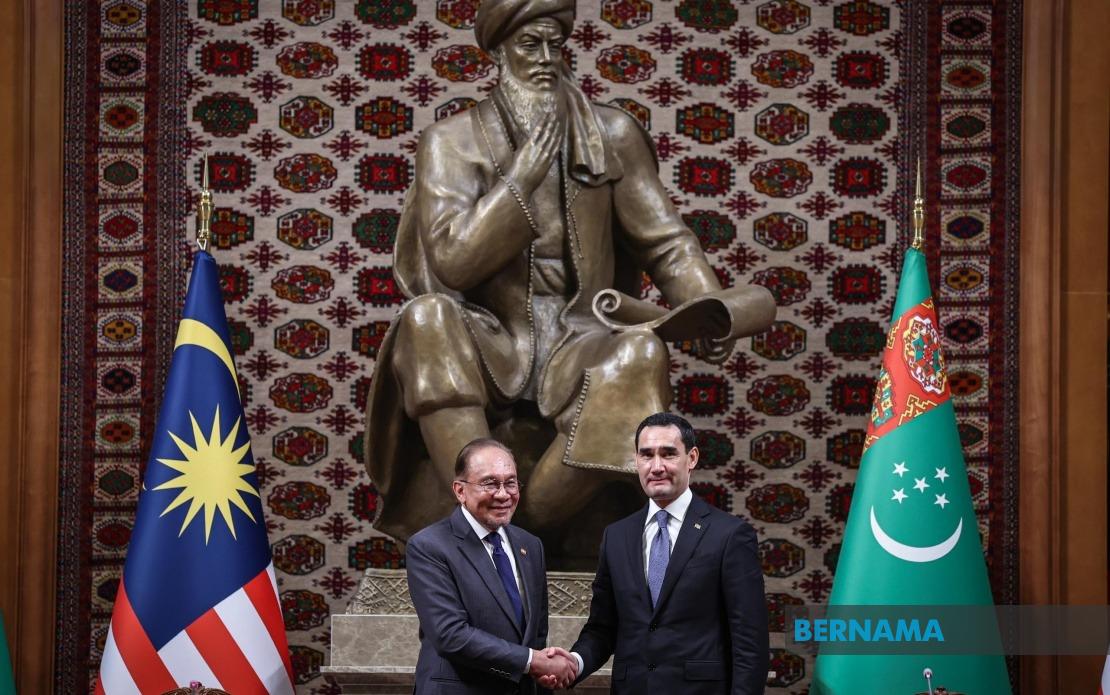
Prime Minister Datuk Seri Anwar Ibrahim and Turkmenistan President Serdar Berdimuhamedov have committed to forging a more structured and progressive bilateral relationship grounded in mutual strategic interests and tangible benefits for their respective populations. The commitment was formalised during Anwar's visit to Ashgabat on June 19, following bilateral discussions at the Presidential Palace, where both leaders endorsed an array of cooperative frameworks designed to translate political goodwill into concrete developmental outcomes.
The substance of the renewed partnership was codified through the exchange of three memoranda of understanding and one formal agreement, signalling an intentional shift towards institutionalised cooperation across multiple economic and diplomatic sectors. These instruments represent more than ceremonial gestures; they establish operational pathways for sustained engagement and accountability mechanisms that both nations have pledged to execute with discipline and transparency. The documents underscore a recognition that long-term bilateral relationships require clear structural foundations and measurable implementation timelines rather than aspirational rhetoric alone.
Among the most significant accords was an Air Services Agreement between the two governments, a development with immediate implications for Malaysian travellers, businesses, and diaspora communities seeking easier access to Central Asia. Enhanced air connectivity traditionally catalyses trade flows, tourism growth, and people-to-people exchanges. For Malaysia, improved linkages with Turkmenistan could facilitate regional positioning in Central Asia, a zone of growing geopolitical and economic significance. The agreement potentially positions Malaysian carriers to explore routes previously constrained by diplomatic distance or logistical barriers.
The cooperation agenda encompassed energy, a sector where Turkmenistan holds substantial reserves and Malaysia possesses advanced downstream and petrochemical capabilities. Discussions on energy collaboration suggest potential Malaysian involvement in refining technologies, liquefied natural gas handling, or renewable energy initiatives. Such partnerships could diversify Malaysia's energy sourcing while offering Turkmenistan access to Malaysian expertise in trading complex energy products in regional markets. Given rising global energy volatility, securing alternative suppliers and partners represents a prudent strategic move for Malaysian policymakers.
Trade and investment frameworks were prominently featured in the bilateral agenda, reflecting both nations' interest in expanding commercial ties beyond traditional commodity exchanges. Malaysia's position as a regional trade and investment hub, combined with Turkmenistan's resource wealth and geographic position bridging Asia, could create complementary economic opportunities. Malaysian companies with expertise in logistics, financial services, and technology may find openings in Central Asia, while Turkmenistani investors could tap Malaysian capital markets and manufacturing ecosystems.
The halal industry and Islamic banking figured prominently in discussions, areas where Malaysia has established itself as a global authority and certification hub. Turkmenistan, as a Muslim-majority nation, represents a market where Malaysia's halal certifications, banking standards, and Islamic finance expertise command significant value. This partnership could expand Malaysia's influence in certifying halal products for Central Asian distribution, strengthening its position as the world's leading halal standards-setter and creating new revenue streams for Malaysian certification and financial institutions.
Education, research, and scientific collaboration were woven into the partnership framework through an MoU between Malaysia's Institute of Diplomacy and Foreign Relations and Turkmenistan's Institute of International Relations. Such diplomatic training exchanges build bilateral understanding and create networks of officials who will shape future relations. Simultaneously, an agreement between the Academy of Sciences Malaysia and the Academy of Sciences of Turkmenistan signals intent to collaborate on research initiatives, potentially in fields ranging from energy technologies to agricultural innovation relevant to Central Asian conditions.
Tourism and people-to-people connectivity represent less-discussed but strategically important dimensions of the partnership. Improved air services and cultural exchange programmes could position Malaysia as a destination for Turkmenistani visitors while opening Turkmenistan's tourist attractions to Malaysian travellers. This human dimension of diplomacy often proves durable, creating constituencies in both countries invested in continued goodwill and exchange.
Anwar's visit, his first to Turkmenistan since assuming office as Malaysia's 10th Prime Minister in November 2022, occurred at Berdimuhamedov's invitation and carried a delegation including the Minister of Investment, Trade and Industry Datuk Seri Johari Abdul Ghani and Minister of Economy Akmal Nasrullah Mohd Nasir. The ministerial composition telegraphed Malaysia's prioritisation of economic dimensions within the diplomatic engagement, signalling that this relationship transcends ceremonial courtesy to encompass serious commercial intent.
The partnership reflects broader Malaysian foreign policy under Anwar's leadership, which emphasises diversified engagement with nations across multiple regions and developmental stages. Turkmenistan, situated in Central Asia and possessing energy resources and geographic significance, aligns with Malaysia's strategy to expand strategic options beyond traditional Southeast Asian and Middle Eastern partners. Deepening ties with Central Asia could enhance Malaysia's influence within regional forums while creating alternative economic corridors.
Both leaders reiterated commitments to implementing agreed areas of cooperation transparently and effectively, acknowledging that successful bilateral partnerships depend not merely on signing documents but on disciplined execution. This emphasis on implementation reflects lessons learned from previous international agreements that languished due to institutional inertia or competing priorities. The joint statement and multiple MoUs establish accountability touchpoints that both governments can reference when assessing partnership progress.
For Malaysia specifically, this partnership diversifies its diplomatic portfolio and potentially creates economic opportunities in energy, finance, and trade across Central Asia. The timing also suggests positioning ahead of anticipated shifts in global energy markets and geopolitical configurations affecting the region. By establishing structured partnerships now, Malaysia positions itself as a reliable regional player when Central Asian nations reassess their international relationships and economic partnerships in coming years.

