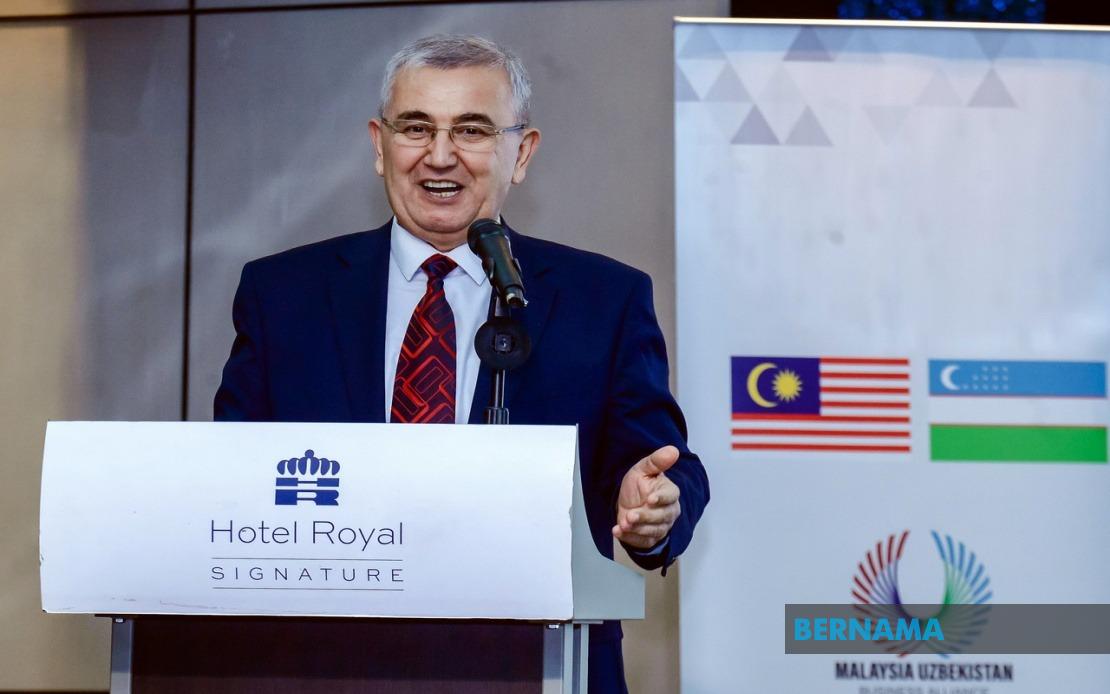
Malaysia and Uzbekistan are poised to forge a substantially deeper agricultural alliance that harnesses technological innovation and complementary expertise to address regional food security challenges. The partnership, highlighted by recent high-level diplomatic exchanges, reflects both nations' recognition that agriculture remains strategically vital in an era of global supply chain uncertainties and population pressures. Uzbekistan Ambassador to Malaysia Dr Karomidin Gadoyev underscored this commitment, noting that agricultural cooperation has featured consistently in discussions between national leaders, including Malaysian Prime Minister Datuk Seri Anwar Ibrahim's visit to Uzbekistan in May 2024 and President Shavkat Mirziyoyev's visit to Malaysia in February 2023.
The framework for expanded cooperation has been substantially advanced by Agriculture and Food Security Minister Datuk Seri Mohamad Sabu's official visit to Uzbekistan, which effectively inaugurated a fresh chapter in bilateral agricultural engagement. This diplomatic initiative moves beyond rhetorical commitment to concrete operational partnerships that address the distinct agricultural advantages each nation possesses. Malaysia brings considerable technical prowess in paddy cultivation, aquaculture, fisheries management, and smart farming methodologies, alongside robust agricultural research infrastructure. Uzbekistan, conversely, contributes specialised knowledge in energy-efficient irrigation systems, horticulture development, and large-scale agri-food production and processing capabilities that have evolved from its Central Asian agricultural heritage.
A critical dimension of this partnership centres on deploying advanced digital technologies and artificial intelligence to enhance agricultural productivity in response to mounting global food supply concerns. Both countries recognise that traditional farming methodologies, while foundational, cannot adequately address the productivity demands of expanding populations and increasingly volatile climate patterns. Gadoyev emphasised that integrating smart and digital agricultural technologies will generate substantial measurable outcomes, with Uzbekistan explicitly seeking to absorb Malaysian experience and expertise to modernise its farming sector. This technological transfer mechanism represents a pragmatic avenue through which developing nations can leapfrog outdated practices and adopt contemporary solutions without undertaking prohibitively expensive independent research cycles.
Practical collaborations are already materialising on the ground. Malaysia's Agricultural Research and Development Institute, commonly known as MARDI, has engaged in exploratory discussions with Uzbek counterparts regarding agricultural innovations that could enhance productivity across both nations' farming systems. Simultaneously, Malaysian agricultural technology firm Miracule has established Uzbekistan's first agricultural drone showroom, signalling expanding commercial interest in mechanising farming operations. The strategic trajectory involves substantial scaling: Gadoyev outlined plans to progressively integrate drone technology into Uzbek agricultural fields, with eventual domestic assembly of advanced agricultural drones representing a longer-term goal that would generate local manufacturing employment and reduce technology acquisition costs.
Aquaculture emerges as a particularly promising cooperation domain given Uzbekistan's unique geographical circumstances and demographic pressures. Despite being double-landlocked and geographically remote from major fishing grounds, Uzbekistan's nearly 40 million population generates substantial seafood demand that domestically produced aquaculture can progressively satisfy. Malaysia's proven expertise in biofloc aquaculture technology offers transformative potential for Uzbek producers, as this methodology reduces feed expenses by approximately 30 percent while simultaneously enhancing productivity and lowering overall production costs. Malaysian commercial enterprises have commenced preliminary investments in shrimp farming and fisheries projects within Uzbekistan, suggesting investor confidence in the sector's viability and profit potential.
Bilateral agri-food commerce has achieved measurable momentum, with trade flows reaching more than RM338 million in 2025, predominantly concentrated in Malaysian palm oil and palm oil derivatives exported to Uzbekistan. However, Gadoyev characterised this volume as substantially below potential, forecasting possibilities to double or even triple bilateral agricultural trade within a five to ten year horizon. Such expansion would benefit both economies substantially: Malaysia could establish Uzbekistan as a regional processing hub for crude palm oil destined for Central Asian consumer markets, effectively penetrating a geographically expansive commercial region with minimal existing competition. Conversely, Uzbek enterprises would gain opportunities to distribute premium fresh and dried fruits and processed food commodities into South-East Asian markets, leveraging Malaysia's well-established commercial networks and distribution infrastructure.
The partnership architecture reflects broader strategic alignment within the international community regarding agricultural security. As global geopolitical tensions and climate uncertainties increasingly disrupt conventional food supply networks, bilateral and regional agreements that enhance production capacity and diversify sourcing become progressively valuable. Malaysia's established position as a technology hub and food processing exporter, combined with Uzbekistan's vast agricultural landmass and production capabilities, creates a fundamentally complementary relationship. The complementarity extends beyond commodities to encompass expertise transfer, technological adaptation, and capacity building, enabling both nations to strengthen resilience against external shocks affecting food availability.
Malaysia's extension of a formal invitation for Uzbekistan to participate in the Malaysia Agriculture, Horticulture and Agrotourism Exhibition in 2026 represents a shrewd strategic initiative to broaden awareness and commercial connections beyond governmental channels. MAHA 2026 will provide Uzbekistan with an extensively attended platform to introduce its agricultural sector, premium fruit products, and processed foods to Malaysian commercial interests and consumer audiences. Such exhibitions function as crucial marketplace nexuses where preliminary business relationships materialise, commercial negotiations commence, and long-term partnerships originate. Gadoyev characterised MAHA as a fundamentally important venue for implementing the planned agricultural and food security cooperation initiatives under development.
The trajectory of Malaysia-Uzbekistan agricultural cooperation suggests an emerging mutually reinforcing partnership wherein Malaysian technological sophistication complements Uzbek agricultural resources and production scale. This asymmetrical complementarity, where each partner supplies what the other lacks, creates inherent incentives for sustained cooperation and mutual investment. For Malaysian stakeholders, Uzbekistan represents an expanding market for agricultural machinery, technology solutions, and expertise, alongside investment prospects in processing and value-added food production. For Uzbek enterprises, Malaysia offers technological pathways to modernise operations, access to established export networks, and collaborative frameworks with institutions possessing decades of agricultural development experience.
The partnership also carries implications extending beyond bilateral commerce to encompass broader Central Asian economic development patterns. Successful Malaysia-Uzbekistan collaboration in agriculture could establish demonstration models that encourage other South-East Asian nations to develop comparable partnerships with Central Asian countries, gradually knitting together two historically separate economic regions. Such integration would enhance food security resilience across both regions by diversifying supply sources and production methodologies, while simultaneously generating employment and commercial opportunities across agricultural value chains from production through processing and distribution. The initiative thus transcends conventional trade arrangements to represent a structural reorientation of regional economic relationships increasingly focused on complementary development rather than competitive positioning.
Looking forward, the consolidation of Malaysia-Uzbekistan agricultural cooperation will require consistent governmental support, commercial investment, and institutional coordination. The foundational diplomatic framework is established, and preliminary commercial activities validate commercial viability. The subsequent phase necessitates translating these encouraging beginnings into scaled operations generating substantial trade volumes and productive capacity. Success will depend on addressing practical implementation challenges including financial mechanisms facilitating cross-border investment, regulatory harmonisation enabling technology transfer, and workforce development ensuring technical capacity on both sides. Should these operational requirements receive adequate attention, the Malaysia-Uzbekistan agricultural partnership could establish a meaningful paradigm for South-East Asian-Central Asian cooperation that addresses shared food security imperatives while generating mutual economic prosperity.

