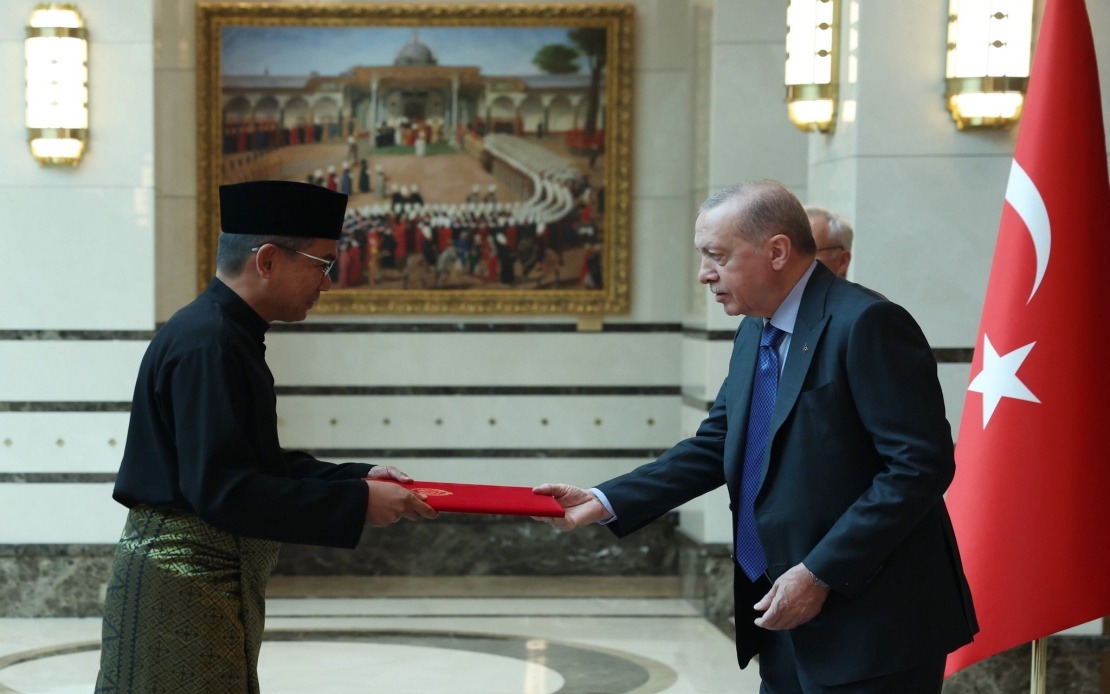
Malaysia has formally backed Türkiye's ambitions to secure Dialogue Partner status within ASEAN, signalling deepening diplomatic alignment between Kuala Lumpur and Ankara. The endorsement was delivered during a high-profile diplomatic ceremony when Malaysian Ambassador to Türkiye, Adlan Mohd Shaffieq, presented his credentials to Turkish President Recep Tayyip Erdoğan at the Presidential Complex on June 17.
The ambassador's statement underscores Malaysia's perception of Türkiye as an increasingly consequential player in regional affairs. Rather than treating the nation as a distant partner, Malaysian officials emphasise Ankara's multifaceted engagement with Southeast Asia spanning economic transactions, geopolitical positioning, and cultural exchange. This framing reflects Malaysia's strategic calculation that closer ties with Türkiye serve broader Malaysian interests in building a more diverse and interconnected regional architecture.
Malaysia and Türkiye maintain a relationship anchored in several substantive areas of cooperation. Defence collaboration represents one pillar, with both nations sharing security concerns and modernisation priorities. The halal industry constitutes another significant dimension, given Türkiye's status as a major halal products manufacturer and exporter that increasingly caters to Muslim-majority markets across Southeast Asia. Educational exchanges further cement people-to-people connections, facilitating cultural understanding and professional networks that extend beyond government-level dealings.
The timing of this diplomatic gesture carries weight within ASEAN's broader engagement strategy. As the bloc seeks to maintain strategic autonomy while managing great power competition, partnerships with middle powers like Türkiye offer additional diplomatic space and economic diversification. For Malaysia particularly, support for Türkiye's aspirations reflects a policy preference for expanding dialogue with nations that share Islamic heritage and developmental trajectories, without necessarily aligning with any single power bloc.
The personal rapport between Turkish President Erdoğan and Malaysian Prime Minister Datuk Seri Anwar Ibrahim appears central to this warming of ties. Ambassador Adlan specifically referenced their strong personal relationship as a foundation for deepening collaboration, suggesting that high-level political chemistry translates into concrete institutional cooperation. The ambassador conveyed greetings from His Majesty Sultan Ibrahim, King of Malaysia, underlining the issue's importance across Malaysia's political hierarchy.
Trade dynamics provide material substance to the diplomatic overture. Erdoğan expressed confidence during his meeting with the ambassador that bilateral commerce would expand further, explicitly referencing a USD 10 billion target. This figure signals ambitious intentions for scaling up economic engagement, though reaching such a threshold would require significant growth from current levels. For Malaysian businesses, enhanced access to Turkish markets and investment opportunities could open new avenues, particularly in sectors where Malaysia possesses competitive advantages.
Dialogue Partner status within ASEAN carries both symbolic and practical significance. While such designation does not grant membership, it provides a formal mechanism for ongoing consultation, participation in selected regional forums, and structured engagement with collective ASEAN positions. For Türkiye, achieving this status would elevate its diplomatic standing in Asia and provide institutional access to one of the world's most dynamic and strategically important regions. For ASEAN members like Malaysia, sponsoring such partnerships demonstrates the bloc's openness to cross-regional cooperation and its ability to shape the terms of engagement with external powers.
Malaysia's support reflects its particular diplomatic tradition of building bridges between the Islamic world and Southeast Asia. Throughout its modern history, Malaysia has cultivated relationships with influential Muslim-majority nations while simultaneously maintaining engagement with major powers and regional neighbours. Supporting Türkiye's ASEAN aspirations aligns with this established pattern of seeking balanced and inclusive regional frameworks that accommodate diverse perspectives and interests.
The emphasis on longstanding friendship between the two countries suggests deep historical roots, though contemporary bilateral ties have particularly intensified in recent years. This progression from historical acquaintance to strategic partnership mirrors similar trajectories observed with other middle powers seeking enhanced Asian engagement. As Türkiye reorients aspects of its foreign policy toward Asia, finding supportive partners like Malaysia creates momentum for broader regional acceptance and cooperation frameworks.
From a Malaysian perspective, expanding institutional channels with Türkiye offers tangible advantages. Enhanced military cooperation could facilitate technology transfer and professional exchanges. Deeper halal industry integration creates supply chain opportunities and marketing reach. Educational partnerships develop human capital and foster future leaders familiar with both Islamic and Southeast Asian contexts. These practical benefits complement diplomatic objectives, creating sustainable foundations for partnership that transcend transient political cycles.
The broader implications for Southeast Asia suggest growing confidence in engaging non-regional powers that bring specific advantages without threatening regional stability. Türkiye's geographic distance from Southeast Asia and its focus on Mediterranean and Middle Eastern affairs reduce zero-sum competitive anxieties that might accompany closer ties with neighbouring great powers. This positioning makes Türkiye an attractive partner for ASEAN members seeking to diversify their external relationships and avoid excessive dependence on any single power.
Looking forward, Malaysia's backing could catalyse broader ASEAN consideration of Türkiye's application. While decisions regarding Dialogue Partner status require consensus or broad agreement among member states, Malaysian support provides diplomatic capital that other nations may follow. The combination of economic incentives, diplomatic opportunity, and shared values creates a compelling case that extends beyond bilateral Malaysian-Turkish considerations to encompass regional strategic interests in maintaining an open, inclusive, and multipolar Asian order.