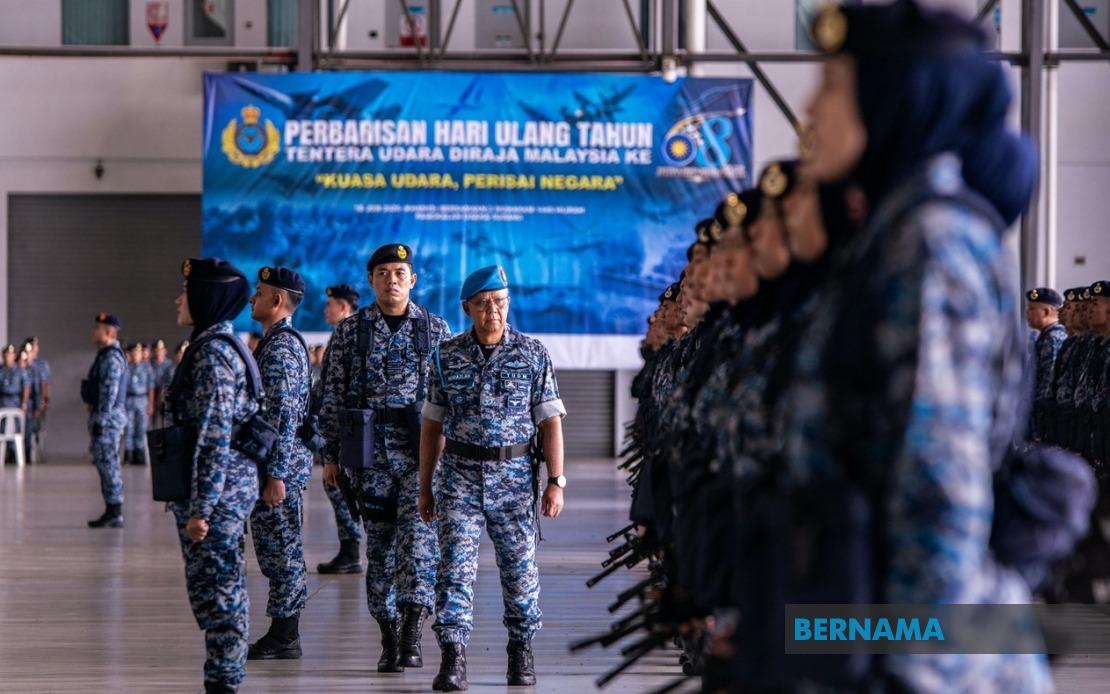
Malaysia's military is moving to significantly strengthen its ability to detect and respond to airborne threats by establishing a comprehensive radar network across the nation's most strategically sensitive zones. The Royal Malaysian Air Force announced the deployment of multiple air defence and surveillance systems during its 68th anniversary celebration, marking a substantial investment in the country's long-term defence architecture amid shifting regional security dynamics.
General Tan Sri Muhamad Norazlan Aris, who leads the RMAF, detailed an ambitious plan to position cutting-edge radar installations at four critical locations chosen for their geographic and operational importance. The deployment encompasses air defence radars in Bintulu, Sarawak, Bukit Puteri in Terengganu, and Bukit Lunchu in Johor, with an additional air surveillance system anchored on Pulau Layang-Layang deep in the South China Sea. This geographical spread reflects a deliberate strategy to monitor Malaysia's sprawling airspace and territorial waters across both peninsular and East Malaysian regions.
The initiative directly addresses longstanding gaps in Malaysia's surveillance coverage, particularly across vast stretches of airspace where detection capabilities have historically been limited. Military analysts have long flagged the vulnerability created by these gaps, which can allow unidentified aircraft to operate undetected and pose potential security risks. By distributing sensor networks across multiple nodes rather than concentrating them in a few locations, the RMAF gains resilience against system failure and broader coverage of the nation's airspace, improving the speed and accuracy of threat identification and early warning.
These radar projects represent phase one of an expansive long-term modernization roadmap called the RMAF Capability Development Plan 2055, or CAP55. This framework signals Malaysia's commitment to systematically upgrading its air force over three decades to meet anticipated future security challenges. Rather than pursuing episodic upgrades, CAP55 positions the RMAF on a deliberate path of technological advancement aligned with evolving threats and the pace of global military innovation. The radar installations serve as an opening move in this broader transformation, establishing foundational surveillance infrastructure upon which other capabilities can be built.
The timing of this announcement reflects Malaysia's acute awareness of mounting regional instability and the demonstrated fragility of global security arrangements. General Muhamad Norazlan explicitly referenced the ongoing Middle Eastern conflicts as a cautionary lesson, emphasizing how seemingly distant geopolitical convulsions can cascade through interconnected supply chains and commerce networks to directly affect Malaysian economic interests. The disruptions that have plagued shipping through the Strait of Hormuz illustrate how regional conflict can spike global energy prices, destabilize international markets, and threaten the flow of goods upon which Malaysia's manufacturing and trading sectors depend.
Malaysia's geographic position creates particular vulnerability to these ripple effects. The nation's economy rests heavily on its access to reliable sea lanes, especially the Strait of Malacca and waters throughout the South China Sea. These waterways carry a substantial portion of global maritime trade and are the arteries through which energy supplies, raw materials, and manufactured goods flow to and from Southeast Asia. Any disruption to these routes—whether from geopolitical tensions, piracy, or military conflict—poses direct threats to Malaysian prosperity. Maintaining the security of these critical sea lanes has become inseparable from national defence planning.
The South China Sea holdings present particular strategic complexity for Malaysian defence planners. Pulau Layang-Layang, where the new air surveillance radar will be positioned, sits in disputed waters claimed by multiple nations including China, Vietnam, the Philippines, and Taiwan. By establishing active surveillance infrastructure on the island, Malaysia reinforces its claim to the territory while simultaneously extending its detection capabilities across one of the world's most contested waterways. This dual objective—territorial assertion combined with genuine military modernization—characterizes many regional defence initiatives in Southeast Asia.
The geopolitical context makes Malaysia's radar deployment emblematic of broader regional security trends. Throughout Southeast Asia, nations are quietly upgrading military capabilities and surveillance networks in response to great power competition and the increasing militarization of disputed territories. Malaysia's measured approach differs from the more confrontational postures adopted by some neighbours, yet it reflects the same underlying reality: smaller Southeast Asian states must continuously adapt their defence posture to manage risks from more powerful actors and maintain effective control over their own territory.
The announcement occurred during formal ceremonies honouring 17 military personnel with service medals and commendations, underscoring how modernization efforts intertwine with professional military culture and institutional recognition. The parade itself showcased RMAF's diverse operational units, including its elite special forces, ground defence contingents, and women's flight, reflecting the comprehensive nature of modern air force operations beyond purely aerial combat roles. This institutional context matters because military modernization succeeds only when coupled with professional development, adequate personnel, and organizational stability.
Forward-looking security analysts suggest Malaysia's radar network, while necessary, represents only one element of a more comprehensive air defence architecture ultimately required to protect national airspace effectively. Radar detection systems must eventually integrate with air-to-air missile systems, fighter aircraft, and command-and-control infrastructure to constitute a genuinely layered defence. The RMAF's modernization pathway appears to recognize this reality, with the radar phase one establishing the sensory foundation upon which future acquisitions of combat aircraft and missile systems can be rationally planned and coordinated.
The investment carries significant budgetary implications even as it bolsters deterrence. Military modernization competes with development spending and social programmes for limited national resources, a tension that Malaysian policymakers must navigate carefully. Yet the strategic necessity remains compelling: a nation unable to monitor its own airspace or defend its maritime boundaries faces gradual erosion of sovereignty and increasing vulnerability to coercion. Malaysia's deliberate progression through CAP55 seeks to balance these imperatives by spreading costs across decades while maintaining incremental improvements to defensive capabilities.
For regional observers, Malaysia's approach offers a model of measured modernization suited to a medium-power nation with genuine security challenges but constrained resources. Rather than pursuing dramatic capability jumps or grandiose military purchases, the RMAF's phased approach achieves incremental strengthening of core capabilities while maintaining technological compatibility and operational integration. As regional tensions persist and great power competition continues reshaping the strategic landscape, similar patient, sustained modernization efforts will likely characterize other Southeast Asian defence planning in coming years.