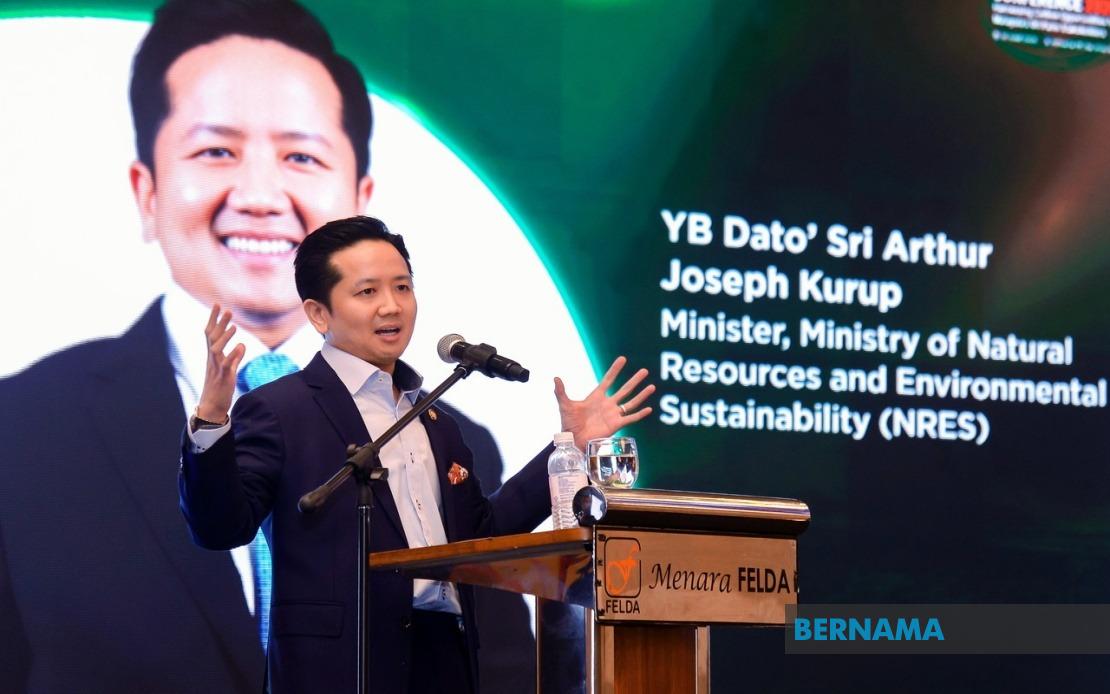
Malaysia's government remains committed to introducing a carbon tax despite ongoing refinements to its implementation strategy, Natural Resources and Environmental Sustainability Minister Datuk Seri Arthur Joseph Kurup said on June 16 in Kuala Lumpur. Speaking at the Malaysia Palm Carbon Conference (MPC) 2026, Kurup acknowledged that the policy continues to evolve as officials balance competing economic and environmental priorities, with the precise launch date remaining under deliberation.
The carbon tax initiative reflects the government's broader attempt to recalibrate its climate policy framework to account for varying degrees of industrial preparedness across Malaysia's economy. Rather than imposing uniform carbon pricing across all sectors simultaneously, the approach emphasises flexibility in timing and sectoral application. Kurup stressed that the initiative would proceed as planned, though the government recognises the need to ensure that implementation does not undermine competitiveness or impose undue hardship on key industries during an economically sensitive period.
Crucially, Kurup framed the carbon tax as a positive incentive mechanism rather than a punitive fiscal measure designed to penalise high-emitting activities. This distinction carries significant weight in Malaysia's industrial policy context, where manufacturing and resource extraction remain economically vital. By positioning the carbon tax as a tool to encourage voluntary adoption of cleaner technologies and practices, the government hopes to secure greater industry cooperation and smoother implementation compared to more adversarial regulatory approaches.
The government is simultaneously examining how carbon tax revenues will be deployed, with several prospective uses under consideration. Proposals include channelling funds toward climate adaptation projects, forest conservation programmes, and sustainable land management initiatives. This approach aligns with Malaysia's commitments under international climate agreements and domestic sustainability goals, ensuring that collected revenues directly support environmental restoration and resilience-building activities rather than entering the general fiscal pool.
Rurup contended that this revenue allocation strategy is essential for strengthening Malaysia's capacity to adapt to climate impacts while advancing the national sustainability agenda. By creating a direct link between carbon taxation and environmental investment, policymakers aim to enhance public and business acceptance of the measure. The strategy also demonstrates that carbon pricing need not function solely as a revenue-raising instrument but can serve as a dedicated funding mechanism for climate action.
The timing of the carbon tax rollout remains subject to ongoing assessment, with Kurup indicating that the government will announce implementation details once planning is finalised. This cautious approach reflects lessons learned from a previous announcement in April, when the government signalled that the carbon tax might be deferred beyond its original 2024 timeline. At that time, officials cited concerns about global energy supply disruptions and geopolitical instability as factors potentially justifying a postponement.
Industries initially targeted for carbon taxation include steel, cement, and construction—sectors known for substantial carbon footprints and technological capacity to implement emissions-reducing measures. However, the government recognised that imposing such measures during periods of economic uncertainty could amplify cost pressures on these critical sectors and potentially inflate consumer prices for essential goods and services. This sensitivity to macroeconomic conditions demonstrates awareness that carbon policy cannot operate in isolation from broader economic management.
The Malaysia Palm Carbon Conference provided a particularly apt venue for discussing carbon tax implementation, given the palm oil industry's significance to Malaysia's economy and its prominent role in global climate discussions. Palm cultivation affects Malaysia's land-use profile substantially, making agricultural and plantation sectors integral to any comprehensive carbon management strategy. Industry participation in such forums signals growing recognition among Malaysian businesses that climate policy is no longer merely an environmental concern but a core commercial consideration.
Parallel to carbon tax development, the government is advancing complementary climate governance frameworks. The National Climate Change Bill, expected to be tabled in the Dewan Rakyat during the current parliamentary year, will provide legislative foundations for enhanced climate action coordination. Kurup emphasised that this bill represents an important institutional step toward strengthening Malaysia's governance architecture for addressing global climate challenges, essentially creating a legal framework within which the carbon tax and other climate measures can operate more effectively.
For Malaysian businesses, the refinement period offers opportunity to assess exposure to potential carbon costs and plan technological transitions. Multinational corporations operating in Malaysia may increasingly view carbon compliance as integral to regional supply chain management, particularly as trading partners in Europe and other developed markets enforce their own carbon border mechanisms. The government's gradual approach provides businesses a window to adapt operational practices and investment priorities accordingly.
The government's emphasis on consultation and flexibility also reflects Malaysia's position within regional climate diplomacy. As a developing nation balancing growth aspirations with environmental responsibilities, Malaysia must navigate international pressure for emissions reductions while protecting domestic economic interests. The deliberate refinement of carbon tax policy demonstrates this balancing act—acknowledging global climate urgency while respecting local economic constraints and industrial capabilities.