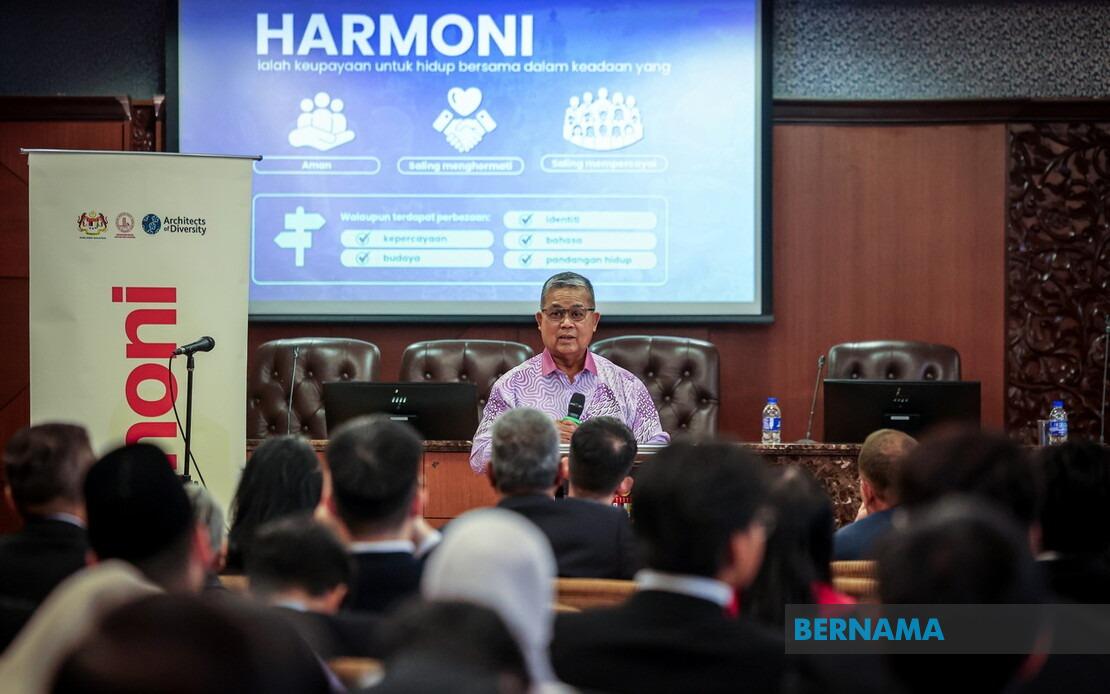
The Department of National Unity and National Integration (JPNIN) is embarking on a significant research initiative to construct a Community Tension Index, a measurement framework designed to assess the state of social cohesion across Malaysia and systematically track emerging concerns related to racial and religious sensitivities. Minister of National Unity Datuk Aaron Ago Dagang announced the initiative at the 2026 Harmony Symposium, underscoring its importance as a strategic tool for government policymakers seeking to identify vulnerabilities within the nation's ethnically and religiously diverse fabric before tensions escalate into broader conflict.
The index represents a data-driven approach to national unity, moving away from anecdotal assessments toward quantifiable indicators that can guide intervention strategies. By developing standardised metrics for measuring community tension, JPNIN aims to create an early warning system capable of detecting shifts in social dynamics before they manifest into serious disruptions to peace and harmony. This approach acknowledges that Malaysia's social cohesion cannot be taken for granted, particularly given the inherent complexities of managing a multiethnic and multireligious society where historical sensitivities remain relevant.
According to Datuk Aaron, the empirical findings from this index will serve as a critical reference point for cabinet-level decision-making when formulating preventive measures and addressing contentious issues before they spiral. Rather than responding reactively to crises, the government intends to build institutional capacity for early identification and measured response. This strategic pivot toward preventive governance reflects lessons learned from previous instances where social tensions escalated rapidly through inadequate monitoring and delayed intervention.
The urgency of this initiative cannot be separated from the alarming trajectory of divisive content in digital spaces. Between January 1, 2025 and January 31, 2026, the Malaysian Communications and Multimedia Commission (MCMC) identified and took enforcement action against 1,493 pieces of online content that violated sensitivities surrounding religion, royalty, and race—the so-called 3R issues. This figure underscores the scale of the challenge facing regulators and policymakers in an environment where content creation and dissemination occur at unprecedented velocity and reach.
Datuk Aaron highlighted how contemporary social media platforms have fundamentally altered the landscape of public discourse in Malaysia. The algorithmic nature of major digital platforms creates what researchers term "filter bubbles" and "echo chambers"—self-reinforcing information environments where individuals encounter predominantly content aligned with their existing beliefs. Rather than exposing Malaysians to diverse viewpoints that might foster mutual understanding, these mechanisms concentrate people within ideological silos, amplifying divisive narratives and progressively narrowing the common ground necessary for constructive dialogue across communal boundaries.
This polarisation effect represents a qualitative shift in how threats to national unity manifest themselves. Unlike earlier periods when tensions operated primarily through physical spaces and interpersonal networks, contemporary threats propagate through digital ecosystems that can reach millions instantaneously and operate beyond the immediate purview of traditional law enforcement. The speed, scale, and persistence of online content make the digital sphere a fundamentally different arena for managing social cohesion, requiring novel institutional frameworks and monitoring capabilities.
Complementing the Community Tension Index initiative, JPNIN has simultaneously undertaken engagement sessions with diverse stakeholders to solicit feedback on a proposal to establish a National Harmony Commission (SKN). This proposed institutional body would function as a dedicated mechanism for early prevention, mediation, and conflict resolution, operating with both proactive and reactive mandates. The commission would work toward harmonising disputes through constructive dialogue and mediation while also maintaining investigative capacity to examine issues bearing potential consequences for national harmony.
The National Harmony Commission proposal reflects recognition that Malaysia's existing institutional architecture may contain gaps in addressing emerging challenges to social cohesion, particularly those originating in or propagating through digital channels. By creating a dedicated body with specialised focus and cross-sector coordination capacity, the government seeks to develop institutional muscle for managing the intersection of social tensions, digital platforms, and the complex sensitivities surrounding 3R issues that remain potent flashpoints in Malaysian society.
For Malaysian readers and policymakers, these initiatives signal a determination to move beyond reactive crisis management toward systematic monitoring and early intervention in matters affecting national unity. The Community Tension Index and proposed National Harmony Commission represent investments in institutional learning and adaptive governance, acknowledging that managing diversity in the digital age requires tools and approaches fundamentally different from those developed in earlier periods.
The stakes involved in strengthening social cohesion extend beyond Malaysia's borders. As a multicultural Southeast Asian nation with significant digital connectivity, Malaysia's experience in developing mechanisms for monitoring and managing online threats to social unity carries implications for regional stability. The approaches being developed through JPNIN's work may offer instructive lessons for other diverse societies grappling with similar challenges of managing polarisation in digital spaces while maintaining respect for legitimate expression and communal sensitivities.
Stakeholder consultation remains critical to the success of both initiatives. The effectiveness of any Community Tension Index depends fundamentally on buy-in from community leaders, religious figures, civil society organisations, and representatives of Malaysia's various ethnic and religious communities. Similarly, a National Harmony Commission lacking legitimacy among stakeholders would struggle to fulfill its mediation and prevention mandates. Ongoing dialogue with diverse constituencies will determine whether these mechanisms ultimately strengthen Malaysia's capacity to navigate tensions or are perceived as instruments of state control.

