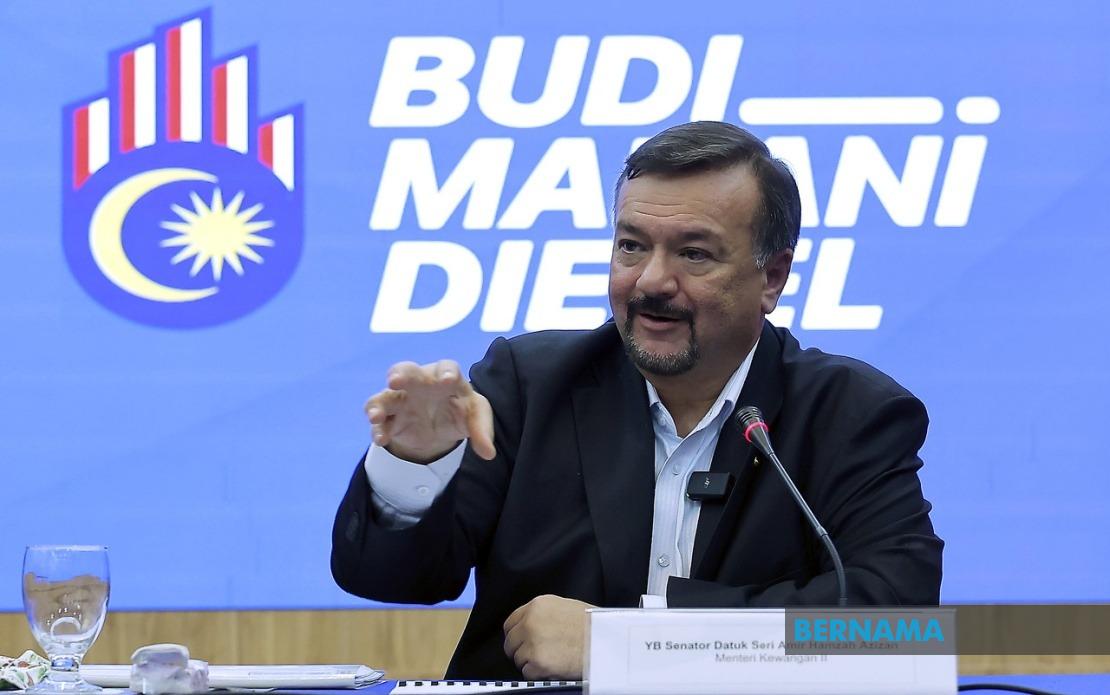
Malaysia's MADANI Government has unveiled a series of refinements to its targeted BUDI Diesel subsidy programme, signalling a commitment to smooth implementation as the scheme enters its early access phase beginning June 27 in Peninsular Malaysia. The Ministry of Finance announced the adjustments following extensive consultations with the public, small business operators, and relevant stakeholders since the original programme framework was unveiled on June 22.
The three principal enhancements represent a pragmatic response to feedback gathered during the pre-launch engagement period. Most notably, the government has introduced a three-month temporary incentive scheme waiving vehicle ownership transfer fees for diesel-powered vehicles starting July 1. This measure directly addresses concerns raised by the transport and commercial sectors, which have expressed apprehension about additional compliance costs during the transition period. By eliminating these administrative charges, authorities aim to reduce friction in the vehicle market and encourage legitimate subsidy programme participation among intended beneficiaries.
A second significant modification permits subsidy eligibility to shift to the actual operational users of diesel vehicles, rather than remaining locked to registered owners. This reform proves particularly relevant for Malaysia's substantial fleet of commercially-operated vehicles, where ownership structures often diverge from day-to-day operational control. Small-scale logistics operators, agricultural enterprises, and construction firms frequently operate vehicles registered under business entities or family members' names. By allowing subsidy eligibility to follow the vehicle's practical user rather than its legal owner, the government addresses a structural challenge that could otherwise have excluded legitimate claimants from benefit access.
The third enhancement expands BUDI Diesel coverage to encompass company-owned private pick-up trucks and jeeps, broadening the vehicle categories eligible for the subsidy beyond the original framework. This extension recognises the central role that such vehicles play across Malaysia's rural and semi-urban economy, serving essential functions in small-scale agriculture, construction, maintenance services, and regional commerce. The inclusion acknowledges that many Malaysian enterprises depend on these vehicle types for operational viability, particularly in areas where public transport remains limited or unreliable.
Finance Minister II Datuk Seri Amir Hamzah Azizan framed the adjustments as evidence of government responsiveness to citizen concerns while reaffirming the core policy objective. The BUDI Diesel programme fundamentally aims to ensure that fuel subsidies reach qualifying Malaysians whilst simultaneously closing mechanisms through which subsidy value has historically leaked away. Government estimates suggest that subsidy leakage has cost the nation billions of ringgit annually through smuggling, black-market diversion, and misuse. The targeted approach therefore represents both a fiscal discipline measure and a social policy instrument designed to protect vulnerable populations who genuinely depend on affordable fuel access.
The transition to a targeted diesel subsidy model marks a significant departure from Malaysia's historical approach of broad-based fuel price controls. Previous universal subsidy regimes created substantial fiscal burdens and generated perverse incentives, including fuel smuggling to neighbouring countries and overutilisation by commercial operators with limited price sensitivity. The BUDI Diesel framework, by contrast, employs means-testing and vehicle-type restrictions to concentrate subsidy benefits on lower-income Malaysian households and small-scale commercial operators who lack viable alternatives to diesel fuel consumption.
For the broader Malaysian business community, the programme adjustments carry mixed implications. Small traders and transporters benefit from the ownership transfer fee exemptions and expanded vehicle coverage, reducing transition costs and broadening eligibility. However, the programme's fundamental targeting mechanism still imposes registration requirements and eligibility verification processes that demand administrative compliance. Stakeholders must familiarise themselves with application procedures, documentation requirements, and verification timelines to access subsidy benefits. Implementing agencies face corresponding challenges in managing fraud risks whilst maintaining programme accessibility.
From a macroeconomic perspective, the BUDI Diesel initiative reflects Malaysia's ongoing efforts to rationalise energy subsidies whilst maintaining social safety nets during periods of global fuel price volatility. With international petroleum markets remaining subject to geopolitical shocks and demand fluctuations, universal fuel price controls create unpredictable fiscal exposures that complicate budgetary planning. Targeted subsidy approaches offer greater fiscal predictability by concentrating support on defined beneficiary populations, though they require robust administrative infrastructure and public cooperation.
The early access phase launching in Peninsular Malaysia represents a pilot period during which authorities will gather operational data, identify implementation challenges, and refine procedures before potential nationwide or full-scale rollout. This phased approach allows policymakers to test subsidy transfer mechanisms, verify eligibility validation systems, and assess administrative capacity across the targeted beneficiary population. Lessons learned during this period will prove essential for determining whether the programme can achieve its dual objectives of cost control and equitable benefit distribution.
Malaysian consumers and businesses should note that the programme enhancements do not eliminate eligibility restrictions entirely, but rather modify their application to reduce implementation friction. Participation still requires meeting specified income thresholds or vehicle-type criteria, and subsidised diesel access remains dependent on registration compliance. The government's evident willingness to adjust programme parameters based on stakeholder feedback suggests flexibility on implementation details, though the core policy commitment to targeted rather than universal subsidisation appears firm. As the scheme progresses from early access through broader deployment, continuing stakeholder engagement will likely shape further refinements to programme mechanics and benefit structures.

