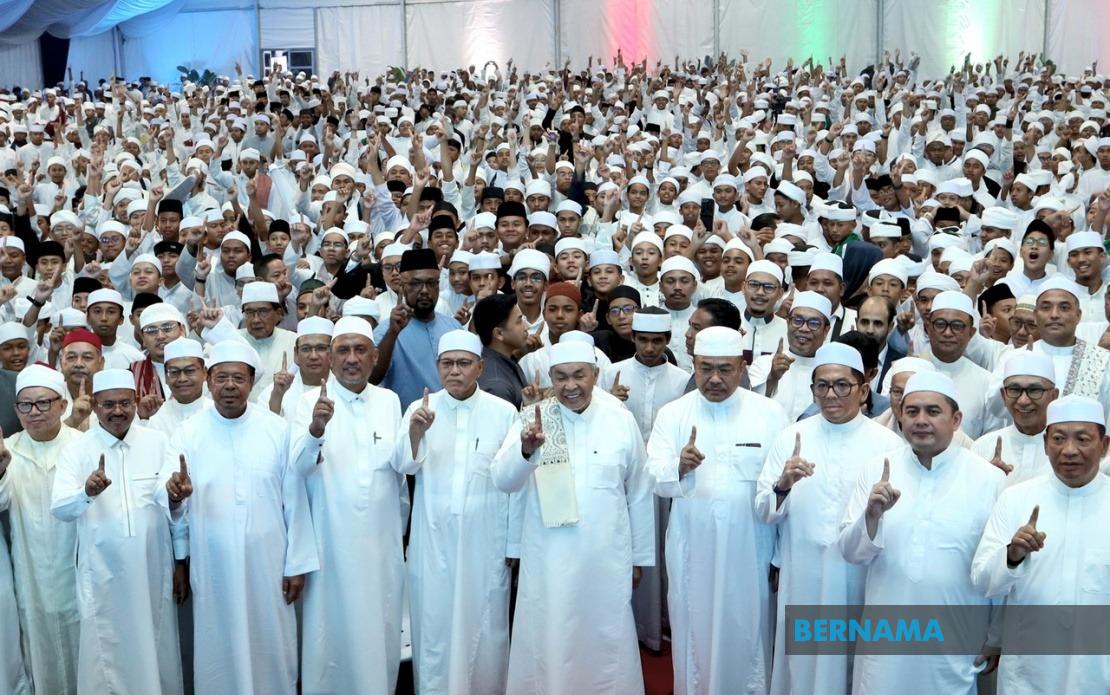
The Malaysian government has taken a significant step forward in formalising Islamic education by approving the establishment of a National Tahfiz Council, a development that promises to reshape how Quranic memorisation programmes are recognised and integrated within the national education framework. Deputy Prime Minister Datuk Seri Dr Ahmad Zahid Hamidi announced the Cabinet's decision at the Pahang State Huffaz Gathering 2026 in Kuantan, an event that drew together more than 5,000 students who have memorised the Quran from across the state. This move reflects growing government acknowledgment that tahfiz education, long operating somewhat independently from mainstream schooling structures, deserves formal institutional support and clearer educational pathways.
Ahmad Zahid, who has been appointed to lead the new council, outlined an ambitious vision for how tahfiz students will navigate their educational journeys. Currently, many graduates from tahfiz institutions face uncertainty about how their qualifications transfer to universities or professional environments. The council aims to eliminate this ambiguity by creating structured progression routes that allow students to transition from madrasah settings directly into tertiary education and eventually into skilled employment. This standardisation addresses a longstanding challenge within the Islamic education sector, where recognition of credentials has remained inconsistent across different states and institutions, potentially limiting opportunities for talented huffaz.
The establishment of this council carries particular significance for Malaysian education policy at a time when the country seeks to broaden its educational offerings beyond conventional academic tracks. By positioning tahfiz education as a legitimate alternative pathway rather than a supplementary pursuit, the government signals its commitment to accommodating diverse student aspirations and learning preferences. For families in rural and semi-urban areas, particularly in states like Pahang, this formalisation provides assurance that investing time and resources in Quranic memorisation represents a viable educational choice with real career prospects, not merely a spiritual or cultural endeavour.
Pahang has emerged as a model for comprehensive tahfiz development, demonstrating how Islamic education can be woven throughout a student's entire learning trajectory. The state has pioneered early childhood programmes such as Tadika Tahfiz Negeri Pahang, inspired by the reigning Sultan, to instil Quranic appreciation from kindergarten age. This foundation building approach cascades upward through secondary schooling and extends to international-level competitions and advanced study. Ahmad Zahid highlighted this progression as evidence that structured tahfiz pathways need not compromise academic quality or limit student potential—instead, they can complement and enhance broader educational achievement.
The council's remit extends beyond simple recognition of existing credentials. The government is simultaneously implementing the National Tahfiz Policy 2.0, which introduces several innovative components designed to modernise the sector. The Malaysian Tahfiz Certificate 2.0 creates standardised qualification frameworks, while the Graded Hafazan Certification allows differentiated recognition of memorisation proficiency. Equally important, the Huffaz Financing Scheme addresses the financial barriers many families face when supporting students through intensive Quranic memorisation programmes, which typically demand considerable time commitment and often involve residential study arrangements.
One of the most promising developments is the TVET Tahfiz initiative, which bridges Islamic education with vocational and technical training. This hybrid approach recognises that modern huffaz benefit from acquiring practical skills alongside their religious knowledge, preparing them for contemporary employment markets where employers value both spiritual grounding and technical competence. By integrating tahfiz education with technical pathways, the initiative acknowledges that students memorising the Quran need not be locked into narrowly defined career trajectories, but instead can pursue diverse professional directions.
The Malaysian Tahfiz Recognition Standard represents another crucial pillar of the reform. Currently, different tahfiz institutions operate according to varying curricula, assessment methods, and completion criteria, creating confusion about comparative standards. A unified recognition framework will enable employers, universities, and professional bodies to meaningfully evaluate tahfiz credentials, much as they do conventional academic qualifications. This transparency should significantly enhance the employment prospects of graduates and remove lingering prejudices about whether tahfiz-educated individuals possess transferable skills and knowledge applicable beyond religious contexts.
To operationalise this vision, the government is forging strategic partnerships between tahfiz institutions and mainstream higher education providers. Universities and skills development institutes now have formal mechanisms to collaborate with madrasahs and tahfiz centres, facilitating credit transfers, articulation arrangements, and collaborative curriculum development. Ahmad Zahid witnessed the signing of a memorandum of understanding between Yayasan Pahang, the Community Development Department, and MARA to strengthen exactly these types of institutional linkages and expand skills development opportunities specifically tailored to huffaz populations.
The timing of this initiative reflects broader regional trends. Across Southeast Asia, countries with significant Muslim populations are increasingly recognising that religious education deserves formal integration into national education systems rather than remaining a parallel, semi-marginalised sector. Malaysia's approach potentially provides a model that other nations might adapt, particularly regarding how to maintain religious authenticity and scholarly rigour while simultaneously ensuring graduates possess marketable qualifications and career options. For Malaysian policymakers, success in this endeavour could demonstrate effective pluralism—accommodating diverse educational philosophies within a coherent national framework.
For the tahfiz community itself, this development carries both promise and responsibility. The formalisation and standardisation of tahfiz education inevitably involves external oversight, curriculum requirements, and assessment protocols that may constrain some institutions' autonomy. However, the prospect of enhanced funding, clearer progression routes, and professional recognition likely outweighs these concerns for most stakeholders. The National Tahfiz Council must carefully balance reform imperatives with respect for established methodologies and institutional traditions that have preserved Quranic scholarship for generations.
The implications for Malaysian students are substantial. A teenager deciding whether to pursue tahfiz education can now look toward a legitimate career pathway rather than viewing the choice as primarily spiritual or cultural. University admissions offices will accept tahfiz graduates alongside conventional secondary graduates. Employers will understand and value the discipline, memory capacity, and dedication that Quranic memorisation demands. These shifts, though seemingly bureaucratic, represent a profound validation of Islamic education's place within Malaysia's educational ecosystem and economy.
Moving forward, the council's effectiveness will depend on sustained government commitment, adequate funding allocation, and genuine collaboration between religious and secular educational institutions. The vision articulated by Ahmad Zahid—enabling tahfiz students to progress confidently from memorisation to professional careers—is ambitious but achievable provided implementation receives consistent policy support and resource prioritisation. For families throughout Malaysia considering their children's educational options, and for the thousands of young huffaz already studying intensively, this institutional recognition marks a turning point toward educational equity and expanded opportunity.