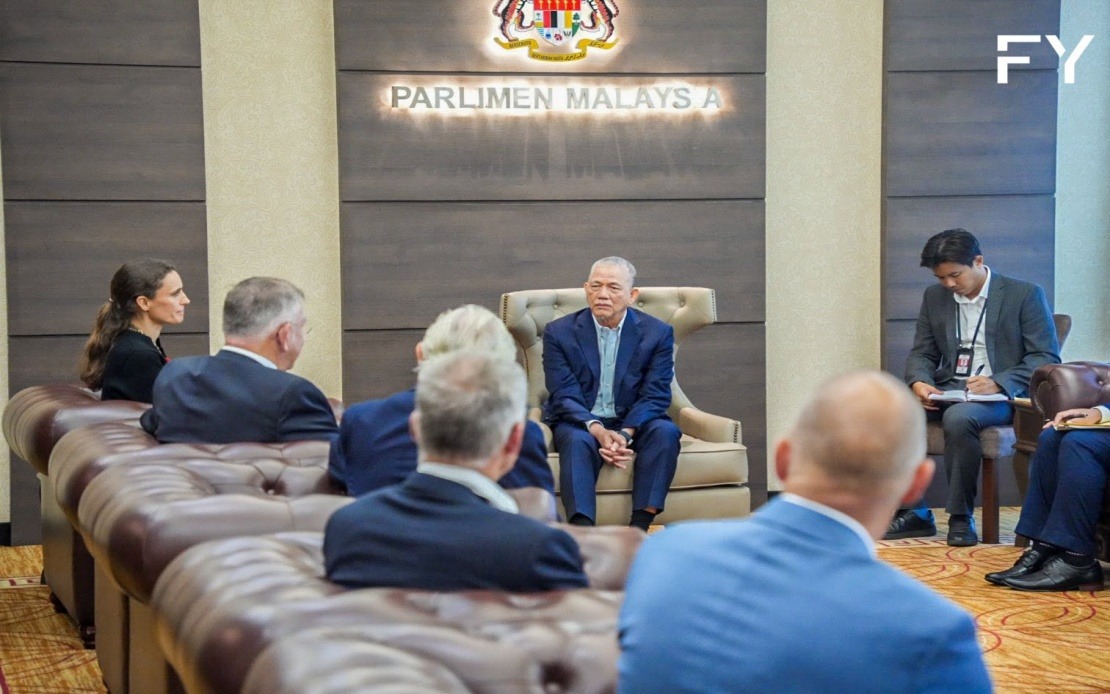
Deputy Prime Minister Datuk Seri Fadillah Yusof has signalled Malaysia's readiness to deepen economic ties with Germany by actively encouraging investment from German small and medium enterprises, particularly in sectors aligned with the nation's long-term sustainability ambitions. The invitation came during a formal courtesy call at Parliament House on June 24 involving German Ambassador to Malaysia Silke Riecken-Daerr and representatives from the German SME Business Association, underscoring the significance Malaysia places on strengthening economic partnerships with Europe's industrial powerhouse.
The focus on green technology, renewable energy, and water management reflects Malaysia's broader commitment to environmental sustainability and climate action. These sectors have become increasingly critical as the country navigates its transition towards a low-carbon economy whilst maintaining competitiveness in manufacturing and industrialisation. By specifically targeting German SMEs—traditionally known for engineering excellence and technological innovation—Malaysia positions itself as an attractive destination for firms seeking to establish regional headquarters or production bases in Southeast Asia. The timing is particularly strategic, as global investors reassess supply chains and seek locations offering both stability and alignment with environmental standards.
Germany's established economic footprint in Malaysia underscores the maturity of bilateral relations. With over 800 German companies already operating across diverse sectors, the country has become deeply integrated into Malaysia's industrial ecosystem. This existing presence provides crucial advantages for new entrants, including established supply chains, skilled personnel familiar with German business practices, and peer networks that reduce barriers to entry. The concentration particularly in mechanical engineering and manufacturing technology demonstrates Germany's historic strength in these fields and Malaysia's capacity to absorb and build upon such expertise.
The discussion extended beyond immediate investment prospects to encompass human capital development, reflecting recognition that sustainable economic growth depends fundamentally on workforce quality. Germany's renowned Technical and Vocational Education and Training system has produced generations of skilled workers whose expertise drives industrial competitiveness across Europe. Fadillah identified this as a potential area for knowledge transfer, suggesting Malaysia might benefit from adopting or adapting German TVET methodologies to develop its own talent pipeline. Such capacity building becomes increasingly essential as Malaysia competes for advanced manufacturing and technology-intensive industries against regional rivals.
The convergence of investment promotion and skills development reveals a sophisticated understanding of modern economic challenges. Malaysia recognises that simply attracting foreign capital proves insufficient if local workforce capabilities cannot support complex manufacturing processes or technology implementation. By exploring TVET cooperation with Germany, the country aims to create conditions where German SMEs find not only regulatory incentives but also access to competent personnel capable of operating advanced equipment and systems. This approach potentially yields longer-term competitive advantages than conventional incentive packages alone.
Renewable energy and water management occupy strategic importance within Malaysia's sustainability framework. As a tropical nation confronting water scarcity in certain regions and vulnerable to climate-related disruptions, Malaysia has compelling incentives to develop robust solutions. German companies operating in these sectors bring proven technologies and operational expertise refined across decades of environmental regulation and market competition. Water treatment innovation particularly resonates given competing demands from industrial, agricultural, and domestic sectors across the region. Renewable energy investments align with Malaysia's commitment to international climate agreements whilst creating domestic energy security benefits.
The bilateral relationship itself reflects broader patterns of Southeast Asian economic integration with developed economies. Malaysia's openness to German investment continues a historical pattern of welcoming foreign capital whilst attempting to secure technology transfer and skills development. However, modern partnership frameworks increasingly emphasise mutual benefit and strategic alignment rather than simple capital flows. Fadillah's statements reflect this evolution, framing German investment not as favour sought but as mutually beneficial cooperation addressing shared challenges around sustainability and human development.
For Malaysian policymakers, deepening relations with German SMEs offers distinct advantages over pursuing only large multinational corporations. Smaller enterprises often demonstrate greater agility in adopting local partnerships, transferring knowledge to suppliers, and creating employment opportunities across supply chains. German SMEs specifically bring traditions of quality, long-term planning, and stakeholder engagement that differ markedly from some investment profiles. Their presence could elevate standards across Malaysian industrial sectors and establish expectations around workplace practices and environmental responsibility.
The initiative also positions Malaysia competitively within Southeast Asia's broader competition for foreign investment. Regional neighbours including Indonesia, Thailand, and Vietnam actively pursue similar partnerships with developed economies. By directly engaging German business associations and emphasising specific sector opportunities, Malaysia demonstrates proactive investment promotion rather than passive reception of capital flows. This approach potentially yields higher-quality partnerships with investors sharing Malaysia's sustainability commitments and values around workforce development.
Looking forward, the concrete outcomes from this engagement remain to be seen. Bilateral investment frameworks require follow-up implementation, including potential regulatory adjustments, sector-specific incentive schemes, and educational partnerships. However, Fadillah's public commitment signals sustained government interest and removes uncertainty about political support for German SME expansion. Such clarity encourages serious investment consideration among German business leaders evaluating regional opportunities. The emphasis on strategic cooperation suggests Malaysia views this not as a discrete transaction but as foundation for expanding economic relationships across multiple sectors over coming years.

