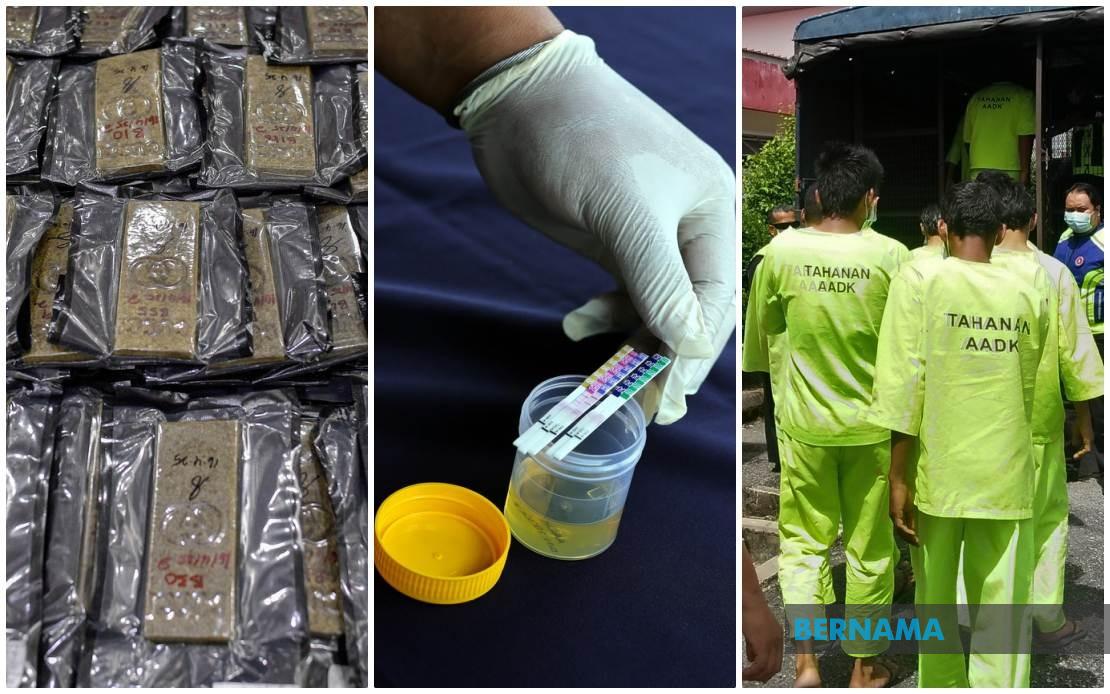
Malaysia's synthetic drug problem has deepened into a national crisis, with Home Minister Datuk Seri Saifuddin Nasution Ismail revealing that 141,817 cases were documented last year—a troubling escalation from 145,526 cases in 2023, though the most recent data indicates 192,852 cases were recorded in 2024. These figures underscore a persistent and worsening challenge that extends far beyond conventional drug trafficking concerns, touching communities across the nation and straining enforcement resources at every level of government.
The substance composition of Malaysia's drug problem has fundamentally transformed in recent years. Synthetic drugs now dominate the abuse landscape, representing approximately 70 per cent of all documented drug misuse cases nationwide. Among these, Amphetamine-Type Stimulants—particularly methamphetamine, locally known as syabu—have become the dominant choice for users. This shift away from traditional narcotics such as heroin, cannabis, and morphine reflects changing market dynamics and evolving user preferences that challenge conventional law enforcement strategies predicated on controlling plant-based substances. The transition underscores how Malaysia's drug economy has modernized, with synthetic variants offering cheaper production costs and higher profit margins that incentivize trafficking networks to expand supply chains.
Geographic analysis reveals that Malaysia's east coast corridor has emerged as the epicenter of synthetic drug abuse. States including Kelantan have been identified as particularly vulnerable, with specific districts recording alarming concentration rates. Pendang district leads in per-capita abuse cases, followed by Kuala Krai, while Bachok, Besut, and Mersing also rank among the most severely affected areas. This geographic clustering suggests that regional factors—including proximity to trafficking routes, local economic conditions, and potentially weaker enforcement capacity in less urbanized regions—create vulnerability conditions that traffickers exploit systematically. For policymakers, this distribution pattern provides crucial intelligence for targeted intervention and resource allocation.
The emergence of fentanyl represents a qualitatively different threat than previous waves of synthetic drug proliferation. Authorities recently discovered fentanyl adulterating vape products during enforcement operations, signaling a deliberate strategy by traffickers to exploit the widespread popularity of vaping among young Malaysians. Fentanyl's potency—measured in doses dozens of times stronger than morphine—creates unprecedented overdose risks. Though authorities characterize current fentanyl prevalence as manageable compared with methamphetamine, the substance's lethality and tendency to spread rapidly through drug networks once established warrants immediate preventive action. The government has responded by amending both the Drug Dependants (Treatment and Rehabilitation) Act and the Dangerous Drugs Act 1952 to classify fentanyl as a scheduled substance, enabling enforcement authorities to pursue trafficking and possession charges.
Youth vulnerability represents a critical dimension of Malaysia's synthetic drug crisis. Nearly 75 per cent of the approximately 192,000 drug abuse cases recorded since January this year involved individuals aged 15 to 39, indicating that young Malaysians face disproportionate exposure and susceptibility. This age distribution reflects both developmental factors—adolescents and young adults typically demonstrate higher risk-taking behavior—and market targeting by traffickers who recognize that securing young users builds long-term consumption habits and customer loyalty. The concentration of cases among youth also carries severe consequences for educational attainment, employment prospects, and public health capacity, as treatment facilities become overwhelmed managing growing caseloads among the productive-age population.
Prison demographics starkly illustrate synthetic drug abuse's grip on Malaysian society. Approximately 70 per cent of all inmates across the prison system carry drug-related convictions or face drug charges while on remand. In certain facilities such as Machang prison, nearly complete inmate populations involve drug-related cases. These figures transform the drug crisis from a public health challenge into a criminal justice crisis that taxes incarceration infrastructure and diverts resources from other security priorities. The overwhelming prison population linked to drug offenses suggests that current enforcement approaches, while necessary, operate at scale insufficient to deter trafficking or consumption, and that rehabilitation and community-based intervention deserve greater investment and policy prioritization.
Digital platforms have become critical distribution mechanisms that conventional enforcement struggles to regulate effectively. The proliferation of online marketplaces—particularly those operating across borders or through encrypted channels—enables buyers and sellers to conduct transactions beyond effective government oversight. These platforms fundamentally lack the regulatory gatekeeping mechanisms that govern traditional retail commerce, creating zones of effective lawlessness where drugs move freely and pricing dynamics respond to supply constraints rather than enforcement pressure. For Malaysian enforcement agencies, this technological transformation represents perhaps the most significant operational challenge, requiring investment in digital forensics, international cooperation protocols, and intelligence capacity that current budgets may not adequately support.
The National Anti-Drugs Agency (AADK) has deployed multiple intervention strategies across prevention, education, and enforcement domains. Community-based prevention initiatives aim to build grassroots resistance to drug use, while structured education programs target schools and educational institutions where preventive investment yields highest returns. Workplace and family intervention programs recognize that drug abuse emerges from complex social and economic contexts where employment stress and family dysfunction create vulnerability. These initiatives represent important foundational work, yet their scaling appears inadequate relative to the magnitude of current caseloads. Effective drug control requires sustained investment across multiple intervention channels operating simultaneously, which budgetary constraints and coordination challenges between agencies frequently impede.
Cooperation between the AADK, Royal Malaysia Police (PDRM), and Customs Department provides enforcement backbone for interdicting traffickers and disrupting supply lines. Border security initiatives target trafficking corridors through which drugs transit into Malaysia, while street-level enforcement pursues dealers and users. However, enforcement alone cannot resolve an issue rooted in demand dynamics and regional trafficking networks that extend across Southeast Asian borders. Malaysia's geographic position—situated along major trafficking routes connecting production zones in Southeast Asia with consumption markets—creates structural vulnerabilities that enforcement cannot entirely eliminate without complementary regional cooperation and upstream intervention in producing countries.
The statistical escalation from 145,526 cases in 2023 to 192,852 in 2024 indicates acceleration that demands urgent policy recalibration. While some case increase may reflect improved detection and reporting rather than pure consumption growth, the trajectory nonetheless suggests that existing interventions have not achieved deterrent effect or supply disruption at meaningful scale. For Malaysian policymakers, this escalation necessitates honest evaluation of current strategy effectiveness and willingness to reallocate resources toward prevention and treatment modalities that evidence demonstrates as effective, rather than maintaining investment patterns predicated on enforcement-centric approaches that have produced declining marginal returns.
The concentration of synthetic drug abuse in Malaysia's east coast corridor also raises regional development questions. Economic marginalization, limited legitimate employment opportunities, and cultural disconnection in peripheral regions may predispose communities toward substance abuse as coping mechanism or income generation alternative. Comprehensive drug control strategy therefore requires parallel investment in economic development, employment generation, and social integration programs that address underlying vulnerability conditions. Without addressing these root factors, enforcement and treatment initiatives operate in isolation from the socioeconomic context that generates ongoing demand and trafficking incentives.
International cooperation mechanisms deserve expanded emphasis given that fentanyl and other synthetic drugs move through transnational supply chains beyond any single nation's enforcement capacity. Malaysia's ability to control its synthetic drug problem depends increasingly on cooperation with neighboring countries and upstream enforcement in production zones. Bilateral and multilateral agreements enabling intelligence sharing, joint operations, and coordinated enforcement against trafficking networks could amplify effectiveness of individual nation efforts. The ASEAN framework provides institutional mechanisms for regional coordination that could be mobilized more systematically toward drug control objectives.
Looking forward, Malaysia faces a critical decision point regarding drug policy direction. The escalating case numbers and emergence of lethal substances like fentanyl demand decisive action combining strengthened enforcement, expanded treatment capacity, prevention investment, and honest assessment of whether current legal frameworks and enforcement approaches remain effective in contemporary drug market conditions. Without rapid policy adaptation and resource reallocation, synthetic drug abuse will likely continue accelerating, consuming increasing shares of enforcement budgets, incarceration capacity, and public health resources while generating downstream social costs far exceeding immediate drug control expenditures.

