The Prime Minister's Department (Religious Affairs) has unveiled an ambitious new programme aimed at democratising access to the teachings and insights of prominent Islamic scholars. The Maal Hijrah Lecture Series represents a deliberate shift in how Malaysia's government engages with Islamic thought, moving away from confined academic discourse towards public-facing educational initiatives that seek to engage citizens across all social strata.
Dr Zulkifli Hasan, the Minister in the Prime Minister's Department (Religious Affairs), articulated the core philosophy behind this initiative during the official launch of the Maal Hijrah 1448H/2026 Lecture Series in Putrajaya. The minister emphasised that the intellectual contributions of nationally and internationally recognised Islamic figures have historically remained sequestered within universities and specialist forums, thereby limiting their potential societal impact. By institutionalising a lecture series format, the government intends to bridge this accessibility gap and create meaningful pathways through which the broader public can engage with sophisticated Islamic scholarship.
The strategic rationale underpinning this programme reflects broader Malaysian policy considerations regarding religious literacy and social cohesion. By positioning Islamic intellectual traditions as relevant to everyday citizens rather than exclusively to scholars and theologians, the initiative seeks to cultivate a more informed and engaged Muslim population. Dr Zulkifli's stated ambition—that these ideas reach not only Muslims but also non-Muslim Malaysians—suggests governmental recognition that religious understanding transcends purely faith-based communities and carries implications for national harmony and mutual respect.
The implementation framework demonstrates significant institutional commitment and coordination. The proposal has already garnered endorsements from major religious affairs bodies and several key educational stakeholders. Both Universiti Sains Islam Malaysia (USIM) and International Islamic University Malaysia (IIUM) have pledged collaborative support, signalling that Malaysia's premier Islamic universities view this initiative as complementary to their academic missions. Rather than treating the lecture series as a standalone effort, the government explicitly plans to expand partnerships beyond these initial institutions to encompass additional universities and educational bodies, thereby creating a distributed network through which Islamic scholarship can be disseminated.
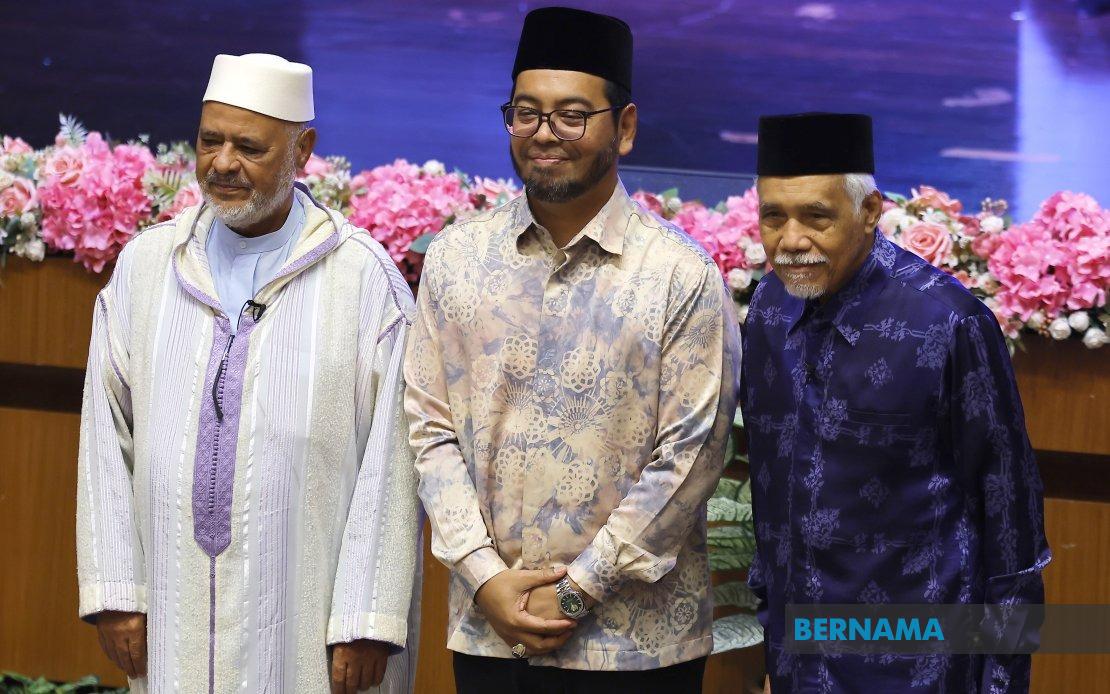
The inaugural 1448H/2026 iteration of the lecture series has already recognised exemplary figures whose contributions merit public profile enhancement. Emeritus Professor Osman Bakar, the rector of IIUM, received designation as the national Maal Hijrah figure, while Professor Sheikh Dr Ahmad Al-Raysuni, an internationally respected Islamic jurisprudence specialist based in Morocco, earned recognition as the international Maal Hijrah figure. These selections underscore the programme's commitment to honouring both locally prominent scholars and those whose influence extends across Muslim-majority regions globally.
The formal recognition process carries ceremonial significance commensurate with the intellectual stature being honoured. The Sultan of Perak, Sultan Nazrin Shah, presented awards to both recipients at the national-level Maal Hijrah 1448H/2026 celebration held at Masjid Putra, thereby conferring royal endorsement upon these scholarly achievements. The accompanying cash prizes, trophies, and certificates of appreciation signal governmental valuation of intellectual contribution to Islamic thought and practice, establishing a precedent for recognising such endeavours as integral to national development.
Osman Bakar's selection carries particular significance for Malaysian higher education. As rector of IIUM, one of Southeast Asia's most substantial Islamic universities, his work represents the synthesis of traditional Islamic learning with contemporary institutional leadership. His trajectory from academic philosopher to university administrator exemplifies the multifaceted contributions that Islamic scholars make to Malaysian society beyond pure theological discourse. Similarly, Ahmad Al-Raysuni's recognition as an international figure underscores Malaysia's aspiration to participate meaningfully in the broader Muslim intellectual landscape, positioning the nation as both a consumer and producer of significant Islamic thought.
The lecture series initiative arrives at a juncture when many Muslim-majority societies, including Malaysia, face complex challenges regarding religious education, cultural transmission, and social cohesion. Traditional madrasah systems and university programmes have long provided formal religious instruction, yet significant portions of the population remain distanced from rigorous Islamic intellectual traditions. This programme addresses that gap by creating accessible public forums where sophisticated ideas can be encountered without prerequisite specialisation, potentially revitalising interest in Islamic thought among youth and professionals who might otherwise perceive such traditions as antiquated or irrelevant.
For Malaysian universities and religious institutions, the collaboration structure offers operational benefits beyond mere intellectual exchange. USIM and IIUM gain platforms to showcase their intellectual leadership and faculty expertise, potentially strengthening institutional reputation and attracting motivated students. The proposed expansion to encompass additional universities creates competitive incentives for other institutions to enhance their Islamic studies programmes and position faculty members for future recognition. This structural incentive system could catalyse quality improvements across Malaysia's religious education ecosystem.
The programme's emphasis on reaching non-Muslim audiences reflects sophisticated understanding of Malaysia's plural society. By framing Islamic scholarship as offering insights valuable to all citizens regardless of faith background, the government signals that religious traditions constitute legitimate sources of wisdom addressing universal human concerns. This positioning potentially reduces sectarian boundaries and cultivates the intellectual humility necessary for genuine interfaith understanding. In Southeast Asia's increasingly diverse urban centres, such initiatives become particularly valuable for building societies where different communities appreciate and respect one another's intellectual heritage.
The practical mechanics of the lecture series remain partially underdeveloped in the initial announcement, leaving questions about scheduling, venue accessibility, translation provisions for international speakers, and mechanisms for engaging audiences beyond university campuses. The success of this initiative will substantially depend on implementation rigour and genuine commitment to reaching ordinary citizens rather than gravitating towards academic convenience. If the programme develops robust outreach capabilities and genuinely prioritises public accessibility, it could establish a replicable model for other nations seeking to bridge scholarly expertise and popular understanding.
Looking forward, the Maal Hijrah Lecture Series represents an investment in Islamic intellectual infrastructure that extends beyond immediate religious considerations. By deliberately cultivating public familiarity with sophisticated Islamic thought, Malaysia positions itself to nurture generations of citizens capable of sophisticated engagement with religious ideas and their implications for contemporary life. The initiative signals governmental recognition that religious literacy and scholarly engagement constitute public goods worthy of institutional support and investment, establishing precedents that could reshape how Muslim-majority societies approach the transmission of intellectual traditions.