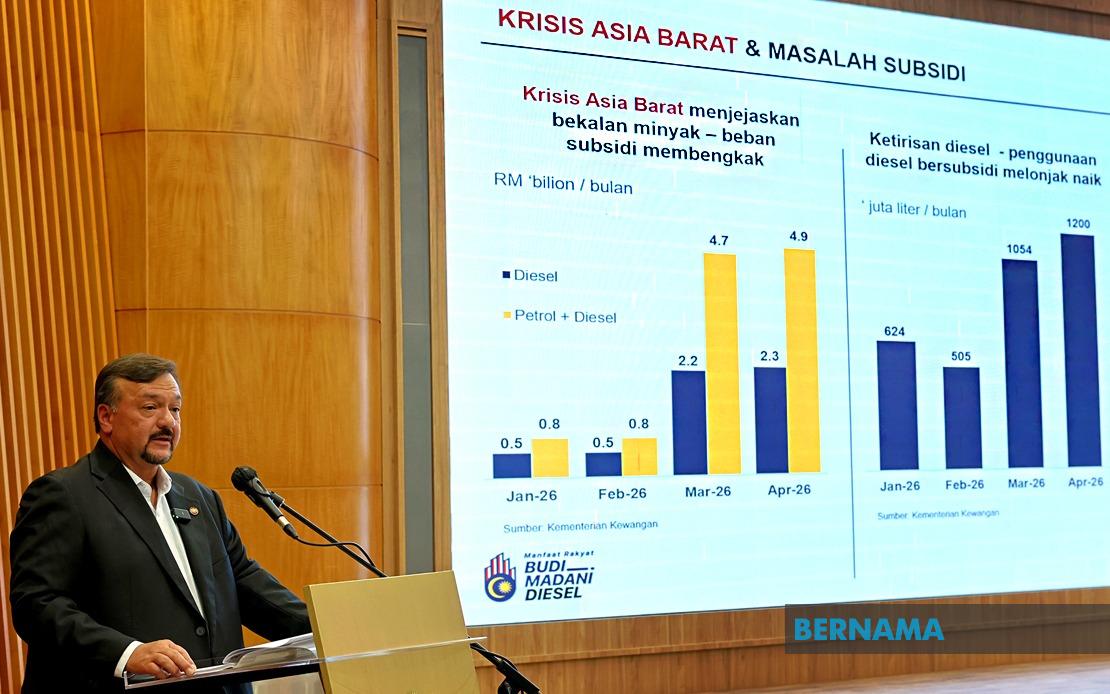
Malaysia will keep its monthly BUDI95 petrol subsidy quota at 200 litres for now, with the government adopting a cautious wait-and-see approach regarding the recent ceasefire agreement between the United States and Iran. Finance Minister II Datuk Seri Amir Hamzah Azizan indicated on June 22 that restoring the quota to its previous 300-litre level remains under consideration, but timing any decision depends heavily on how international tensions evolve and their cascading effects on crude oil markets over coming weeks.
The preliminary 14-point accord signed between US President Donald Trump and Iranian President Masoud Pezeshkian represents a significant diplomatic development, yet its durability remains uncertain. Officials in Putrajaya are acutely aware that the 60-day negotiation window built into the agreement provides insufficient clarity on whether a lasting settlement will materialise. This ambiguity, combined with the volatile nature of oil pricing in response to geopolitical shocks, has made ministers reluctant to commit to raising subsidies before the situation stabilises. The reduction from 300 to 200 litres per recipient per month was introduced as a cost-containment measure when international oil prices posed fiscal pressures on Malaysia's subsidy budget.
Amir Hamzah emphasised that shielding citizens from economic hardship remains government policy, even under the tighter quota regime. He noted that data analysis reveals approximately 80 per cent of BUDI95 beneficiaries consume fewer than 200 litres monthly, suggesting the current ceiling accommodates the majority of eligible households without severe disruption to their mobility or economic activities. This finding underpins the minister's assertion that the subsidy reduction, though significant in headline terms, has imposed manageable consequences on most recipients. The government's framing positions the 200-litre cap not as punitive but as calibrated to genuine usage patterns.
Beyond the fuel allocation itself, officials are encouraging behavioural conservation strategies to reduce petrol dependence. The promotion of work-from-home arrangements and public messaging about fuel-efficient driving practices represent a softer policy layer complementing the subsidy structure. These initiatives acknowledge that while government can control the price mechanism, households and employers can also influence consumption through operational choices. The multi-pronged approach suggests recognition that subsidy management alone cannot solve Malaysia's exposure to volatile commodity markets.
Prime Minister Datuk Seri Anwar Ibrahim expressed optimism last Thursday about the US-Iran peace accord's potential to stabilise West Asia and reduce conflict-driven oil-price volatility. His confidence, however, appears measured—he acknowledged that a final binding agreement must be concluded within the 60-day period, indicating awareness that preliminary accords frequently encounter implementation obstacles. For Malaysia, an economy substantially exposed to oil-price fluctuations through both domestic consumption and export revenues, the stakes of sustained regional peace are considerable. Even modest downward pressure on crude prices from de-escalation would ease government spending on fuel subsidies and free fiscal resources for other priorities.
The decision to maintain the 200-litre quota reflects a technocratic approach to fiscal risk management. By avoiding a premature return to 300 litres, the government preserves budget flexibility should Middle East tensions reignite or crude prices spike unexpectedly. Conversely, the government's openness to restoration if conditions improve signals that the 200-litre cap is not meant as permanent austerity but rather a contingent measure responsive to external conditions. This framing balances immediate fiscal responsibility with acknowledgement of hardship among subsidy-dependent households.
For Malaysian petrol consumers, particularly those from lower-income groups who disproportionately rely on BUDI95, the suspension of the increase represents continued constraint on purchasing power. Commuters, small traders, and delivery workers remain bound by the 200-litre monthly allocation, though most reportedly manage within it. The psychological impact of foregone restoration, however, is significant—households have adjusted consumption patterns and budget allocations based on the 200-litre reality, and restoring 300 litres would require behavioural and budgetary recalibration.
Regionally, Malaysia's cautious stance reflects a broader Southeast Asian concern about oil-price volatility and its broader macroeconomic ripple effects. Countries across the region maintain fuel subsidies or price controls affecting millions of citizens, and decisions in any major economy to adjust those regimes reverberate through regional discussions on fiscal sustainability and energy policy. Malaysia's willingness to hold the line on current subsidies pending clarity on geopolitical risk signals to regional peers that prudence, not political pressure alone, should guide such decisions.
The government's monitoring framework will likely include oil futures movements, rhetoric from US and Iranian officials during the 60-day negotiation period, and broader Middle East security indicators. Any significant disruption—fresh military escalation, terrorist attacks, or diplomatic breakdown—would probably trigger earlier reassessment of the quota decision. Conversely, if the ceasefire holds and oil prices decline materially, the government may find space to restore benefits before the full 60 days elapse, framing such a move as confidence in improved conditions.
Amir Hamzah's emphasis on data showing 80 per cent of beneficiaries use under 200 litres monthly provides an evidence base for maintaining current policy while deflecting criticism that the cap is broadly punitive. This framing suggests that future government communications will likely centre on protecting the affected minority—the 20 per cent consuming above 200 litres—rather than on universal subsidy expansion. Potential relief for high-consumption households might take the form of targeted supplements for specific professions, such as taxi or lorry drivers, rather than blanket quota increases.
Looking ahead, Malaysia's energy policy will remain tethered to international petroleum markets and Middle East stability. The BUDI95 programme, designed to ensure fuel affordability for lower-income households, has become a test case for how governments balance social protection with fiscal sustainability in a volatile commodity environment. The decision to hold at 200 litres while monitoring West Asia demonstrates acknowledgment that temporary policy adjustments, rooted in credible risk assessment rather than electoral cycles, may be necessary tools for managing long-term fiscal health. As the 60-day negotiation window progresses, Malaysian officials will be watching not just oil prices but broader signals about whether this particular moment of diplomatic breakthrough might finally break the pattern of recurring Middle East crises that have destabilised global energy markets for decades.

