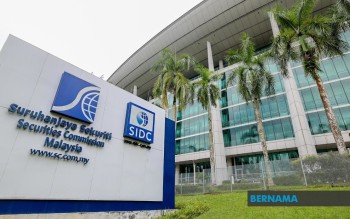
Malaysia is positioning itself as a gateway for Russian capital into Islamic finance, with government and regulatory authorities working together to construct an integrated ecosystem designed to appeal to Moscow-based and Central Asian investors. The Ministry of Finance and Securities Commission Malaysia have identified the Russian market as a strategic growth opportunity, moving beyond traditional investor bases to diversify the nation's shariah-compliant financial sector and reinforce Kuala Lumpur's standing as the world's leading Islamic finance centre.
The Securities Commission has charted an ambitious international expansion programme that includes planned exploratory missions into Central Asia during 2026 or 2027. These visits form part of a broader internationalisation strategy for Malaysia's Islamic capital market, extending far beyond simple promotional exercises. The undertaking aims to evaluate whether markets in the region possess the institutional infrastructure, regulatory maturity and investor appetite necessary to support Islamic financial instruments and structures. Simultaneously, officials intend to cultivate deeper networks among regulators, market participants and financial institutions across Central Asia, establishing the groundwork for sustained commercial relationships.
A particularly significant development emerged following discussions in May 2025 with the Head of the Republic of Tatarstan, during which Russian officials expressed interest in adopting Malaysia's Islamic finance development blueprint. This represents a potential breakthrough for Malaysian expertise providers seeking overseas markets. Rather than merely attracting foreign capital inflows, Malaysia can now export the sophisticated knowledge systems that underpin its shariah-compliant financial infrastructure, including advisory services rooted in Islamic jurisprudence, management consulting, professional training programmes and institutional capacity-building initiatives. Such service exports could generate substantial revenue streams while simultaneously establishing Malaysia as a thought leader and reference point for emerging Islamic finance jurisdictions.
The diplomatic groundwork has already commenced. The Securities Commission has conducted multiple bilateral engagement sessions with the Central Bank of Russia and the Saint Petersburg International Mercantile Exchange, with recorded meetings occurring in both 2023 and 2025. These discussions represent methodical relationship-building aimed at dismantling regulatory barriers and establishing mutual understanding between Malaysian authorities and Russian counterparts. Such official channels create platforms for negotiating recognition of shariah-compliant instruments, discussing harmonisation of reporting standards and exploring pathways for Russian participation in Malaysian capital markets.
The broader context for this initiative reflects Malaysia's strategic calculation regarding global Islamic finance competition. The nation has established itself as the primary hub for shariah-compliant banking, sukuk issuance and Islamic asset management, commanding approximately one-quarter of global Islamic finance assets. Yet growth in this sector increasingly depends on reaching new investor pools and geographic markets. Traditional investors from Middle Eastern sovereign wealth funds and Southeast Asian institutions provide steady demand, but penetrating European and Asian markets requires tailored approaches. Russia, with its substantial Muslim population in Tatarstan and the Caucasus region, coupled with Central Asian republics harbouring significant Islamic finance appetite, represents an underexploited opportunity.
Regulatory advancement forms another pillar of Malaysia's strategy. The government is strengthening supervisory frameworks and modernising rules governing Islamic capital markets through the Capital Market Masterplan 2026-2030. This five-year roadmap emphasises product innovation—developing new sukuk structures, Islamic derivatives and shariah-compliant investment vehicles capable of meeting diverse investor requirements. Enhanced regulatory efficiency also reduces compliance costs for foreign participants, making Malaysian markets more accessible to Russian investors evaluating multiple jurisdictions.
The initiative underscores Malaysia's commitment to welcoming legitimate foreign investment from Russia, contingent on adherence to domestic Malaysian law and internationally recognised standards. This conditionality reflects Kuala Lumpur's careful diplomatic balancing, maintaining investment openness whilst observing international norms. Such positioning allows Malaysia to benefit from cross-border capital flows whilst avoiding political complications that might arise from appearing overly accommodating toward any single external power.
Malaysia's approach also emphasises philosophical alignment with Islamic principles of sustainable development. The government frames its outreach to Russian investors not merely as financial opportunism but as implementation of Maqasid al-Shariah—the overarching objectives of Islamic jurisprudence emphasising preservation of faith, intellect, lineage, property and life. By constructing an inclusive financial ecosystem that bridges Russian investors with global markets through transparent, equitable mechanisms, Malaysia positions Islamic finance as a vehicle for shared prosperity rather than sectarian exclusivity. This narrative appeals to Russian policymakers contemplating Islamic finance adoption for predominantly Muslim constituent territories.
The timing of this initiative carries geopolitical significance. Malaysia's expansion into Russian markets occurs amid broader realignment of capital flows and investment patterns across Eurasia. Traditional Western-dominated financial channels face increasing scrutiny and sanctions-related complications for Russian participants, creating openings for alternative financial hubs offering shariah-compliant instruments. Malaysia can capitalise on this structural shift by offering Russian investors reliable, internationally validated pathways into global capital markets whilst maintaining operational independence from contested geopolitical disputes.
Implementing this strategy effectively requires sustained institutional commitment and nuanced execution. The Securities Commission must balance aggressive international expansion with maintaining the regulatory integrity that underpins Malaysia's credibility as a shariah-compliant financial centre. Any reputational damage from inadequately vetted Russian investors or insufficient compliance protocols could undermine decades of careful standards-building. Consequently, engagement with Russian counterparts demands rigorous due diligence, transparent communication about governance expectations and willingness to enforce regulatory requirements consistently.
For Southeast Asian readers, Malaysia's Russian outreach carries important implications regarding regional competitiveness in Islamic finance. Neighbouring financial centres in Indonesia, Brunei and Singapore maintain Islamic finance operations, yet none match Malaysia's institutional depth or market liquidity. By successfully cultivating Russian investor relationships, Malaysia reinforces its regional dominance whilst establishing templates for attracting investors from other emerging markets. The knowledge transfer and service export opportunities flowing from Russian engagement could strengthen Malaysia's position as Southeast Asia's financial and shariah expertise centre, with broader implications for the region's economic integration and capital market development.

