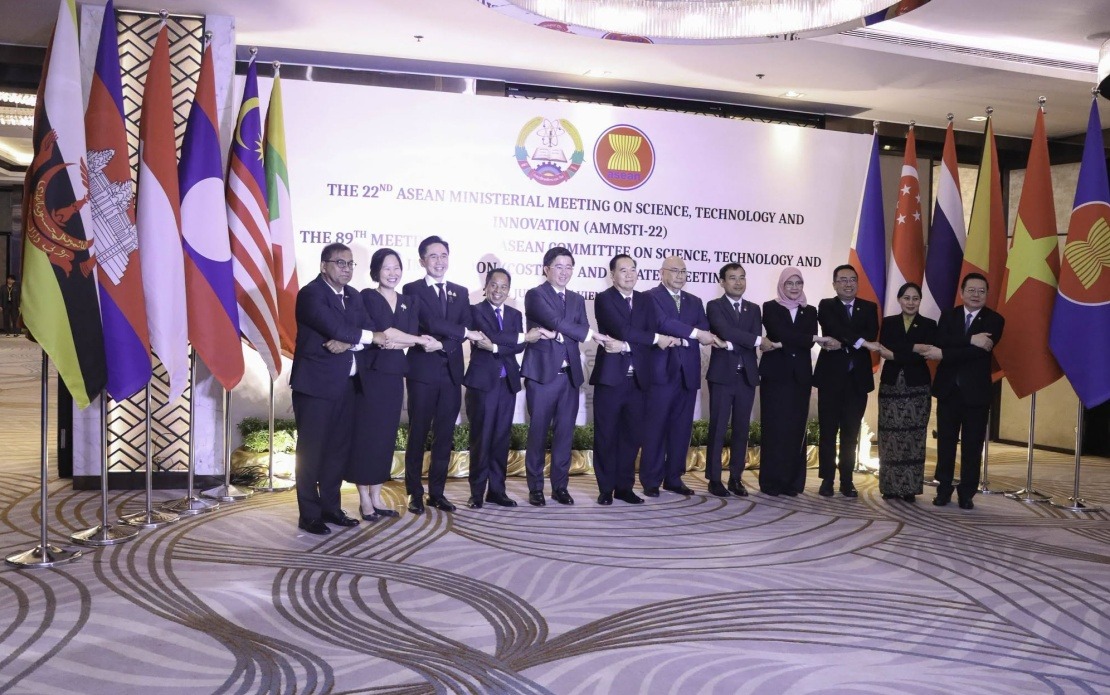
Malaysia has made a compelling case for ASEAN nations to establish a more unified and strategically focused approach to science, technology and innovation, positioning coordinated regional action as essential to addressing interconnected challenges that transcend borders. Speaking at the 22nd ASEAN Ministerial Meeting on Science, Technology and Innovation in Vientiane, Laos, Science, Technology and Innovation Minister Datuk Chang Lih Kang articulated how fragmented efforts across the ten-member bloc have limited the region's capacity to tackle systemic problems that demand collective intelligence and resources. The call reflects growing recognition that ASEAN's considerable combined economic and human capital remain underutilised when individual nations pursue isolated technology pathways.
The minister specifically identified four critical areas where integrated regional collaboration could yield transformative outcomes. Energy transition stands paramount as Southeast Asia grapples with rising electricity demand amid mounting pressure to decarbonise its economy. Food security represents another existential concern, given the region's agricultural vulnerability to climate disruption and demographic pressures. Public health systems across ASEAN require strengthened innovation capacity, particularly following lessons from the COVID-19 pandemic about regional preparedness gaps. Climate resilience equally demands coordinated technological responses, as rising sea levels and extreme weather increasingly threaten coastal nations and island economies throughout Southeast Asia. Each of these challenges operates at a regional scale, making piecemeal national solutions inadequate without broader ecosystem coordination.
Central to Malaysia's advocacy is the concept of a "mission-oriented" innovation framework, which contrasts with traditional approaches emphasising generic technology development. Mission-orientation means explicitly aligning research priorities, funding mechanisms and talent deployment toward solving specific, high-impact regional problems. This methodology has gained traction globally following successful models in Scandinavian countries and the European Union, where coordinated research agendas demonstrably accelerate solutions to defined societal challenges. For ASEAN, such an approach would require unprecedented coordination among national research councils, universities and private sector innovators, fundamentally reshaping how the region invests in scientific capability.
Beyond strategic framing, Malaysia outlined concrete mechanisms for deepening integration. Strengthening regional innovation platforms would create shared infrastructure where researchers from multiple countries collaborate on common problems, pooling expertise and reducing duplicative effort. Integration of the ASEAN startup ecosystem addresses a critical gap in the region's innovation pipeline, where promising ventures often relocate to Singapore or international hubs due to fragmented domestic markets and limited cross-border access to capital. By creating seamless regulatory pathways and coordinated venture funding mechanisms, ASEAN could retain entrepreneurial talent and accelerate commercialisation of locally-developed technologies. Equally important is ensuring that research outputs translate into tangible societal benefits rather than remaining confined to academic journals, requiring stronger linkages between researchers and end-users.
The bilateral engagement between Datuk Chang and ASEAN Secretary-General Dr Kao Kim Hourn carries particular significance given Malaysia's upcoming leadership role. In 2025, Malaysia will assume the chair of AMMSTI-23 and host the 91st ASEAN Committee on Science, Technology and Innovation gathering, providing an institutional platform to advance the integration agenda. These early-stage consultations suggest Malaysia intends to use its chairmanship strategically, potentially establishing working groups on priority areas and formalising cooperation frameworks that persist beyond any individual nation's leadership term. Success would position Malaysia as a consequential driver of regional technology policy, elevating the nation's standing within ASEAN's architecture.
Multilateral discussions with counterparts from Singapore, Brunei and Thailand reveal where collaborative advantages may emerge. Artificial intelligence represents a frontier technology where ASEAN lags considerably behind advanced economies, yet regional collaboration could accelerate adoption and customisation for Southeast Asian contexts. The semiconductor industry, increasingly critical to global supply chains, offers opportunities for specialised manufacturing hubs leveraging different member-states' comparative advantages. Biotechnology applications span agriculture, medicine and industrial manufacturing, domains where ASEAN possesses significant biodiversity resources and growing technical capability. Space technology, traditionally the preserve of wealthy nations, is democratising through reduced-cost satellite systems and could enable earth observation capabilities supporting climate monitoring and resource management. Nuclear technology, contentious though it remains in some quarters, represents essential capacity for advanced energy systems and medical applications.
These technological pillars reflect sophisticated understanding of how regional economies can move up global value chains through strategic positioning rather than competing as individual entities. A unified ASEAN approach to semiconductors, for instance, could establish the region as a preferred manufacturing and design hub complementing rather than directly competing with Taiwan or South Korea. Collaborative AI research and development leverages Southeast Asia's large digital populations as both talent pools and data sources for training localised algorithms addressing regional problems. Biotechnology cooperation builds upon ASEAN's extraordinary biological heritage, potentially creating intellectual property frameworks that ensure member-states share benefits from genetic discoveries.
Yet translating these aspirations into functioning cooperative mechanisms presents formidable challenges rooted in ASEAN's fundamental operating principles. The Association's commitment to non-interference and national sovereignty, while enabling peaceful coexistence among disparate political systems, simultaneously constrains deeper integration requiring harmonised standards, regulations and institutional authority. Member-states retain legitimate concerns about intellectual property rights protection, brain drain acceleration through easier researcher mobility, and whether collaborative frameworks might advantage more developed nations like Singapore over less-industrialised peers. Funding mechanisms for genuine regional initiatives remain underdeveloped, with most research budgets allocated through national channels lacking flexibility for cross-border projects.
The economic rationale for integration, however, grows increasingly compelling. Individual ASEAN nations investing separately in cutting-edge technologies face mounting cost barriers, with world-class research facilities requiring capital outlays beyond many national research budgets. Fragmented regulatory environments create friction when startups attempt scaling across multiple markets, favoring external investors over regional entrepreneurs. Brain drain persists as talented scientists and engineers migrate toward countries with critical masses of research excellence and funding. A genuinely integrated STI ecosystem could reverse these dynamics, creating sufficient scale and coherence to retain talent, attract international investment specifically into regional research hubs, and position ASEAN as an innovation centre rather than a peripheral technology consumer.
Datak Chang's commitment to advancing this agenda through Malaysia's upcoming chairmanship suggests momentum building behind integration efforts. Whether this translates into substantive cooperative mechanisms or remains aspirational rhetoric will depend partly on Malaysia's diplomatic skill in building consensus among ASEAN's diverse membership, but equally on whether member-states allocate genuine budgetary commitments to regional initiatives. The stakes extend beyond technological capability; an integrated ASEAN STI ecosystem carries profound implications for economic diversification, employment creation and the region's positioning amid great-power competition for technological supremacy between the United States and China.

