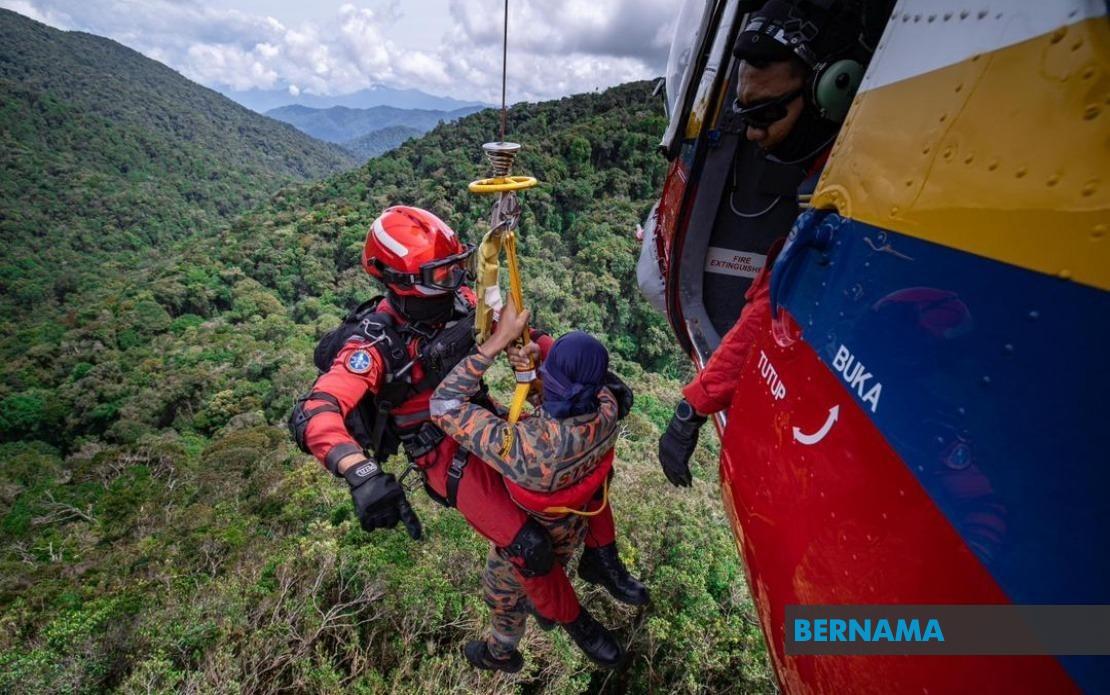
The scale of hiking-related casualties in Malaysia has become a pressing public health concern, with authorities revealing that nearly 1,100 accidents involving trekking activities have been documented over a five-year period ending in 2025. Deputy Minister of Natural Resources and Environmental Sustainability Syed Ibrahim Syed Noh disclosed this sobering information to Parliament on June 23, highlighting that the 63 fatalities and 87 injuries stemmed from recreational activities in Malaysia's forests. These figures underscore an uncomfortable reality facing the nation's rapidly expanding outdoor adventure sector: despite the growing appeal of hiking among Malaysian and international visitors, safety infrastructure has not kept pace with demand.
The spike in hiking-related incidents reflects broader trends across Southeast Asia, where increased accessibility and the rise of social media have transformed trekking from a niche activity into mainstream recreation. Malaysia's diverse topography, ranging from the challenging peaks of Peninsular Malaysia to the pristine trails of Sabah and Sarawak, attracts tens of thousands of hikers annually. However, this surge in participation has outpaced the development of standardized safety protocols and regulatory frameworks. The Fire and Rescue Department of Malaysia data cited by Syed Ibrahim reveals that many accidents occur due to inadequate preparation, insufficient knowledge of trail conditions, and the absence of trained personnel in remote areas where emergencies can become life-threatening within hours.
Recognizing these deficiencies, the government has embarked on a multi-faceted approach to enhance hiking safety across the nation's Permanent Reserved Forests. A cornerstone of this effort is the Mountain Risk Assessment and Management Guideline, known as MoGRAM, developed by the Peninsular Malaysia Forestry Department with technical and financial support from the United Nations Development Programme. This framework provides forest authorities with evidence-based methodologies for evaluating terrain hazards, managing trail capacity, and establishing protocols for different risk levels. The development of MoGRAM represents Malaysia's commitment to aligning its outdoor recreation standards with international best practices, though implementation remains uneven across states.
Central to the safety enhancement strategy is the mandatory deployment of certified Forestry Mountain Guides across 189 designated high-risk hiking areas throughout the peninsula. These specialized personnel serve as the frontline defenders of hiker welfare, equipped with expertise in emergency response, route navigation, and adherence to established safety practices. To date, the certification programme has trained 2,322 individuals from local and indigenous communities as Mountain Guides, creating employment opportunities while simultaneously building crucial safety capacity. This localized approach has the added benefit of preserving traditional knowledge about forest environments and weather patterns that are invaluable for risk mitigation.
Beyond personnel deployment, the ministry is spearheading the development of an advanced digital hiking registration and trail management system. This initiative, executed in collaboration with the Malaysian Space Agency, leverages geospatial technology, geographic information systems, and remote sensing capabilities to create a comprehensive mapping and monitoring infrastructure. Such a system would represent a significant leap forward from the current fragmented approach, where registration is handled manually or through disparate online platforms managed by individual state forestry departments. By centralizing trail information and hiker movement data, authorities would gain real-time visibility into outdoor activities, enabling faster response times during emergencies and more strategic deployment of search and rescue resources.
The proposed national digital registry addresses a critical vulnerability in Malaysia's current hiking safety ecosystem. When incidents occur in remote or poorly mapped terrain, the absence of reliable information about hiker locations, group composition, and expected return times can delay rescue operations by precious hours. A unified system would automatically flag overdue hikers and provide rescue teams with precise geographical coordinates derived from the registration data. This technological advancement is particularly crucial in Malaysia's challenging terrain, where dense vegetation, unpredictable weather, and rugged topography can quickly transform a routine hike into a survival situation for the unprepared or unlucky.
State governments, which retain constitutional authority over forest resources and hiking permit issuance, have been encouraged to participate in this national framework despite their jurisdictional autonomy. The ministry's position is pragmatic: while respecting federalism, a coordinated approach to hiking safety transcends state boundaries, particularly for popular multi-state trails and during emergency situations requiring rapid inter-state cooperation. This delicate balancing act reflects Malaysia's broader constitutional architecture, where environmental management requires negotiation between federal and state governments, sometimes resulting in implementation delays and inconsistent standards.
The investment in Mountain Guide training and certification also addresses the skills gap that has contributed to numerous preventable accidents. Many commercial hiking operators and individual guides lack formal training in risk assessment, first aid, and rescue techniques, increasing vulnerability during emergencies. The comprehensive training curriculum covers hiking safety protocols, risk management methodologies, advanced first aid, wilderness survival skills, and search and rescue operations. By professionalizing the guide sector, Malaysia is effectively creating a distributed safety network that reduces dependence on government rescue services, which are often stretched thin across vast geographical areas.
Looking forward, the government's multi-pronged strategy reflects an acknowledgment that hiking safety demands coordination across multiple agencies and stakeholder groups. The involvement of the United Nations Development Programme signals Malaysia's commitment to implementing globally recognized standards, while the collaboration with the Malaysian Space Agency demonstrates the application of cutting-edge technology to solve practical safety challenges. However, success ultimately depends on sustained funding, consistent enforcement across all states, and genuine behavioral change among hikers regarding preparation and risk awareness.
The statistics presented by Syed Ibrahim should serve as a wake-up call to both recreational hikers and policy makers. While 1,059 accidents over five years may seem modest compared to other recreational injuries, each fatality represents a preventable tragedy. The hiking community in Malaysia must internalize that modern trail access does not eliminate ancient dangers; it merely makes them more accessible to those unprepared to manage them. Education campaigns emphasizing the necessity of guides, proper equipment, and realistic self-assessment of physical capabilities must accompany infrastructure improvements. For Malaysian readers, particularly those in urban centers increasingly turning to hiking as weekend recreation, this means accepting that certified guides are not optional luxuries but essential safety investments.
The integration of technology, human expertise, and regulatory frameworks demonstrates that Malaysia is attempting to solve a complex problem with comprehensive solutions. Whether these initiatives prove sufficient will depend on implementation speed, inter-agency coordination, and the willingness of hikers to embrace safety protocols that may inconvenience their recreational pursuits. As hiking continues its explosive growth across Southeast Asia, Malaysia's experience and evolving safety framework could serve as a model for neighboring countries facing similar challenges.

