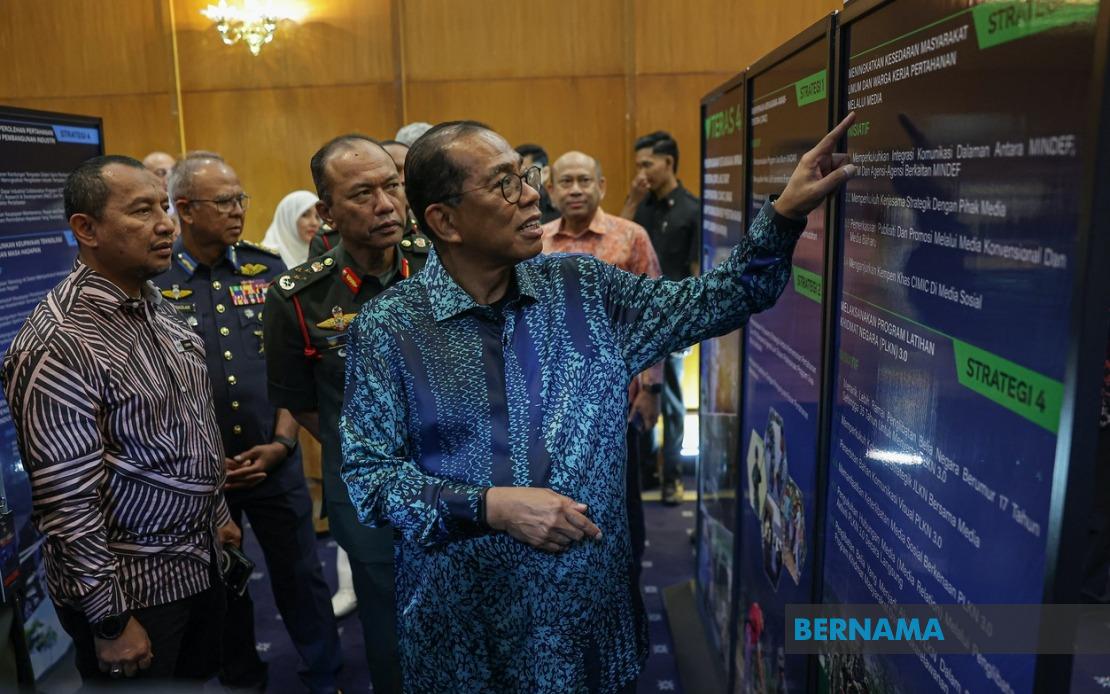
Malaysia's defence establishment has taken a significant step forward by introducing two interconnected strategic frameworks aimed at hardening the country's security posture over the coming five years. Defence Minister Datuk Seri Mohamed Khaled Nordin unveiled the National Defence Strategic Plan (PSPN) and Defence Capacity Blueprint (RTKP) 2026-2030 on June 25, positioning these documents as essential tools to navigate an increasingly volatile regional and global security environment while ensuring Malaysia's defence planning remains contemporary and sufficiently flexible.
The dual-document approach reflects a deliberate strategy to address what the ministry views as critical vulnerabilities in how Malaysia prepares for future threats. Rather than presenting a single overarching plan, the framework separates strategic intent from operational implementation capacity—a distinction that underscores recognition that even well-designed defence strategies falter without adequate resourcing, trained personnel, and institutional coordination. Both documents complement the existing Defence White Paper, which established Malaysia's longer-term defence philosophy. The new frameworks essentially translate that philosophy into actionable medium-term goals and the concrete capabilities required to achieve them.
The security landscape motivating these initiatives reflects realities that weigh heavily on Southeast Asian policymakers. Minister Mohamed Khaled identified three principal drivers: intensifying geopolitical rivalry with no clear resolution in sight, rapid technological advancement particularly in artificial intelligence and automated systems that disrupt traditional military capabilities, and the proliferation of non-traditional security threats that conventional defence structures struggle to address. These concerns extend beyond hypothetical risks; they manifest in regional tensions, contested maritime boundaries, and cyber operations that target both military and civilian infrastructure. Malaysia's position as a maritime trading nation exposed to multiple sea lanes and potential flashpoints makes these concerns particularly acute.
The PSPN itself is organized around seven strategic pillars designed to provide coherent direction across diverse defence functions. These pillars encompass the operational readiness of the Malaysian Armed Forces, which involves ensuring troops, equipment, and doctrine remain aligned with contemporary threats; expansion of defence capabilities to address identified capability gaps; the welfare and retention of military personnel and veterans, recognising that institutional knowledge and experienced personnel form the foundation of military effectiveness; and critically, defence technology and innovation—a pillar acknowledging that Malaysia cannot rely indefinitely on imported defence solutions and must develop indigenous technological capacity where feasible.
Where the PSPN answers the question of strategic direction, the RTKP addresses the harder practical question: how does Malaysia actually build and sustain the capabilities its defence strategy demands? The blueprint focuses on four foundational elements. Financial resources represent the first constraint; defence budgets exist within broader fiscal contexts, and the blueprint must identify which capabilities deserve prioritisation. Human capital constitutes the second pillar, recognising that sophisticated military systems require well-trained, educated personnel and that recruiting, developing, and retaining such personnel demands strategic workforce planning. Technological expertise forms the third element, acknowledging that Malaysia's defence industrial base requires development and that reliance on foreign expertise carries both financial and security implications. Finally, inter-agency coordination ensures that no single ministry operates in isolation—defence strategy intersects with foreign policy, maritime administration, law enforcement, and critical infrastructure protection.
The minister articulated this relationship through a simple but effective formulation: the PSPN determines where Malaysia aims to travel, while the RTKP ensures the nation possesses the resources, skills, and organisational capacity to arrive. This framing reflects strategic maturity in recognising that ambition without capacity produces only frustration and capability shortfalls. The blueprint explicitly embraces what Malaysian planners term a whole-of-government and whole-of-society approach. This represents an important departure from viewing defence as the exclusive purview of the Defence Ministry and military services. Rather, it acknowledges that modern security challenges—whether cyber attacks, maritime piracy, terrorism, or economic coercion—require coordination across civilian ministries, private sector participation in critical infrastructure protection, and public awareness and resilience.
Concomitant with these strategic frameworks, Malaysia continues advancing its material capabilities. The Defence Ministry confirmed receipt of three ANKA Medium Altitude Long Endurance Unmanned Aircraft Systems in March, with these platforms already deployed and operational at Labuan Air Base. Unmanned systems represent a significant capability augmentation, offering persistent surveillance and reconnaissance without risking pilot lives and at lower operational costs than manned alternatives. The platforms serve particular strategic value in monitoring maritime zones and border regions where Malaysia faces persistent challenges ranging from smuggling to territorial surveillance.
The procurement pipeline extends considerably further. The Malaysian Armed Forces anticipate delivery of FA-50M light combat aircraft, representing a generational advancement in air combat capability and close air support. These aircraft address longstanding capability gaps and signal Malaysia's commitment to maintaining credible air power amid regional military modernisation. Additionally, maritime patrol aircraft remain on the acquisition schedule, acknowledging the critical importance of maintaining surveillance over Malaysian waters and exclusive economic zone. The second batch of Littoral Mission Ships rounds out the near-term procurement landscape, gradually building maritime surface capability tailored to regional operations in relatively confined waters.
For Malaysian readers and policymakers, these developments carry several implications. The strategic framework suggests the Defence Ministry has conducted honest assessment of gaps between current capabilities and emerging requirements. The emphasis on technology and innovation reflects understanding that Malaysia cannot indefinitely purchase defence capabilities off-the-shelf; indigenous capacity building, though requiring sustained investment and international partnerships, offers long-term resilience. The whole-of-society framing indicates recognition that national security extends beyond military matters, encompassing economic stability, cyber resilience, and public trust in institutions.
Regionally, Malaysia's defence modernisation occurs within a competitive environment. Southeast Asian neighbours pursue broadly similar capability enhancements, and the region's major powers—China and India, through their respective activities in the South China Sea and Indian Ocean—maintain close attention to maritime security developments. Malaysia's framework-based approach to medium-term planning allows for orderly capability development while maintaining fiscal discipline and strategic focus. The framework's five-year horizon provides sufficient specificity to guide procurement and force development whilst maintaining flexibility to adapt should regional circumstances change dramatically.
Implementation remains the critical test. Strategic documents proliferate; sustained execution against stated objectives proves considerably rarer. The RTKP's emphasis on institutional capacity and inter-agency coordination directly acknowledges this challenge. Success will depend not merely on securing parliamentary funding for planned acquisitions but on effectively integrating new platforms into operational doctrine, developing appropriate training regimes, and ensuring administrative structures evolve alongside technological advancement. Whether Malaysia succeeds in translating these comprehensive frameworks into genuine capability enhancement will become apparent through observable changes in force readiness, personnel retention, and institutional effectiveness over the coming years.

