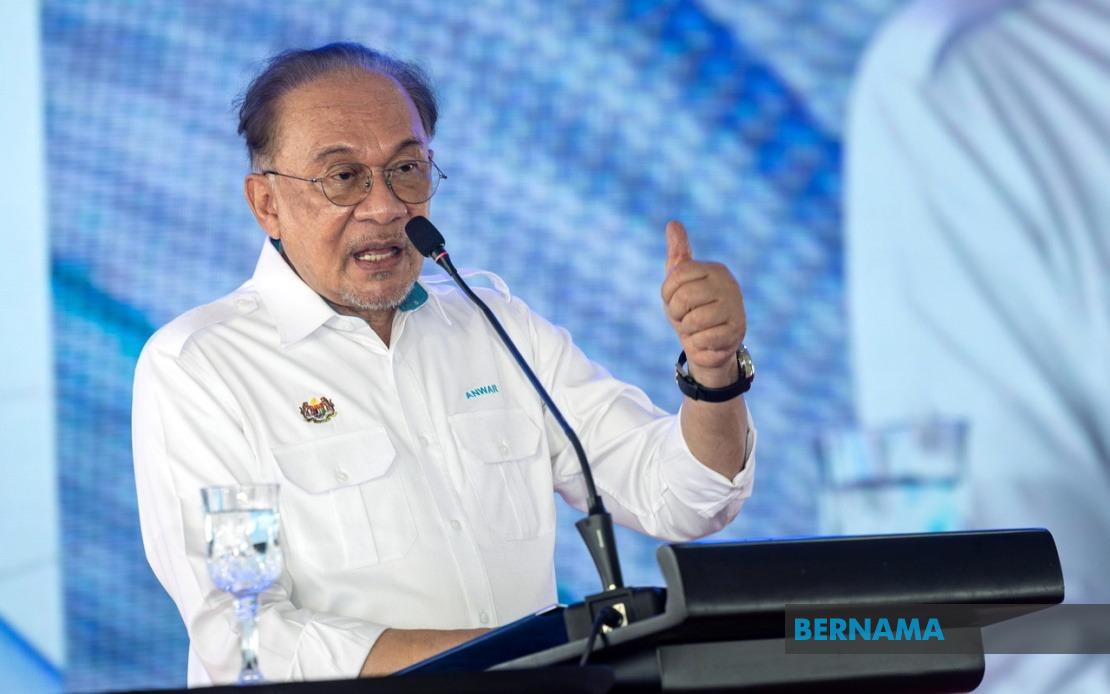
Malaysia has moved decisively to fortify its energy independence through major bilateral agreements with Russia and Turkmenistan, Prime Minister Datuk Seri Anwar Ibrahim announced at an industrial park groundbreaking ceremony in Kepala Batas on June 20. The strategic energy partnerships represent a significant diversification of Malaysia's resource security, addressing long-standing vulnerabilities in the country's hydrocarbon supply chain and positioning it as a more resilient regional player in an increasingly volatile global energy market.
During recent diplomatic engagements, Russian President Vladimir Putin committed to supplying Malaysia with crude oil, liquefied natural gas, and diesel under a long-term arrangement spanning a minimum of two decades. This commitment emerged from high-level discussions conducted in Kazan during Anwar's recent visit to Russia, underscoring the deepening strategic partnership between Kuala Lumpur and Moscow despite broader geopolitical tensions affecting global energy flows. The agreement reflects Russia's interest in cultivating stable markets in Southeast Asia and Malaysia's pragmatic approach to securing energy supplies from multiple sources.
The Turkmenistan partnership has yielded even more expansive opportunities for Malaysia's energy sector. Following intensive negotiations and diplomatic visits since Turkmenistan President Serdar Berdimuhamedov's December 2024 trip to Malaysia, Ashgabat has granted Kuala Lumpur unprecedented access to its vast hydrocarbon reserves. Notably, Malaysia has secured entry into one of the world's largest natural gas repositories, a development with profound implications for the country's industrial competitiveness and long-term economic planning. This arrangement transforms Malaysia's energy calculus, shifting the nation from potential supply vulnerability to a position of relative abundance for several decades.
The broader geopolitical context enhances the significance of these agreements. Traditional energy suppliers and established market dynamics have been disrupted by recent international developments, forcing energy-dependent nations to recalibrate their supplier relationships. Malaysia's moves toward Russia and Turkmenistan reflect a calculated strategy to reduce concentration risk and ensure that critical energy imports cannot be easily weaponised through supply disruptions. For a nation whose petrochemical and manufacturing sectors depend heavily on stable energy inputs, these partnerships provide essential certainty for corporate investment decisions and workforce planning.
Beyond domestic consumption, the Turkmenistan agreement opens export opportunities that could enhance Malaysia's regional and international standing. The arrangement explicitly contemplates re-exporting energy to neighbouring markets including China, Japan, and South Korea—all nations with substantial and growing energy demands that outpace their domestic production capabilities. Malaysia could position itself as a transit hub and trading intermediary, capturing value through storage, processing, and distribution operations while strengthening ties with major Asian economies. This transition from pure consumer to potential supplier-trader marks a notable shift in Malaysia's energy sector strategy.
The timing of these announcements reflects Anwar's broader foreign policy doctrine, which emphasises leveraging international relations to advance Malaysia's national interests across multiple dimensions. Energy security, he stressed during the Kepala Batas event, cannot be separated from job creation, economic development, and the prosperity of Malaysian citizens. By securing dependable hydrocarbon supplies, the government aims to moderate energy costs for consumers and producers, enhance manufacturing competitiveness, and provide stable revenue foundations for related industries. This integrated approach treats energy policy not as a technical commodity matter but as central to comprehensive national development.
The implications for Malaysia's industrial sector are substantial. The Setia Fontaines Industrial Park ceremony served as the backdrop for these announcements, symbolising the direct connection between energy security and manufacturing capability. Industrial parks and manufacturing clusters require predictable, affordable energy supplies to attract and retain investment. With two-decade visibility on energy costs and availability, companies operating in Malaysia face reduced operational uncertainty and can commit confidently to long-term capacity expansions. This competitive advantage could help Malaysia attract regional manufacturing operations relocating from higher-cost or less stable jurisdictions.
Regional energy dynamics will likely shift as Malaysia's partnership framework becomes operational. The agreements position Kuala Lumpur as a serious player in Asian energy markets rather than a peripheral consumer. Neighbouring countries and international energy traders will need to account for Malaysia's expanded supply security and potential role as a regional energy trader. ASEAN's energy resilience broadly depends on individual members securing diverse supply sources, and Malaysia's moves contribute to reducing regional vulnerability to supply shocks or political leverage by dominant energy suppliers.
The diplomatic architecture supporting these energy agreements also carries strategic weight beyond hydrocarbon flows. Russia and Turkmenistan have demonstrated their interest in cultivating deep bilateral relationships with Malaysia across sectors beyond energy. These partnerships signal Malaysia's successful navigation of complex geopolitical waters, maintaining constructive relations with multiple major powers while advancing national interests. For a Southeast Asian nation conscious of balancing relationships between major powers, these energy agreements represent effective statecraft that produces tangible benefits without locking Malaysia into exclusive political dependencies.
Longer-term considerations shape how Malaysia should manage these partnerships. Energy markets continue evolving toward renewable and decarbonised sources, even as fossil fuels retain significant importance for decades ahead. While securing 20-year supply agreements provides stability, Malaysia should simultaneously accelerate renewable energy development and energy efficiency initiatives. This dual-track approach prevents over-reliance on hydrocarbon agreements while ensuring that Malaysia remains positioned to capitalise on future energy transitions. The agreements buy strategic time for Malaysia to build complementary energy infrastructure and technology capabilities.
Malaysia's energy security improvements also position it favourably for attracting foreign direct investment in energy-intensive industries. Semiconductor manufacturing, petrochemicals, steel production, and other high-value sectors require reliable energy supplies as a prerequisite for location decisions. Companies evaluating Malaysia against competing investment destinations in Southeast Asia and globally will factor energy security and price predictability heavily into their assessments. By securing long-term supply agreements with creditworthy partners, Malaysia strengthens its value proposition to international investors seeking stable operating environments.
The agreements represent validation of Anwar's foreign policy approach, which emphasises pragmatism and results over ideological consistency. Malaysia has clearly signalled that it will engage strategically with multiple international partners to advance national objectives, treating energy security as a non-negotiable priority that transcends other diplomatic considerations. As Malaysia continues developing its economy and supporting its growing population, energy availability remains fundamental to sustained prosperity. These partnerships with Russia and Turkmenistan provide the resource foundation upon which Malaysia can build inclusive growth and maintain regional relevance for decades.

