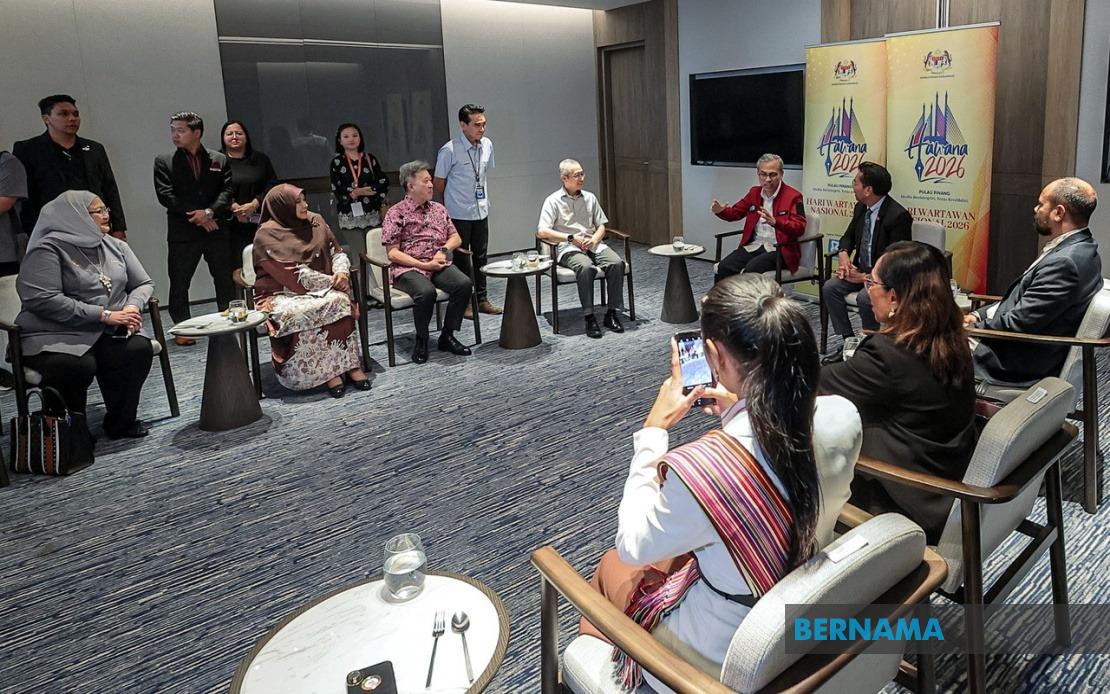
Communications Minister Datuk Fahmi Fadzil has signalled Malaysia's intent to deepen institutional ties with Timor-Leste's media sector, proposing a suite of collaborative initiatives that extend beyond traditional news-sharing arrangements. The overture emerged during discussions with Timor-Leste's Secretary of State for Social Communication, Expedito Loro Dias Ximenes, and senior figures from the nation's news agency TATOLI, held at the HAWANA 2026 conference in Butterworth on June 20.
Fahmi outlined a multifaceted approach to regional media cooperation, positioning Malaysia's state news agency Bernama and national broadcaster RTM as conduits for knowledge exchange and institutional learning. Among the proposals is a scheme to leverage the Tun Abdul Razak Broadcasting and Information Institute (IPPTAR) as a training hub for Timor-Leste journalists, reflecting an intention to position Malaysia as a technical resource for Southeast Asian media development. This initiative carries particular significance given the region's growing emphasis on professional journalism standards and the increasingly complex media landscape facing newer democracies.
The timing of these discussions proved particularly symbolic, as both ministers acknowledged a striking disparity in their respective countries' standing on international press freedom metrics. Timor-Leste currently ranks first in Southeast Asia on the World Press Freedom Index published by Reporters Without Borders, claiming 30th place globally out of 180 nations assessed. Malaysia, by comparison, holds second position regionally, a ranking that evidently prompted candid reflection from Fahmi on the domestic policy environment. The acknowledgment underscores a broader regional conversation about the conditions necessary for robust independent media and the institutional factors that either facilitate or constrain journalistic freedom.
Fahmi framed Malaysia's position as one of active improvement rather than stagnation. He emphasised that the current MADANI Government has presided over tangible gains in the World Press Freedom Index relative to previous administrations, though he characterised existing achievements as merely a platform for further advancement. This rhetorical positioning suggests awareness that press freedom remains a politically sensitive barometer of democratic health, particularly as Malaysia navigates competing pressures from government transparency advocates, media industry players, and public discourse expectations. The minister's willingness to engage substantively on the topic signals a shift towards acknowledging press freedom as an explicit policy objective rather than a peripheral concern.
The delegation from Timor-Leste's government communications sector appears strategically positioned to benefit from Malaysian institutional expertise while simultaneously serving as a subtle reminder of what comparative best practice might entail. Timor-Leste, having emerged from decades of occupation and conflict, has constructed a relatively robust legal framework protecting press freedom—a foundation that Malaysia might examine as it refines its own media regulatory architecture. The proposed journalist training programmes through IPPTAR could facilitate practical knowledge transfer on editorial practices, news production standards, and the operational dimensions of maintaining credible public broadcasting.
The broader context for these bilateral discussions involves HAWANA 2026, the sixth iteration of a regional media conference convening approximately 1,000 journalists, editors, and media professionals across Southeast Asia. Held at the PICCA Convention Centre at Butterworth Arena, the conference operates under the thematic banner 'Media Integrity Strengthens Credibility'—a framing that emphasises professional standards and institutional trustworthiness as foundational to media's social role. Prime Minister Datuk Seri Anwar Ibrahim was scheduled to officiate proceedings, indicating high-level governmental commitment to the conference's messaging around media standards and journalistic ethics.
The involvement of senior Malaysian communications officials—including Bernama chairman Datuk Seri Wong Chun Wai and chief executive Datin Paduka Nur-ul Afida Kamaludin—underscores the institutional weight attached to these discussions. The presence of Broadcasting director-general Ashwad Ismail and Bernama editor-in-chief Arul Rajoo Durar Raj suggests that cooperation proposals extend beyond ministerial rhetoric into operational planning at agency level. This multi-layered engagement reflects recognition that sustainable bilateral media partnerships require alignment across government communications bodies, news organisations, and regulatory authorities.
For Malaysian policymakers, the comparative press freedom positioning carries implications beyond diplomatic courtesy. Timor-Leste's higher ranking reflects legislative choices, institutional independence, and enforcement mechanisms that Malaysia might evaluate as it contemplates regulatory refinements. The willingness to engage with a neighbour demonstrably ahead on this specific metric potentially signals receptiveness to peer learning and international benchmarking—approaches that could inform Malaysia's media policy evolution. However, such engagement operates within Malaysia's distinct political and constitutional context, where historical sensitivities around media regulation and state-media relationships persist.
The proposed Bernama-TATOLI cooperation and RTM coordination arrangements carry practical utility for both nations. Timor-Leste gains access to technical capabilities and journalistic training resources; Malaysia acquires a regional counterpart with which to share content, coordinate coverage of mutual interest, and develop deeper institutional ties within ASEAN's media ecosystem. Such arrangements also contribute to soft power positioning, as Malaysian media institutions can project influence through training programmes and professional exchanges—a dimension particularly relevant as Southeast Asian nations navigate great power competition and information environment challenges.
The delegation's participation in HAWANA 2026 places bilateral media cooperation discussions within a broader architecture of regional professional development and standard-setting. The conference's emphasis on media integrity addresses challenges endemic to Southeast Asia, including misinformation, disinformation, resource constraints facing newsrooms, and pressure on independent journalism from various quarters. Malaysia's engagement with Timor-Leste's media representatives at this forum suggests alignment with conference themes around professional responsibility and institutional credibility as critical to media's democratic function.
Fahmi's explicit acknowledgment that Malaysia has 'room to enhance efforts, policies and initiatives' in press freedom advancement represents notable candour for a sitting minister. This framing invites scrutiny of specific policy mechanisms, regulatory reforms, and institutional autonomy measures that might drive further improvement on the World Press Freedom Index. Whether such acknowledgment translates into substantive policy shifts or remains primarily communicative will likely emerge through monitoring of Malaysian media regulatory changes, government-press relations, and statutory measures affecting editorial independence in coming quarters.
The Timor-Leste engagement also reflects Malaysia's positioning within ASEAN as a communications hub and media authority, despite the region's heterogeneous press freedom landscape. By proposing training infrastructure and institutional partnerships, Fahmi positions Malaysia as having relevant expertise to transfer regionally—a dimension of soft power that complements Malaysia's economic and diplomatic objectives within Southeast Asia. The bilateral initiatives potentially establish precedent for similar cooperation with other ASEAN partners, establishing Malaysia's communications ministry as a regional leader in media development and journalistic training programmes.

