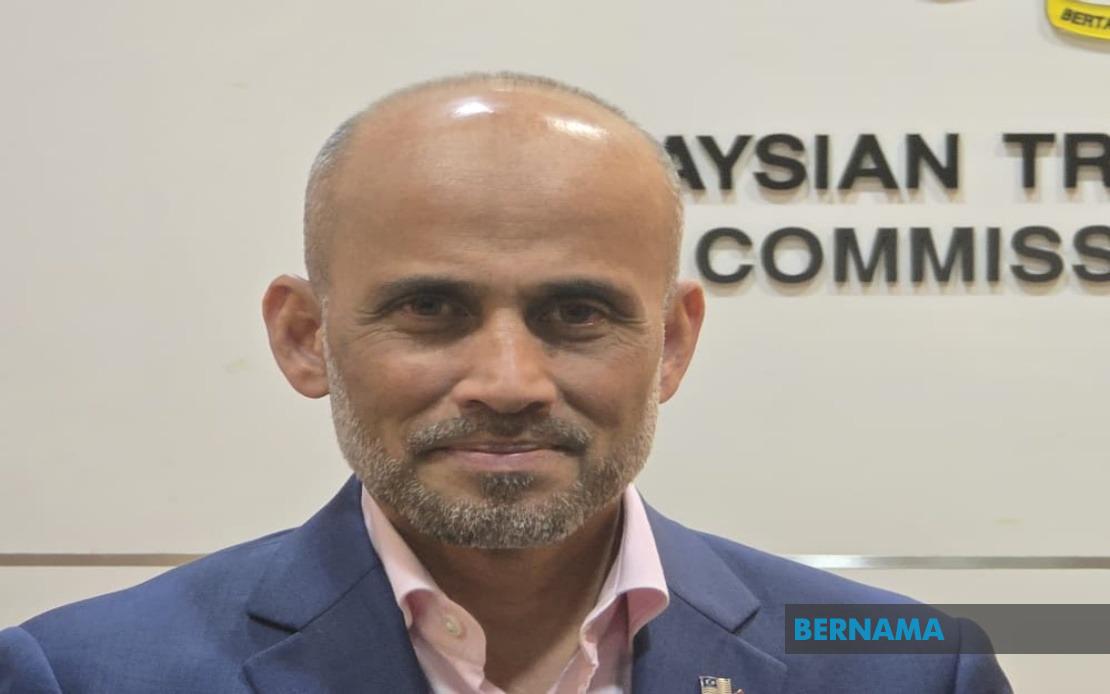
As Malaysia's High Commissioner to Singapore prepares to depart after five years of service, Datuk Dr Azfar Mohamad Mustafar has offered an optimistic assessment of bilateral relations, characterising the partnership between the two neighbouring nations as increasingly robust despite a turbulent global environment. Speaking to Bernama ahead of his transition to serve as High Commissioner to the United Kingdom from July 1, Azfar emphasised that Malaysia and Singapore have fundamentally strengthened their relationship through collaborative problem-solving and shared commitment to addressing mutual challenges. This positive outlook comes at a critical juncture as both countries navigate persistent geopolitical tensions and economic headwinds affecting the broader region.
Azfar's tenure, which began in June 2021, coincided with one of the most disruptive periods in recent history. The COVID-19 pandemic presented unprecedented complications for the Malaysia-Singapore relationship, particularly given the exceptionally high volume of cross-border commuters and the essential nature of trade flows between the two economies. When strict containment measures including land border closures were implemented, the impact on daily workers and businesses operating across both jurisdictions created immediate diplomatic and logistical pressures. The high commissioner acknowledged that these consular challenges required swift intervention and creative problem-solving to protect the interests of Malaysian nationals while respecting Singapore's public health requirements. Such crises, while difficult, paradoxically strengthened working relationships as both governments demonstrated willingness to find pragmatic solutions that preserved economic momentum while safeguarding public welfare.
Beyond pandemic management, Azfar highlighted the resilience of the bilateral economic relationship as a cornerstone of his tenure's achievements. Trade and investment flows between Malaysia and Singapore have rebounded impressively and now exceed pre-pandemic levels, demonstrating the fundamental strength and interdependence of both economies. Singapore maintains its position as one of Malaysia's most significant trading partners, a status underscored by consistent and growing commercial engagement across multiple sectors. More substantially, Singapore represents a major source of foreign direct investment into Malaysia, a relationship that has deepened rather than contracted despite global uncertainties. This investment pattern reflects investor confidence in Malaysia's economic fundamentals and the stability of the Malaysian business environment, particularly in growth corridors such as Johor.
The establishment of the Johor-Singapore Special Economic Zone represents a tangible manifestation of the two nations' commitment to deepening economic integration. This initiative creates a framework for enhanced collaboration in manufacturing, logistics, technology, and services sectors, offering Singapore investors direct access to Malaysia's larger domestic market and lower-cost production platforms. Azfar expressed optimism that this special zone, combined with other emerging opportunities, would catalyse increased Singaporean investment into Malaysia, particularly concentrated in Johor where proximity to Singapore creates natural advantages. The mechanism exemplifies how strategic infrastructure and institutional arrangements can transform bilateral relationships from transactional to transformational, creating sustained competitive advantages for both economies while contributing to broader regional development.
Looking toward the future, Azfar reaffirmed Malaysia's commitment to supporting Singapore's upcoming ASEAN chairmanship in 2025, a responsibility that carries substantial implications for the region's economic and political trajectory. Singapore has indicated that deepening economic integration among ASEAN member states will constitute a priority during its stewardship, an agenda that aligns closely with Malaysia's own economic objectives. Malaysia's willingness to leverage its diplomatic resources and bilateral relationship to advance ASEAN-wide initiatives demonstrates a mature approach to regional cooperation, recognising that collective progress creates opportunities for all member nations. This collaborative stance extends beyond bilateral matters to encompass the broader architecture of Southeast Asian integration, acknowledging that individual national interests are ultimately served through successful regional outcomes.
Among the concrete initiatives requiring Malaysia-Singapore cooperation, the ASEAN Power Grid initiative merits particular emphasis given its transformative potential for regional energy security and sustainability. This project envisions interconnected electricity infrastructure across Southeast Asia, enabling more efficient power distribution, integration of renewable energy sources, and greater resilience against supply disruptions. Singapore's position as a technological leader and Malaysia's substantial energy resources create natural complementarities that can be leveraged to advance this ambitious undertaking. The initiative simultaneously addresses climate change imperatives while enhancing energy security, making it strategically crucial during a period of geopolitical tension and energy market volatility. Malaysia's active participation in advancing this initiative reflects an understanding that energy infrastructure development constitutes essential groundwork for long-term regional prosperity.
Azfar's career trajectory reflects the continuity and seriousness with which Malaysia approaches its diplomatic relationships. Having joined the Foreign Ministry in 2001 after initially serving as an Administrative and Diplomatic Officer in 1996, Azfar brings substantial experience to bilateral relations. His previous assignment as Ambassador to France from 2018 to 2021 provided exposure to European perspectives on Asian affairs during a critical period of strategic rebalancing. This background positions him well for his incoming role in London, where Malaysia's representation to the United Kingdom carries implications for trade negotiations, security cooperation, and access to European markets. His departure from Singapore, while marking a transition, represents continuity in Malaysia's diplomatic commitment as successors inherit relationships carefully cultivated and substantially strengthened.
The broader significance of Azfar's reflections extends beyond diplomatic pleasantries or official optimism. His assessment suggests that despite persistent territorial disputes, competing economic interests, and occasional political friction, Malaysia and Singapore have developed sufficient institutional maturity and mutual understanding to navigate complex challenges collaboratively. This capacity for pragmatic cooperation, rooted in recognition of fundamental interdependence, offers lessons for other regional dyads and demonstrates the possibility of productive relationships between nations with competing interests. The Malaysia-Singapore model, characterised by compartmentalisation of disputes and focus on expanding mutual benefits, provides a template for managing bilateral tensions without allowing disagreements to metastasise into broader conflict or severed cooperation.
As geopolitical uncertainties multiply globally and Southeast Asia faces pressures from great power competition, the stability and positive trajectory of Malaysia-Singapore relations assume increasing importance for regional equilibrium. A strong bilateral relationship between these two economically significant neighbours creates a stabilising anchor within ASEAN, reducing the likelihood that bilateral disputes or alliance competition could fragment the broader regional consensus. The demonstrated ability of Malaysia and Singapore to work together on substantive economic initiatives, infrastructure projects, and regional cooperation mechanisms suggests resilience in bilateral ties that transcends individual political administrations or temporary diplomatic friction. This institutional depth and relationship stability represent valuable assets as both nations navigate the coming decade's strategic challenges and economic transitions.

