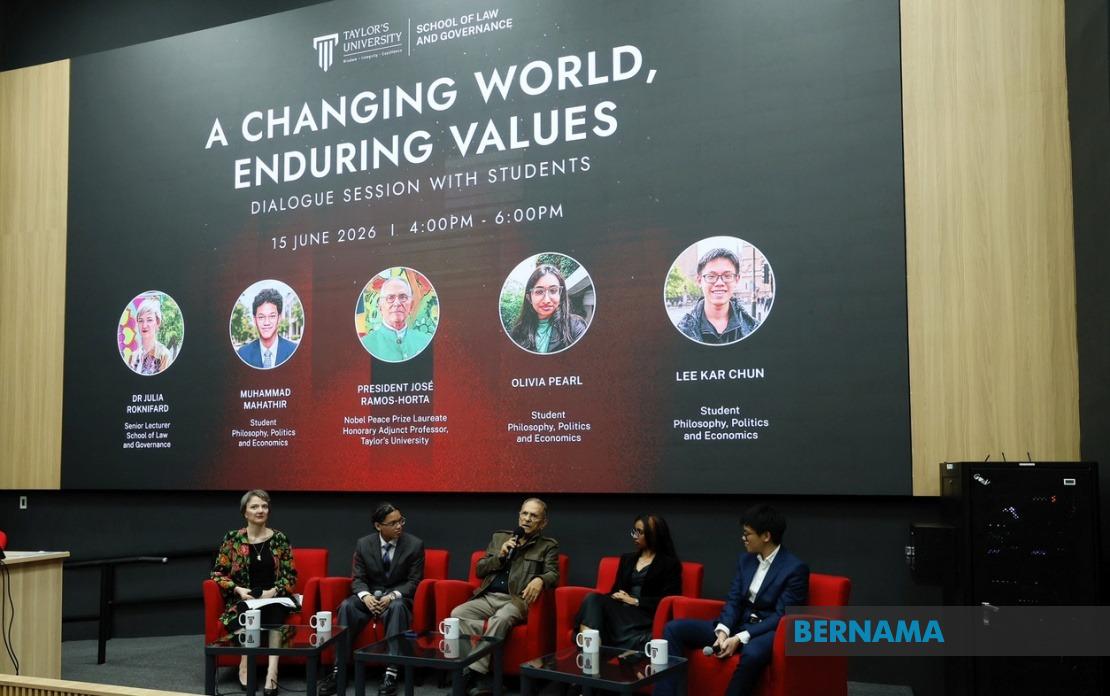
Timor-Leste's President Jose Ramos-Horta has characterised the diplomatic relationship between his nation and Malaysia as exceptionally robust, underscoring Malaysia's consistent backing and international standing in security, democratic governance and individual freedoms. The Nobel Prize-winning statesman and former journalist made these observations while visiting Taylor's University in Petaling Jaya on Monday as part of a five-day official visit, engaging directly with university students in dialogue about global shifts and unchanging values.
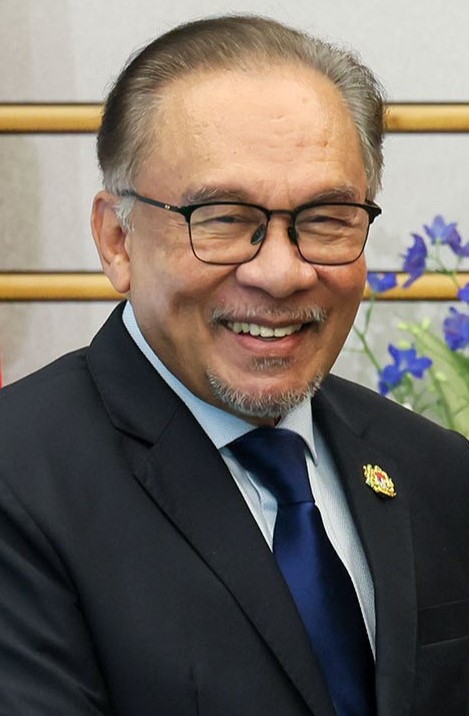
Ramos-Horta traced Malaysia's constructive engagement with Timor-Leste back several decades, noting that support extended well before his nation's formal independence in 2002, specifically referencing the Malaysian military contingent deployed during the critical 1999 peacekeeping operations. This historical perspective underscores how bilateral cooperation has evolved from immediate crisis response into a sustained partnership framework. The president observed that Malaysia has demonstrated consistent advancement over the past 40 years, with recent improvements particularly evident under the administration of Prime Minister Datuk Seri Anwar Ibrahim, whose strategic direction has contributed to strengthening Malaysia's economic performance and international influence.
When addressing the significance of professional journalism in Southeast Asia, Ramos-Horta extended warm wishes to Malaysia's media community ahead of the National Journalists' Day celebration planned for Penang this Saturday. He emphasised that an informed citizenry represents the foundation upon which national cohesion can develop and through which societies navigate complex domestic challenges. His message underscored the interconnection between press freedom, public knowledge, and national unity—themes that resonate across the region as democracies grapple with information authenticity and civic engagement.
A pivotal element of Ramos-Horta's remarks centred on Timor-Leste's forthcoming stewardship of ASEAN, with the organisation scheduled to hold its chair in his country during 2029. The president expressed confidence that necessary infrastructure projects will reach completion within the required timeframe, indicating that accelerated development efforts are underway to accommodate the regional bloc's leadership responsibilities. This appointment represents a significant affirmation of Timor-Leste's standing within ASEAN and its capacity to host major multilateral gatherings.
Timor-Leste achieved full ASEAN membership on October 26, 2025, becoming the eleventh member state and marking the organisation's first expansion in 26 years. This milestone culminated efforts that took considerable time to navigate through the regional consensus-building process required for new accession. Malaysia, which held the ASEAN chair during the previous year, played a meaningful role in facilitating this historic enlargement, a contribution Ramos-Horta specifically acknowledged during his engagement with Malaysian audiences.
For Malaysia and the broader Southeast Asian context, Timor-Leste's integration into ASEAN carries substantial implications. The inclusion of this nascent island nation with strategic geographic positioning expands the bloc's territorial footprint, influence in the maritime domain, and collective economic weight. Conversely, the challenges confronting Timor-Leste—infrastructure deficiencies, economic development requirements, institutional capacity constraints—now become shared concerns of the regional community as it assumes leadership responsibilities.
Ramos-Horta's emphasis on Malaysia's role in supporting Timor-Leste's ASEAN accession reflects deeper patterns of strategic partnership within the region. Malaysia's facilitation during its chairmanship reflected commitment to inclusive regionalism and the principle of consensual expansion that underpins ASEAN's decision-making protocols. This diplomatic investment positions Malaysia favourably in advancing future regional agendas and maintains its influence as a constructive force in Southeast Asian affairs.
The dialogue at Taylor's University allowed Ramos-Horta to communicate directly with younger Malaysian audiences about the evolving international landscape while affirming enduring principles of governance and social cohesion. His characterisation of Malaysia's development trajectory—particularly the progress achieved through recent administrative initiatives—implicitly endorses the policy directions pursued by the current government, offering international validation that may resonate domestically.
Looking ahead, the 2029 ASEAN chairmanship under Timor-Leste's stewardship will test the region's capacity to support developing member states while maintaining the bloc's effectiveness. Malaysia's continued engagement during this period will likely prove important to ensuring institutional continuity and substantive progress on regional priorities. The endorsement Ramos-Horta has offered regarding bilateral ties and Malaysian contributions positions both nations favourably for deepening collaboration across diplomatic, security, economic and cultural dimensions as Southeast Asia navigates an increasingly multipolar global environment.