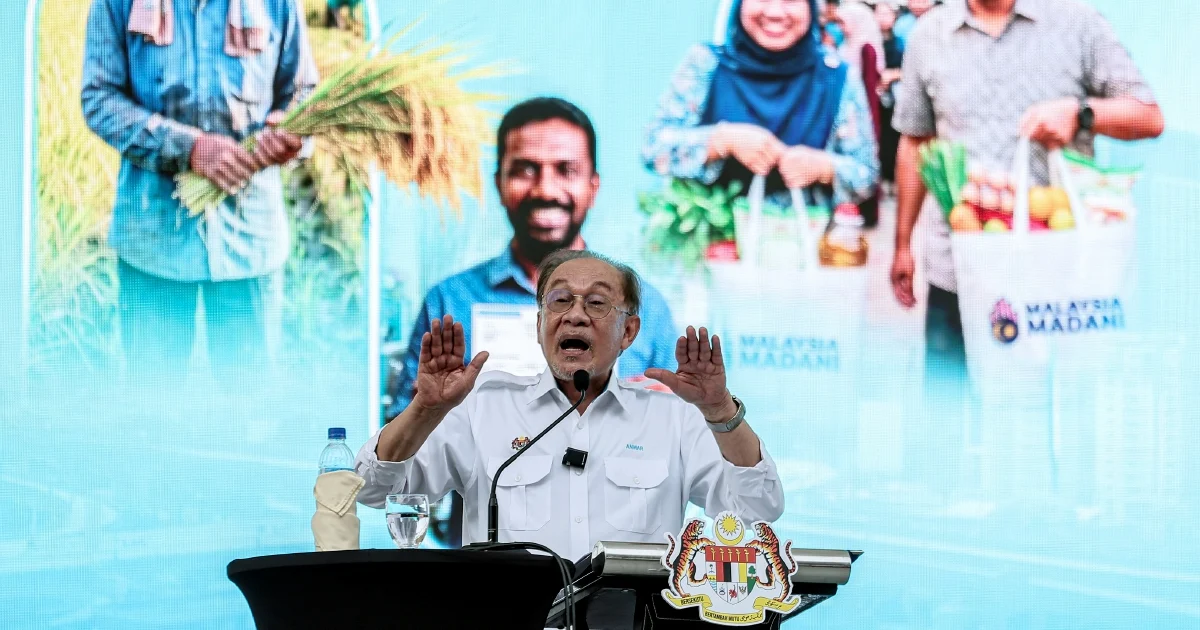
Prime Minister Anwar Ibrahim disclosed plans to significantly enhance funding for Malaysia's community policing network, announcing a substantial raise in annual grants provided to Neighbourhood Watch Areas across the country. The move sees the annual allocation climb from RM6,000 to RM10,000 per neighbourhood watch group, representing a 67 per cent increase in government support for these grassroots safety initiatives. The enhanced funding will commence on January 1, 2027, providing nearly two months for local communities to prepare for the expanded resources.
Neighbourhood Watch Areas, commonly referred to by their Malay acronym KRT, form a crucial pillar of Malaysia's community-based security framework. These voluntary citizen associations operate at the hyperlocal level, working in partnership with the Royal Malaysia Police to strengthen crime prevention and community safety. The funding provided by the government allows these groups to purchase equipment, conduct community awareness programmes, and maintain operational capabilities that would otherwise strain neighbourhood resources. By investing in these organisations, the government acknowledges their integral role in maintaining public order and fostering neighbourly vigilance.
The announcement, made during an official visit to Segamat in Johor, reflects the government's broader commitment to reinvigorating community engagement in public safety. Malaysian neighbourhoods have increasingly recognised that policing cannot rely solely on official law enforcement; sustained security requires active participation from residents who understand local dynamics and can serve as early warning systems for suspicious activity. The funding increase signals recognition that these volunteer-led organisations require adequate resources to discharge their responsibilities effectively.
For many neighbourhood watch groups across Malaysia's urban centres, towns, and villages, the additional RM4,000 annually can translate into meaningful operational improvements. Funds might be allocated towards patrol equipment, communication systems, training workshops, or community sensitisation campaigns targeting specific local issues such as drug-related activities, vehicle thefts, or house burglaries. Different neighbourhoods face distinct security challenges, and greater financial flexibility allows watch groups to tailor their approaches to their communities' particular needs. This contextual responsiveness distinguishes community-led initiatives from standardised police deployments.
The timing of this announcement, with implementation scheduled for early 2027, allows government machinery adequate opportunity to process the increased budgetary allocation through formal channels. The January 1 commencement date aligns with Malaysia's financial year structure, facilitating seamless integration into the national budget framework. Neighbourhood watch coordinators and local government representatives now have several months to prepare administrative procedures for receiving the enhanced grants and planning how best to deploy the additional resources.
From a broader policy perspective, the funding increase demonstrates the government's confidence in community-centred security approaches at a time when many societies face mounting pressure on law enforcement budgets. Rather than solely expanding police forces—an expensive proposition requiring recruitment, training, and infrastructure—governments increasingly partner with citizens to share responsibility for security. Malaysia's neighbourhood watch system exemplifies this cost-effective strategy, leveraging civic commitment to stretch official resources further and foster stronger social cohesion as a byproduct.
For Johor residents, where Anwar made the announcement, the news carries particular significance. The state has experienced waves of criminal activity in recent years, from organised crime to household theft, prompting heightened community consciousness around security matters. Enhanced funding for neighbourhood watch groups there could enable more sophisticated monitoring systems, better-coordinated patrols, and more frequent community engagement activities designed to build social resilience and reduce opportunities for criminal activity.
The increase also reflects recognition that inflation and rising operational costs have steadily eroded the value of the RM6,000 annual allocation over time. Since neighbourhood watch groups typically fund their activities from these government grants supplemented by voluntary contributions from residents, the shortfall between available funds and actual needs has likely widened. The new RM10,000 figure provides more realistic support for contemporary operations, though community observers may debate whether even this amount suffices for comprehensive neighbourhood security initiatives in higher-density urban areas.
Implementation of the new grant structure will require coordination between multiple government agencies, including the Ministry of Home Affairs, the Royal Malaysia Police, and local authorities responsible for disbursing funds to neighbourhood organisations. Clear communication about the enhanced allocation and any modified application or reporting procedures will be essential to ensure smooth transition and prevent confusion at the grassroots level. Training and guidance materials may be necessary to help neighbourhood watch coordinators maximise the impact of their expanded budgets.
The announcement carries implications for Malaysia's wider safety agenda heading into 2027. By strengthening community partnerships and demonstrating tangible investment in grassroots policing, the government reinforces its commitment to creating safer neighbourhoods through collaborative rather than purely enforcement-driven approaches. This philosophy, when effectively implemented, typically yields dividends in terms of both crime reduction and public confidence in the safety system. For Malaysian communities where neighbourhood watch groups operate actively, the increased funding represents both practical resource enhancement and symbolic recognition of their valued contributions to maintaining the country's security landscape.

