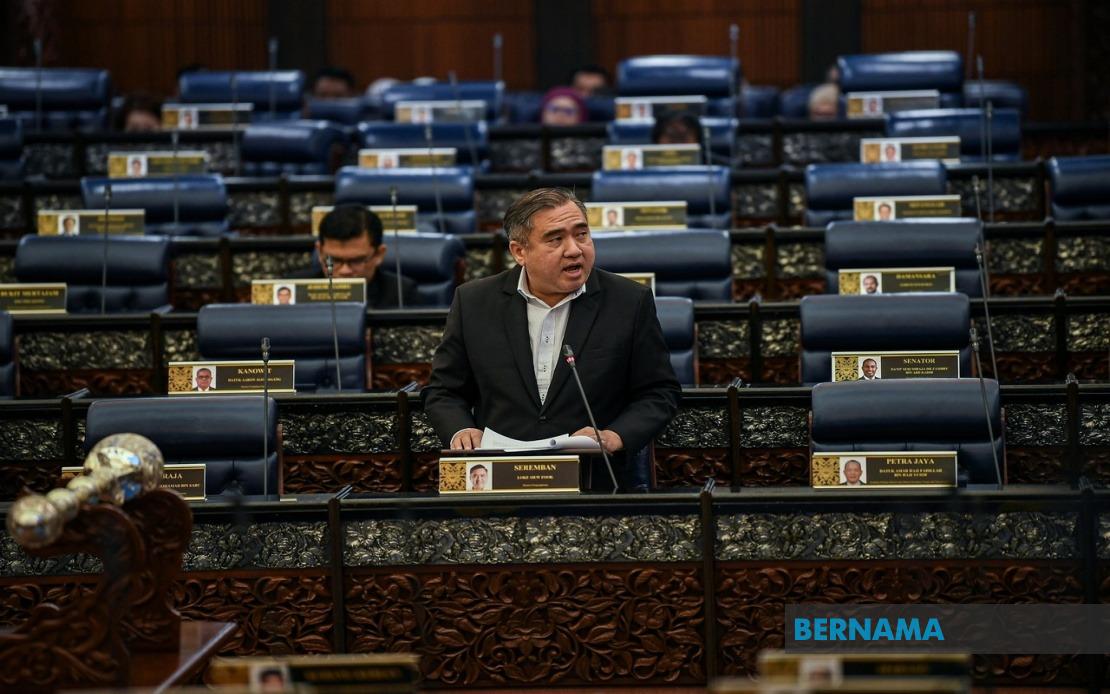
Malaysia is moving to establish dedicated legal provisions against illegal street racing through the Road Transport (Amendment) Bill 2025, which Transport Minister Anthony Loke tabled for its second reading in Parliament today. The legislation addresses a longstanding enforcement gap by creating a specific offence under Section 42A of the Road Transport Act 1987, allowing authorities to prosecute racing and unauthorised speed testing as standalone crimes rather than relying on broader dangerous driving statutes.
The new framework represents a significant shift in how Malaysia's transport authorities will tackle the persistent problem of illegal racing on urban and highway networks. Currently, such conduct falls under general dangerous driving provisions, which require demonstrable harm—an accident, injury, or fatality—before authorities can secure convictions. This evidentiary burden has hampered enforcement efforts, allowing racing enthusiasts and speed-testing motorists to operate with relative impunity provided no crash occurs. By establishing a dedicated offence, enforcement agencies gain the capacity to intervene proactively, disrupting racing activities before they escalate into tragedies.
First-time offenders will face financial penalties ranging from RM2,000 to RM10,000, or imprisonment not exceeding two years, or both penalties combined. The graduated penalty structure reflects legislative intent to distinguish between first-time transgressors and habitual offenders. For individuals convicted a second or subsequent time, penalties escalate markedly: fines between RM5,000 and RM20,000 paired with up to five years' imprisonment, or both. This tiered approach acknowledges that repeat offenders demonstrate persistent disregard for road safety and warrant harsher intervention.
Minister Loke illustrated the practical advantage of the new provision through concrete examples. Should two or more motorcyclists engage in racing or speed contests on a public road, authorities may now prosecute regardless of whether an accident materialises. Similarly, motorists who commandeer public roads for unauthorised vehicle speed testing face criminal liability independent of collision outcomes. This preventive dimension addresses a critical enforcement reality: many illegal racing incidents occur on roads crowded with other vehicles and pedestrians, where intervention before impact proves crucial to protecting innocent parties. The ability to act without awaiting catastrophic consequences represents a meaningful enhancement to traffic law enforcement capacity across Malaysia.
Complementing the racing offence, the Bill introduces Section 110B to strengthen protection for road transport enforcement personnel. The new provision creates criminal liability for individuals who obstruct, interfere with, assault, or threaten enforcement officers conducting lawful operations. The offence extends to following enforcement vehicles or disseminating information about enforcement operations designed to facilitate offender escape. Penalties include fines of RM10,000 to RM50,000, imprisonment from one to five years, or both, and the offence qualifies as arrestable, enabling police intervention without warrant.
This protection mechanism responds to documented incidents where enforcement personnel face obstruction or intimidation while pursuing commercial transport violations. The amendment recognises that safe and effective enforcement requires law enforcement officials to operate without fear of retaliation or sabotage. By criminalising information-sharing aimed at helping offenders evade detection, the Bill targets coordinated obstruction networks that have historically undermined enforcement campaigns against overloading, non-compliant vehicles, and commercial transport breaches. For Malaysian authorities managing heavy-vehicle compliance in particular, this provision directly supports operational viability on increasingly congested national highways.
Beyond these headline provisions, the amendment revises penalty structures for existing offences. Minimum fines and compound limits for selected violations will increase from RM300 to RM500, though this elevation does not mandate automatic issuance of maximum compounds. Instead, enforcement officers will retain discretion to calibrate actual compound amounts according to offence severity, offender circumstances, the settlement timeframe available, and prescribed administrative procedures. This flexible approach allows proportionate application while raising the financial stakes for traffic violation, potentially incentivising compliance more effectively than flat-rate fines.
The revised maximum compound rates take effect January 1, 2029, allowing sufficient transition time for enforcement agencies to update administrative systems and train personnel in applying the new parameters. For Malaysian motorists and commercial operators, the extended implementation window provides clarity regarding future compliance costs. The staggered approach also permits regulators to monitor early enforcement patterns and adjust procedures if necessary before the full regime becomes operational.
From a regional perspective, Malaysia's legislative move aligns with broader Southeast Asian recognition that illegal racing and reckless street driving demand dedicated criminal frameworks. Countries across the region grapple with similar enforcement challenges as motorcycle culture and automotive enthusiasm intersect with densely populated urban zones. By establishing specific offences, Malaysia joins jurisdictions attempting to move beyond treating racing as a secondary consequence of accident investigation. The approach acknowledges that preventive law enforcement, supported by clear legal authority to intervene independent of collision outcomes, proves more effective than reactive prosecution following tragedy.
For Malaysian road users, the Bill's passage would deliver meaningful protection by enabling authorities to disrupt dangerous driving conduct before it claims lives. The escalating penalty structure creates genuine deterrence, particularly for repeat offenders who recognise that second convictions carry substantial prison sentences. Commercial transport operators face incentives to maintain compliant operations and cooperate with enforcement, while enforcement personnel gain both legal tools and personal protection necessary to conduct thorough compliance campaigns. Implementation of these amendments would signal sustained governmental commitment to traffic safety and enforcement credibility across Malaysia's increasingly complex road network.

