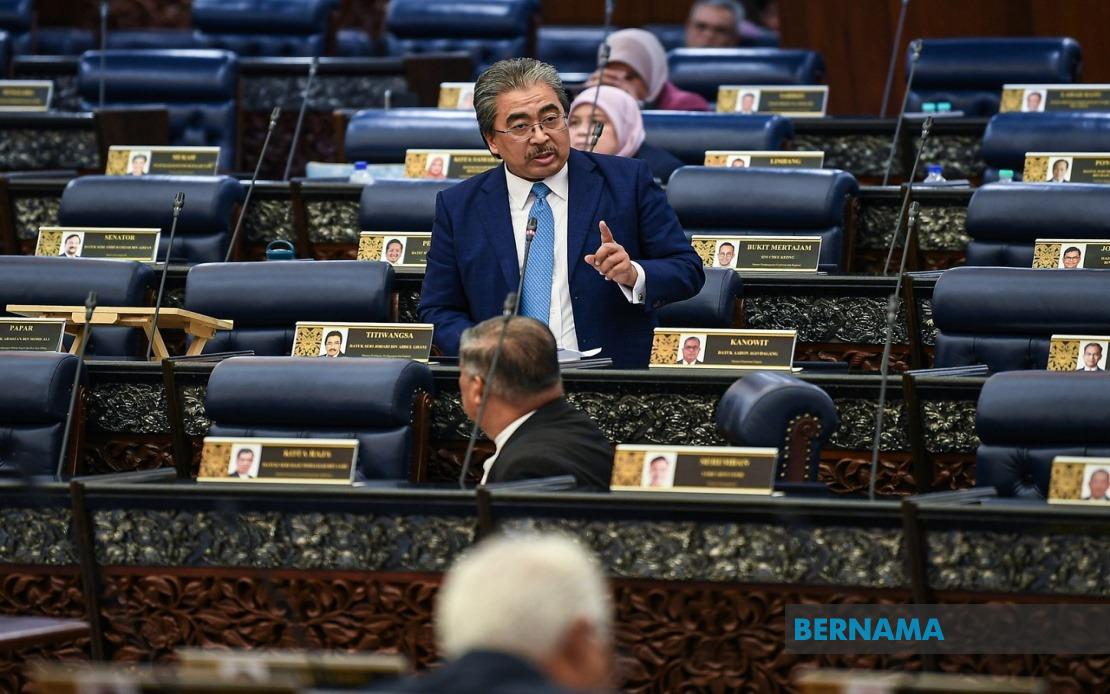
Malaysia is moving to establish a system preventing the importation of goods manufactured under forced labour conditions, positioning itself as a proactive participant in global supply-chain governance. Investment, Trade and Industry Minister Datuk Seri Johari Abdul Ghani disclosed the development during parliamentary proceedings, framing the initiative as essential for maintaining trade relationships and meeting international standards. The timing reflects mounting pressure from the United States, which has signalled its readiness to impose tariffs on Malaysian exports unless the country demonstrates concrete action on labour compliance within weeks.
The government has assembled an Inter-Agency Task Force on Forced Labour, which operates under the stewardship of the Ministry of Investment, Trade and Industry. This collaborative approach brings together substantial institutional firepower: the Ministry of Finance handles economic implications, the Ministry of Foreign Affairs manages diplomatic dimensions, the Ministry of Home Affairs addresses security and immigration aspects, and the Ministry of Human Resources ensures labour-standard alignment. Supporting agencies include the Attorney-General's Chambers, Royal Malaysian Customs Department, Malaysian Border Control and Protection Agency, Royal Malaysian Police, Malaysian Investment Development Authority, and the Malaysian External Trade Development Corporation. This breadth of participation suggests the government recognises forced-labour compliance extends beyond single-agency responsibility, touching customs enforcement, immigration procedures, police investigations, and investment approval frameworks.
Malaysia currently lacks statutory instruments or operational mechanisms to prevent goods produced with forced labour from entering its import stream. This regulatory vacuum exposes the country to international criticism and economic sanctions. The absence reflects Malaysia's historical reliance on voluntary industry compliance and bilateral arrangements rather than prescriptive domestic legislation. Establishing such a framework requires balancing enforcement rigour with commercial practicality—overly restrictive measures could disrupt supply chains and raise import costs for businesses, whilst weak frameworks invite international rebuke and economic penalties. The task force must navigate these competing pressures whilst developing mechanisms that satisfy both domestic stakeholders and trading partners.
The urgency stems from escalating American scrutiny. In June 2026, the United States announced preliminary findings from an investigation covering 60 countries, assessing whether their governments adequately enforce import restrictions on forced-labour products. Malaysia emerged among 54 nations identified as lacking specific legal constraints on such goods, whilst six countries possessed laws but failed enforcement. This classification carries material consequences: the US has signalled an indicative 10 per cent tariff on Malaysian exports becomes operative after July 24 unless compliance improves. For a nation whose prosperity depends significantly on manufacturing exports and trade relationships, such tariffs represent a substantial economic threat. The 10 per cent rate, whilst seemingly modest, compounds rapidly across diverse product categories—from electronics and semiconductors to textiles and automotive components—potentially affecting billions in annual revenue.
The forced-labour investigation nears completion, whereas a parallel US Section 301 examination into market access remains ongoing. This dual-track scrutiny reflects broader American anxieties about supply-chain transparency and labour standards within Southeast Asia. Malaysia's geographic position as a major manufacturing hub and gateway economy means US enforcement priorities directly impact regional supply networks. Neighbouring countries observe Malaysia's regulatory responses carefully, recognising that stringent Malaysian standards may eventually cascade throughout ASEAN supply chains as international buyers demand uniform compliance across suppliers.
Implementing an effective forced-labour import mechanism requires Malaysia to establish verification systems for incoming goods. This involves customs procedures capable of screening products for labour-practice compliance, potentially through supplier documentation, third-party audits, or certification requirements. Such systems demand investment in training customs officers, developing verification protocols, and creating databases of compliant suppliers. Moreover, Malaysia must determine enforcement standards—which products face heightened scrutiny, which labour practices constitute forced labour under Malaysian law, and what evidentiary thresholds trigger import denial. These definitional questions carry enormous practical weight.
The regulatory framework must distinguish Malaysia's obligations as an importing country from its responsibilities regarding domestic labour practices. International forced-labour standards, particularly International Labour Organization conventions, establish minimum benchmarks. Malaysia currently ratifies several ILO instruments but has experienced criticism regarding enforcement, particularly concerning migrant worker protections in agriculture and construction. Establishing an import-ban mechanism creates political space to strengthen domestic labour enforcement simultaneously—demonstrating to international partners that Malaysia takes labour rights seriously across its entire economy rather than adopting selective standards for imports whilst tolerating abuses domestically.
For Malaysian businesses, the emerging framework carries both compliance costs and competitive implications. Import-dependent manufacturers relying on suppliers in countries with weaker labour enforcement may face supply disruptions or require investments in supply-chain auditing. Export-oriented companies face potential market access restrictions if their operations or supply chains utilise forced labour. Conversely, companies achieving certified compliance gain competitive advantages in American and other developed markets increasingly demanding ethical-sourcing credentials. The mechanism thus functions as a market-structure tool, rewarding compliant businesses whilst penalising those cutting corners through labour exploitation.
The regional dimension merits attention. Southeast Asian manufacturing interconnection means Malaysia's import restrictions influence supplier behaviour across Thailand, Vietnam, Cambodia, and Indonesia. Stricter Malaysian standards may encourage regional improvements in labour practices as suppliers seek to maintain market access through multiple ASEAN importers simultaneously. Alternatively, restrictions might shift production to countries with weaker enforcement, temporarily displacing problems rather than solving them. ASEAN coordination on forced-labour standards could strengthen regional competitiveness whilst raising labour floors systematically.
Implementation timing proves critical. With the July 24 deadline approaching, Malaysia must demonstrate tangible progress to forestall American tariffs. This compressed timeline creates risks—hastily drafted regulations may contain enforcement gaps or unintended consequences. Yet delay invites tariff application, imposing immediate economic costs that funding proper mechanism development becomes more difficult. The task force must balance thoroughness with decisiveness, likely deploying phased implementation beginning with critical import categories and expanding subsequently.
Successfully managing this challenge requires Malaysia to present itself internationally as a serious partner in global supply-chain governance whilst domestically protecting business competitiveness and worker interests. The forced-labour mechanism represents an inflection point: demonstrating commitment to international standards opens market access and avoids tariffs, but insufficient implementation disappoints both international partners and local stakeholders concerned about labour practices. How effectively Malaysia constructs and operates this mechanism will influence both its trading relationships and its credibility as a responsible actor within the evolving international labour-rights framework.

