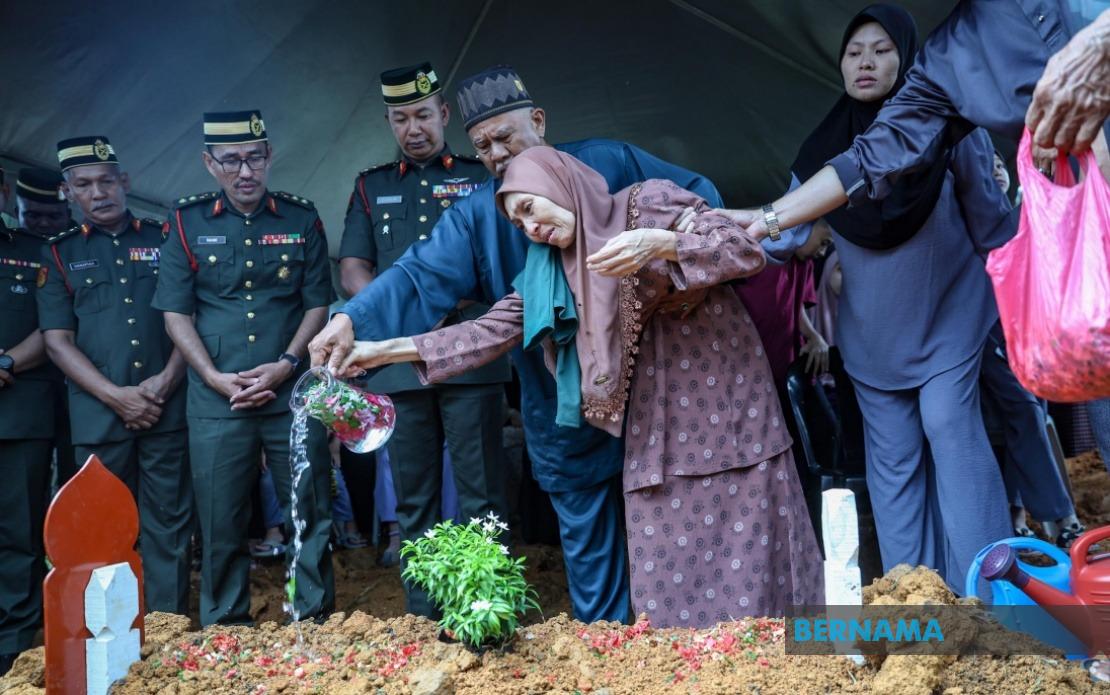
Private Siti Khadijah Sungip, a 24-year-old member of the Malaysian Army's First Squadron of the Royal Engineer Regiment, was buried at 1.15 pm on June 17 in Kluang, one day after a catastrophic training accident claimed her life at Hobart Camp in Gurun, Kedah. The funeral brought together military personnel, family members, and mourners at Taman Sri Lambak Muslim Cemetery in a solemn gathering that underscored the human cost of military service and training operations within the armed forces.
The incident occurred at 10.57 am on June 16 during a grenade throwing training exercise at the camp's target range. Private Siti Khadijah and Corporal Norazmi Abu Bakar, who served with the Sixth Battalion of the Royal Malay Regiment, both sustained fatal injuries from an explosion that erupted during the operation. Both soldiers were confirmed dead en route to Sultan Abdul Halim Hospital in Sungai Petani, with their conditions deemed too critical for medical intervention.
Following the incident, Private Siti Khadijah's body underwent post-mortem examination at Sultanah Bahiyah Hospital in Alor Setar, completing procedures around 2.30 am on the morning of her funeral. The remains were then transferred to her family residence in Taman Sri Lambak, arriving at 12.10 pm before being taken for the funeral prayer at Darul Iman Mosque. The military ensured dignified escort throughout, with the First Field Troop Leader, Lieutenant Muhammad Lutfil Hadi Osman, and four members of the First Squadron accompanying the body.
The funeral ceremony carried full military honours, reflecting Private Siti Khadijah's status as an active service member. The symbolic presentation of the Jalur Gemilang to her next of kin formed the centrepiece of the proceedings. Brigadier General Datuk Zulhelmy Masdar, Commander of the 7th Brigade headquartered at Mahkota Camp, officiated this handover to the deceased's father, Sungip Jais, 65, a gesture that acknowledged both the family's loss and the soldier's contribution to the military service.
Major Mohd Azlan Shah Abdul Razak from the TDM Field Engineering Institute conducted the funeral prayer, ensuring religious observances were properly conducted for the fallen soldier. The presence of multiple military units and senior officers at the ceremony illustrated institutional respect for Private Siti Khadijah and recognition of the tragedy among the armed forces hierarchy.
The Hobart Camp incident represents a serious operational concern for the Malaysian Army and raises questions about training protocols and safety measures during high-risk exercises. Grenade throwing drills are essential components of military training but demand rigorous adherence to safety procedures and close supervision. The simultaneous death of two soldiers suggests the explosion was catastrophic in nature, warranting thorough investigation into what transpired at the target range.
For the Malaysian Army, such incidents carry both immediate and long-term implications. They necessitate comprehensive reviews of training methodologies, equipment maintenance, and supervisory protocols to prevent future occurrences. The death of personnel during training operations, rather than combat, presents particular challenges for institutional accountability and public confidence in military safety management.
Private Siti Khadijah's death also highlights the risks undertaken by women in active military service. As the Malaysian Armed Forces continue to expand roles for female personnel, incidents such as this underscore that women serving in combat-support and technical positions face identical operational hazards as their male counterparts. Her position within the Royal Engineer Regiment placed her in demanding training environments requisite for operational readiness.
The involvement of the Royal Engineer Regiment and the Royal Malay Regiment in the incident demonstrates that training accidents can affect soldiers across different military branches. The Royal Engineer Regiment, responsible for critical infrastructure and combat engineering tasks, conducts particularly hazardous training exercises as part of occupational requirements. The loss of personnel from different units in a single incident suggests the training operation may have involved joint or coordinated exercises.
For Malaysian families with military connections, such tragedies reinforce the sobering reality that military service, even during training phases, carries inherent risks. The Kluang funeral ceremony provided space for collective mourning while maintaining military tradition and honouring institutional values. The gathering reflected the dual nature of military loss—personal tragedy for families and institutional impact for the armed forces.
The Royal Engineer Regiment and broader Malaysian Army structure will likely conduct comprehensive accident investigations in accordance with military protocols. Such investigations typically examine equipment condition, training procedures, adherence to standing operating procedures, supervisory presence, and environmental factors. The findings will inform whether systemic changes are necessary across the force.
As the military community processes this loss, the focus extends beyond the immediate tragedy to broader questions about training safety culture, resource allocation for supervision and oversight, and equipment reliability. For Southeast Asia, where multiple nations maintain significant military training establishments, the incident serves as a sobering reminder of occupational hazards even in peacetime training environments.