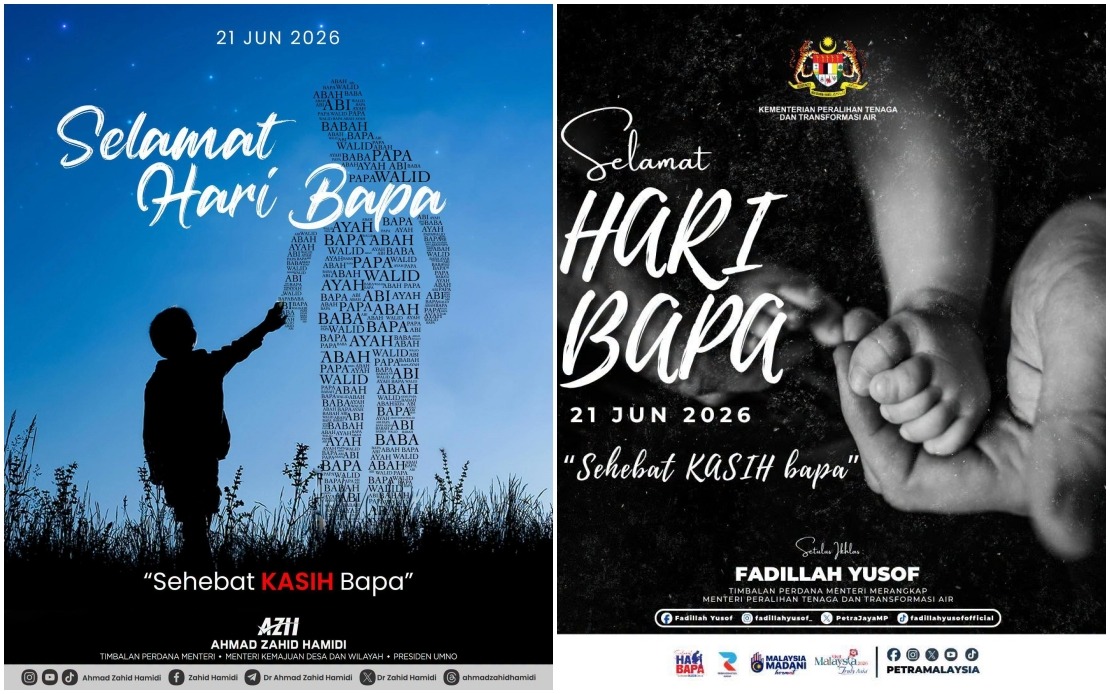
Malaysia's leadership marked Father's Day on June 21 with heartfelt acknowledgements of paternal sacrifice and commitment, with Deputy Prime Ministers Datuk Seri Dr Ahmad Zahid Hamidi and Datuk Seri Fadillah Yusof leading a chorus of ministerial tributes that emphasised the often-unspoken contributions fathers make to family life and societal development.
Ahmad Zahid, who holds the Rural and Regional Development portfolio alongside his deputy prime ministerial responsibilities, reflected on the profound yet frequently overlooked nature of fatherhood. Drawing a parallel to the film Papazola, he noted that paternal love transcends verbal expression, instead manifesting through sustained effort, quiet prayers, perseverance through hardship and deliberate steps taken in service of family security. His observation captures a cultural reality across Malaysia's diverse communities, where many fathers prioritise actions over emotional articulation in demonstrating their affection and commitment.
The Deputy Prime Minister's address carried an implicit call for intergenerational reconciliation and appreciation. He urged adult children to maximise their time with aging fathers, to inquire regularly about their wellbeing and to articulate the gratitude that may have accumulated silently over decades of parental support. This exhortation carries particular resonance in contemporary Malaysia, where rapid urbanisation and migration patterns have sometimes fractured traditional family structures and proximity.
Fadillah Yusof, the Minister of Energy Transition and Water Transformation, broadened the conceptual framework surrounding fatherhood by acknowledging the linguistic and cultural plurality that characterises Malaysian family life. By naming the various terms through which fathers are addressed across Malaysia's communities—bapa, ayah, abah, papa, walid, abi, appa and apak—Fadillah's statement recognised that fatherhood transcends any single cultural or linguistic identity. This inclusivity reflects Malaysia's multicultural fabric and the shared paternal responsibilities that bind families across ethnic and religious boundaries.
Fadillah's reflection expanded the paternal role beyond the conventional breadwinner designation, instead positioning fathers as educators, protectors and exemplars of character. This reconceptualisation aligns with evolving understandings of masculinity and parental involvement that have gained traction regionally and globally. The Minister emphasised that the transmission of wisdom through counsel, the foundation-laying through demonstrated values, and the protective presence fathers provide collectively constitute the scaffolding upon which family harmony and societal stability rest.
Communications Minister Datuk Fahmi Fadzil added his voice to the ministerial chorus, offering gratitude on behalf of the government for the accumulated love, sacrifice, guidance and dedication that fathers invest in their families. His invocation of blessings for paternal health, strength and happiness subtly acknowledged the physical and emotional toll that sustained family provision and protection demands. In this framing, fatherhood emerges not as an abstract social role but as a demanding personal commitment requiring sustained physical and emotional reserves.
Health Minister Datuk Seri Dr Dzulkefly Ahmad introduced a public health dimension to the Father's Day discourse, connecting paternal wellbeing directly to family continuity and children's future achievements. By urging fathers to prioritise their own health maintenance, Dzulkefly articulated an often-overlooked truth: that paternal longevity and vitality enable fathers to witness their children's milestone moments and major life accomplishments. This health-focused perspective carries practical significance in Malaysia, where non-communicable diseases and lifestyle factors increasingly impact middle-aged and older men.
The ministerial tributes collectively constitute a form of state-sanctioned recognition that extends beyond perfunctory celebration into substantive acknowledgement of paternal contribution. By having multiple Cabinet members participate in Father's Day messaging, the Malaysian government signalled that fatherhood and family structure occupy a legitimate place within official discourse and policy concern. This institutional validation carries particular importance in societies where traditional family values remain culturally significant.
The emphasis on unspoken love and demonstrated action rather than verbal expression reflects cultural patterns prevalent across Malaysia and Southeast Asia more broadly. Where individualistic Western frameworks might prioritise explicit emotional communication, the ministerial statements suggested that Malaysian fathers frequently express devotion through work, sacrifice and quiet protection. This framing neither diminishes paternal affection nor suggests emotional distance; rather, it acknowledges culturally specific modes of emotional expression that remain deeply meaningful despite their quietness.
The Father's Day tributes also implicitly addressed contemporary anxieties about family fragmentation and generational disconnection in rapidly urbanising Malaysia. By encouraging children to proactively maintain relationships with fathers, to seek their counsel and to express dormant appreciation, the ministers spoke to a societal need for intentional relationship maintenance. Modern work patterns, geographic dispersion and digital mediation have reshaped how Malaysian families maintain bonds, rendering deliberate effort increasingly necessary to preserve intergenerational connection.
These ministerial statements demonstrate how official rhetoric can simultaneously honour traditional family structures while acknowledging their contemporary pressures and transformations. The recognition that fathers serve as educators and moral guides reflects enduring cultural values while the emphasis on health maintenance and intentional relationship-building acknowledges modern realities. This balance allows the tributes to resonate across different generational cohorts and family configurations within Malaysian society.

