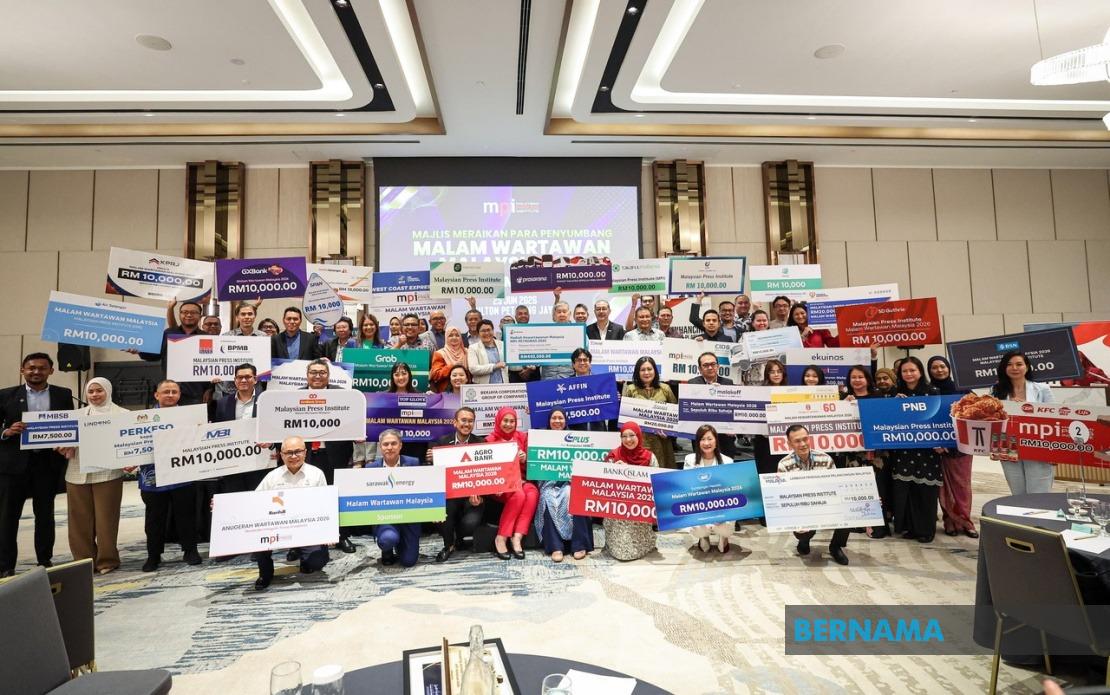
The Malaysian Press Institute has successfully mobilised over RM1 million in financial backing for its flagship Malaysia Press Night 2026, underscoring sustained commitment from the corporate sector and news organisations to support professional journalism in the country. The fundraising effort, detailed at an appreciation ceremony in Kuala Lumpur, represents a significant endorsement of the annual event's importance to Malaysia's media landscape and journalistic standards.
Dr Ainol Amriz Ismail, the MPI's chief executive officer, revealed that the RM1.037 million haul breaks down into RM587,000 raised from 60 contributing organisations and RM450,000 from PETRONAS, the national oil corporation that has underwritten the prestigious MPI-PETRONAS Malaysian Journalism Awards since 1994. This dual-source funding model demonstrates how public-spirited companies and industry players have aligned their corporate interests with the broader mission of elevating journalism practice. PETRONAS's sustained backing over three decades reflects a strategic recognition that media integrity and professional standards serve the long-term health of Malaysia's business environment and public discourse.
The event assumes heightened significance this year with the confirmation that Prime Minister Datuk Seri Anwar Ibrahim will grace the Malaysia Press Night on July 17. The prime ministerial attendance signals government acknowledgment of journalism's role in national development and democratic governance. Such visible support from the highest political office validates the profession's standing at a time when media outlets globally face mounting pressures from misinformation, fragmentation, and economic headwinds. For Malaysian news organisations navigating a complex operating environment, the prime minister's participation offers both symbolic encouragement and practical recognition of journalism's institutional importance.
Dr Ainol Amriz articulated the deeper purpose underlying the fundraising campaign, framing the Malaysia Press Night not merely as a ceremonial gathering but as an affirmation of journalism's foundational responsibilities. He stressed that the contributions reflect a collective commitment to sustaining professional, ethical, and trustworthy reporting that serves the public interest and strengthens national discourse. This framing is particularly resonant in Southeast Asia, where several countries grapple with challenges to press freedom and journalistic independence. By positioning the Malaysia Press Night as a celebration of factual accuracy and information verification, the MPI reinforces journalism's counter-cyclical role during periods when false narratives and disinformation campaigns gain traction.
The Malaysian Press Institute's governing structure, evident in the attendance of Datuk Yong Soo Heong as president and other council members, reflects institutional continuity and diverse stakeholder engagement. Bernama's chief executive officer, Datin Paduka Nur-ul Afida Kamaludin, attended the ceremony alongside PETRONAS's Jalina Joheng, demonstrating the multi-institutional nature of Malaysia's media governance and corporate engagement with journalism standards. This networked approach to supporting professional development distinguishes Malaysia's approach from more fragmented or purely commercial models elsewhere in the region, where journalism often lacks institutional champions.
Beyond the immediate fundraising milestone, Dr Ainol Amriz highlighted the cascading benefits that such financial support generates across Malaysia's broader media ecosystem. The contributions enable the MPI to maintain ongoing professional development programmes, deliver industry training initiatives, and sustain broader efforts that benefit journalists and media organisations nationwide. These institutional investments address a critical gap in many developing journalism markets: the ongoing need for skills upgrading, ethical training, and technical expertise that keeps newsrooms competitive and credible. For Malaysian journalists confronting rapidly evolving digital platforms and audience expectations, access to such professional development becomes increasingly vital to career advancement and workplace relevance.
The ceremony also featured a substantive forum examining contemporary challenges and opportunities within Malaysian journalism, underscoring that the Malaysia Press Night extends beyond ceremonial recognition to include serious industry dialogue. The forum brought together Malaysian Journalism Icon Datuk A. Kadir Jasin, representing journalism's historical conscience and institutional memory, alongside contemporary media leaders including Karangkraf Group's Firdaus Hussamuddin, TV AlHijrah's Namanzee Harris, and Vanakkam Malaysia's Thiaga Rajan Muthusamy. This intergenerational panel composition creates space for discussing both the enduring principles underlying journalism practice and the novel challenges emerging from digital transformation, audience fragmentation, and changing consumption patterns.
For Malaysian and Southeast Asian readers, the Malaysia Press Night carries implications extending beyond the immediate media industry. A press corps supported through institutional funding and professional development programmes produces more rigorous reporting on governance, corporate accountability, and public policy. Enhanced journalistic capacity indirectly strengthens investor confidence, democratic institutions, and civil society oversight. The RM1 million fundraising effort therefore represents not merely a media industry event but a foundational investment in Malaysia's information infrastructure and democratic health.
PETRONAS's consistent three-decade sponsorship of the MPI-PETRONAS Malaysian Journalism Awards merits particular analytical attention, as it suggests that Malaysia's corporate sector has internalised the value proposition that supporting journalism serves broader business interests. Companies operating in competitive markets benefit from transparent governance, reliable information flows, and public trust—all conditions that responsible journalism helps establish. This enlightened self-interest contrasts with approaches in some jurisdictions where corporate and political actors view journalism with suspicion or hostility, creating defensive newsroom cultures that ultimately impoverish public information.
The MPI's success in securing contributions from 60 separate organisations suggests widespread recognition among Malaysia's institutional ecosystem that journalism requires active support to thrive. This distributed funding base, while still modest in absolute terms, protects editorial independence more effectively than reliance on single funders or solely advertising revenue. For Malaysian newsrooms, such institutional pluralism creates space for editorial decisions driven by public interest rather than advertiser pressure or political leverage.
Looking forward, the Malaysia Press Night 2026 will occur within a regional context where several Southeast Asian nations grapple with deteriorating press freedom indices and shrinking advertising markets for traditional news organisations. Malaysia's ability to mobilise corporate and institutional support for journalism through events like the Malaysia Press Night offers a partial counter-narrative to broader regional trends. The event's existence and financial viability signal that sustained professional journalism remains valued by significant segments of Malaysia's business leadership, government, and civil society. Whether such support suffices to address mounting commercial pressures on news organisations remains an open question, but the RM1 million commitment represents tangible acknowledgment of journalism's importance to Malaysia's future.

