Malaysia's Minister in the Prime Minister's Department (Religious Affairs), Datuk Dr Zulkifli Hasan, has called on the nation's young people to find inspiration in the profound spiritual and social lessons embedded within the Hijrah narrative, positioning the historical migration as a blueprint for contemporary positive change. Speaking in Putrajaya on June 16, Zulkifli emphasised that Malaysia's youth demographic possesses exceptional capacity for transformation and nation-building, but requires meaningful reflection on the deeper significance of Prophet Muhammad SAW's journey from Makkah to Madinah to channel that potential constructively.
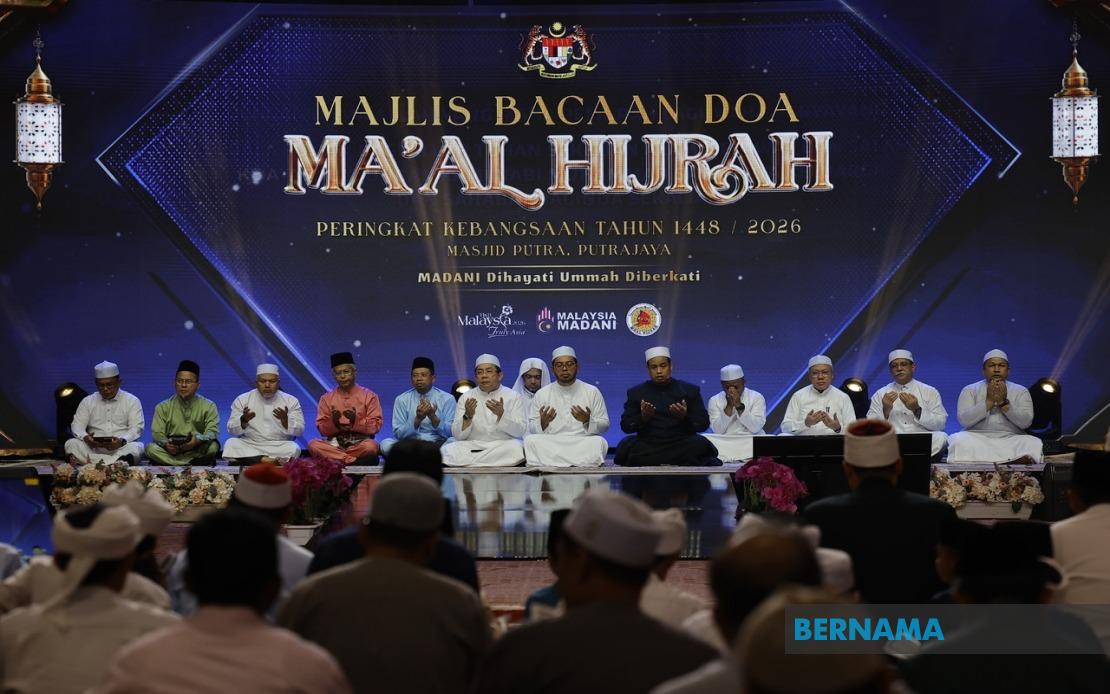
The minister's exhortation arrives as the country gears up for the national Maal Hijrah 1448H/2026M celebration, scheduled for June 18 at Putra Mosque under the patronage of Sultan Nazrin Shah, Sultan of Perak. This year's observance carries particular significance through its thematic focus on encouraging Malaysians to internalise and translate the principles of Hijrah into practical action within their communities and personal lives. Rather than positioning the commemoration as a purely historical reflection, Zulkifli framed it as an opportunity for contemporary Malaysian society to extract actionable wisdom from how the Prophet established foundational institutions and social structures in Madinah following his migration.
A distinguishing feature of this year's celebration is its structural approach, which deliberately positions Putra Mosque as the ceremonial starting point rather than a peripheral venue. This choice carries symbolic weight—Zulkifli underscored that the mosque functioned historically as the cornerstone institution from which civilisation and community development radiated outward. By anchoring the national programme at this religious and social nexus, organisers intended to rekindle awareness among participants about how spiritual conviction and institutional frameworks intersect to create meaningful societal progress. The ceremonial proceedings will commence at 7 am, with the conferring of national and international Maal Hijrah Figure awards forming the centrepiece of the morning's activities.
Recognising contemporary economic pressures facing the nation, Zulkifli acknowledged that this year's festivities would operate on a more austere scale compared to previous celebrations. The decision reflects heightened consciousness regarding energy conservation amid persistent global supply chain disruptions and inflationary pressures affecting multiple sectors across Southeast Asia. This measured approach demonstrates how religious and cultural observances in Malaysia are increasingly calibrated to align with broader national imperatives around fiscal prudence and environmental stewardship, signalling that spiritual commitment need not conflict with practical resource management.
The programme's intellectual dimension will be anchored by a keynote lecture series featuring distinguished national and international scholars at the JAKIM Auditorium on June 18, anticipated to draw approximately one thousand participants. This component creates space for broader public engagement beyond ceremonial proceedings, allowing attendees to access substantive commentary from established religious thought leaders regarding how contemporary Muslims—and Malaysians specifically—might operationalise Hijrah principles within their daily contexts. The anticipated diversity of speaker perspectives, spanning both domestic and international forums, positions the dialogue as an opportunity to situate Malaysia's development trajectory within broader Islamic intellectual traditions.
For Malaysian youth specifically, the Hijrah narrative carries particular resonance in a nation navigating rapid modernisation, economic complexity, and evolving social expectations. The principles embedded within the migration story—perseverance through adversity, commitment to community welfare, institutional building, and the integration of spiritual conviction with pragmatic social organisation—offer a counternarrative to individualistic approaches that sometimes dominate youth discourse in upper-middle-income countries. By explicitly linking youth empowerment rhetoric to the Hijrah framework, Zulkifli positioned spiritual reflection not as escapism from contemporary challenges but as a catalyst for constructive engagement with them.
The emphasis on institutional development through mosque establishment carries additional contemporary relevance for Malaysian governance discussions. As federal and state governments wrestle with questions about how religious institutions can contribute to broader social development objectives—from community healthcare and education to interfaith dialogue—the symbolic centring of the mosque within the celebration indirectly validates these institutions as multipurpose social anchors rather than exclusively devotional spaces. This framing aligns with broader Southeast Asian trends where religious organisations increasingly assume quasi-developmental roles, particularly in communities where state capacity remains constrained.
From a regional perspective, Malaysia's approach to Maal Hijrah observance offers instructive contrasts with how neighbouring Muslim-majority nations commemorate the Islamic calendar milestone. While Saudi Arabia and Egypt emphasise the historical pilgrimage dimension, Malaysia's iteration foregrounds youth mobilisation and nation-building imperatives, reflecting the country's distinct developmental priorities as an ethnically diverse, middle-income nation navigating demographic transitions. The deliberate cultivation of an intellectual platform around Hijrah principles suggests official recognition that symbolic religious observances gain greater traction when coupled with substantive engagement opportunities for younger generations.
The participation of international figures alongside national scholars also signals Malaysia's positioning within transnational Islamic networks and intellectual spaces. By facilitating cross-border exchange around interpretations of the Hijrah narrative, the celebration implicitly endorses a cosmopolitan approach to Islamic learning rather than insular nationalism. This openness creates opportunities for Malaysian youth to encounter diverse perspectives on how Islamic principles might inform responses to shared challenges—from environmental sustainability to technological disruption to governance reform—facing Muslim-majority nations throughout Asia and beyond.
Looking forward, the success of this year's Maal Hijrah 1448H programming will likely be measured not merely through attendance figures or ceremonial proceedings but through whether youth engage substantively with the intellectual and spiritual content on offer. The thematic emphasis on internalisation and reflexive practice suggests organisers recognise that contemporary Malaysian youth require more than exhortation; they require meaningful engagement opportunities where abstract principles intersect visibly with concrete life circumstances. As the nation confronts challenges ranging from economic inequality to skills mismatches in the labour market to political polarisation, the Hijrah framework—properly explicated and contextualised—may indeed offer valuable orientational resources for young Malaysians seeking to contribute constructively to their communities and nation.