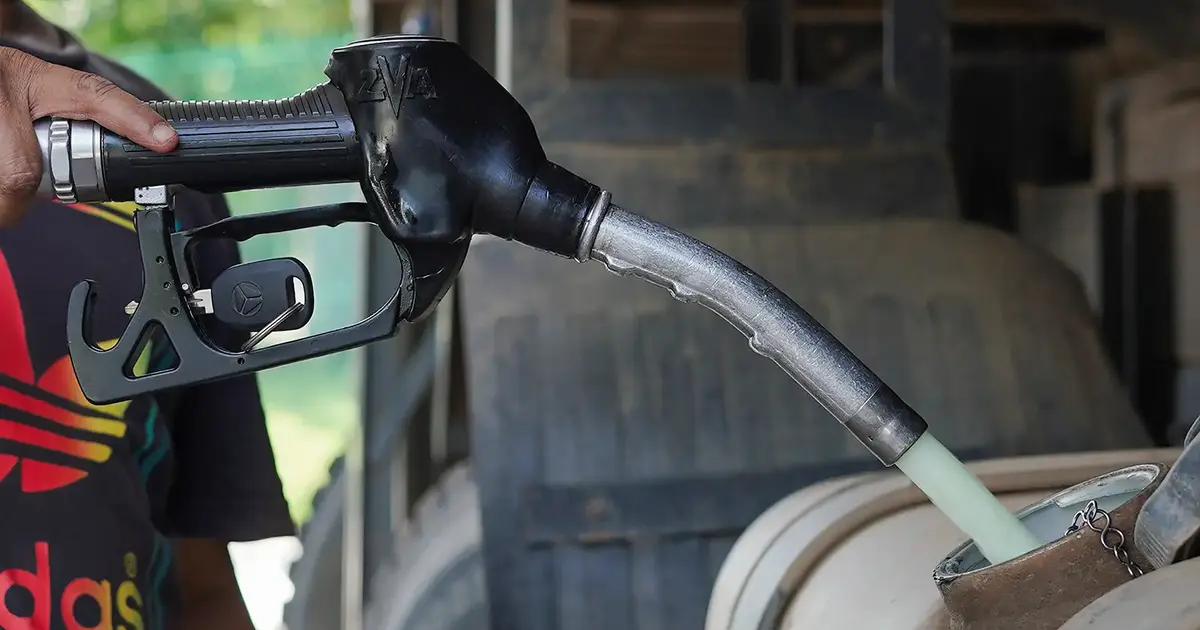
Malaysia's fuel subsidy framework is set to undergo significant tightening, with the BUDI diesel programme positioning itself to recover roughly 1 billion litres worth of subsidies currently lost annually to leakages and inefficiency. According to the Finance Minister II, the diesel sector has emerged as a particular vulnerability within the broader subsidy architecture, with diversion of government-supported fuel occurring at substantially higher rates than in the petrol market.
The core issue centres on the implementation gap between two pillars of Malaysia's subsidy verification system. While RON95 petrol has benefited from relatively comprehensive MyKad-based identification protocols that track purchases and prevent bulk diversion by non-qualifying buyers, the diesel distribution network operates with considerably weaker gatekeeping mechanisms. This asymmetry has created opportunities for subsidy arbitrage, where diesel intended for domestic consumption or specific industrial purposes finds its way into unintended channels or across borders where price differentials create profitable opportunities.
Diesel consumption patterns differ markedly from petrol usage, complicating the implementation of uniform verification approaches. Commercial vehicles, agricultural machinery, power generation equipment, and industrial operations all depend on diesel, creating legitimate high-volume consumption clusters that can obscure illegitimate flows. Unlike RON95 petrol, predominantly used by private motorists filling individual vehicles at petrol stations, diesel moves through more complex supply chains involving bulk purchases, direct delivery to businesses, and multiple intermediaries. This structural difference has allowed leakages to flourish despite subsidies' stated objectives of supporting genuine domestic demand.
The magnitude of losses—1 billion litres annually—translates into substantial fiscal impact when multiplied by the per-litre subsidy differential between global benchmark prices and government-controlled domestic rates. For context, this volume exceeds total monthly diesel consumption in several Southeast Asian nations, illustrating the scale of Malaysia's subsidy commitment and, by extension, the severity of leakage proportions. Recovering even a fraction of this volume through improved verification would free government resources currently depleted by subsidising fuel destined for illegal channels or external markets.
MyKad-based verification represents the most feasible technological pathway for addressing leakages without imposing operational disruption on legitimate diesel consumers. The system leverages Malaysia's existing national identification infrastructure, enabling real-time cross-referencing of purchaser identity, fuel volumes, and purchase frequency against predetermined thresholds. For RON95 petrol, such systems have proven effective in constraining bulk purchases by non-qualifying entities while maintaining convenience for individual motorists. Extending comparable protocols to diesel requires technical adaptation to accommodate commercial and industrial high-volume users who legitimately require frequent, substantial purchases.
Implementing enhanced verification across Malaysia's diesel distribution network presents operational challenges absent in the RON95 system. Petrol stations follow standardised formats with integrated point-of-sale infrastructure readily compatible with MyKad scanning and digital cross-checking. Diesel distribution encompasses independent stations, wholesale depots, direct industrial delivery systems, and agricultural supply points with varying technological sophistication. Retrofitting these diverse networks with compatible verification hardware and establishing centralised monitoring systems demands coordination across public and private operators, standardisation of data protocols, and investment in digital infrastructure, particularly in less urbanised regions where diesel consumption concentrates among farming and plantation operations.
The subsidy leakage problem reflects broader structural vulnerabilities in Malaysia's fuel support system that have persisted despite recurring recognition and policy adjustments. Previous initiatives attempting to tighten controls have achieved partial success, constrained by implementation capacity, political sensitivities around fuel pricing, and resistance from stakeholder groups benefiting from existing arrangements. The BUDI programme's targeting of 1 billion litres suggests policymakers recognise that incremental improvements yield insufficient savings and that more comprehensive structural intervention has become economically justified.
Regional context underscores Malaysia's fiscal stakes. Neighbouring countries including Indonesia, Thailand, and Brunei have grappled with similar subsidy leakage dynamics, with some implementing progressive subsidy reduction or targeted approaches limiting support to specific user categories. Malaysia's maintenance of broad-based diesel subsidies positions it as regionally generous on fuel pricing, attracting cross-border purchases and smuggling operations. Enhanced domestic verification does not eliminate transnational arbitrage entirely but constrains domestic leakages that represent the most readily recoverable portion of losses.
The fiscal implications extend beyond immediate subsidy savings. Budget resources freed from leakage elimination could theoretically redirect toward infrastructure, healthcare, or education, competing priorities within Malaysia's constrained fiscal framework. Alternatively, improved subsidy targeting might enable gradual transition toward market-based pricing while protecting specific user populations through targeted voucher systems or direct support mechanisms. Such recalibration would align Malaysian fuel policy with longer-term sustainability objectives while reducing systematic inefficiencies.
Successful implementation of enhanced MyKad-based verification in the diesel sector requires sustained commitment to technical systems development and inter-agency coordination. The Finance Ministry, energy regulators, downstream fuel operators, and digital infrastructure providers must establish unified standards and enforcement mechanisms. Transparency regarding implementation timelines, coverage thresholds, and performance metrics would signal serious commitment beyond rhetorical acknowledgment of leakage problems. Industry stakeholders meanwhile require clarity regarding legitimate commercial access to subsidised diesel, preventing verification mechanisms from inadvertently constraining genuine productive consumption.

