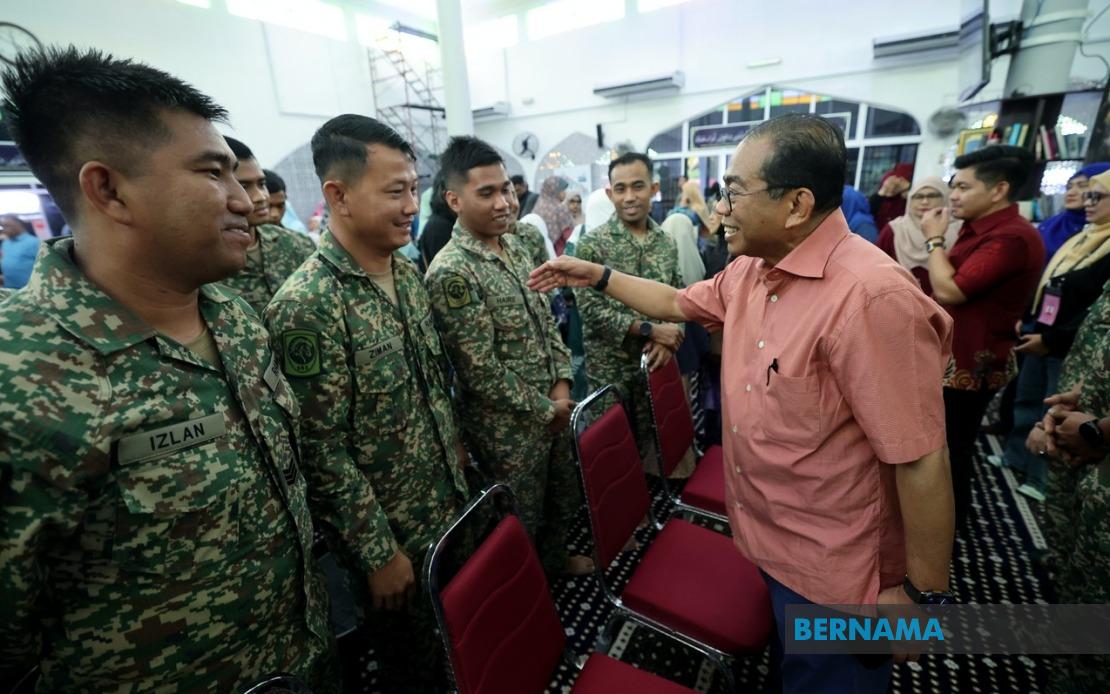
The Defence Ministry is preparing to receive its formal investigation report into a deadly grenade blast at Hobart Camp in Gurun by the middle of July, Defence Minister Datuk Seri Mohamed Khaled Nordin announced during a visit to Felda Air Tawar 2 in Kota Tinggi. The inquiry follows the deaths of two military personnel who sustained fatal injuries during a training exercise at the facility in June, an incident that has triggered fresh scrutiny of safety standards across Malaysian military training operations.
Defence Minister Mohamed Khaled indicated that investigators are in the final stages of compiling their findings before the report reaches his ministry for formal consideration and decision-making. The timeline suggests that the full scope of the incident—which claimed the lives of Corporal Norazmi Abu Bakar of the Sixth Battalion, Royal Malay Regiment, and Private Siti Khadijah Sungip of the First Squadron, Royal Engineers Regiment—will be thoroughly documented within weeks. Officials have cautioned that no immediate actions will be announced until the investigative findings have been thoroughly reviewed by relevant ministries and military leadership.
The explosion occurred on the morning of June 16, when the two personnel were engaged in active training drills at the facility. The blast resulted in severe injuries to both soldiers, who were immediately evacuated to Sultan Abdul Halim Hospital in Sungai Petani. Despite rapid medical intervention and transport, both personnel were pronounced dead en route to the hospital. The incident raised immediate concerns about the adequacy of safety protocols and equipment inspection procedures at the training installation.
What distinguishes this tragedy is that it was not an isolated occurrence at the Gurun facility. A second dangerous incident unfolded precisely two weeks later, on June 29, when a firearms discharge took place during a combat enhancement training exercise at the same camp. In that incident, Sergeant Mohamad Firdaus Che Shaharudin and Corporal Felix Franchis of the Fourth Battalion, Royal Ranger Regiment, suffered leg injuries after being struck by shrapnel from the accidental discharge. The proximity of these two incidents at the same location has intensified scrutiny into whether systemic failures or inadequate supervision may have contributed to the dangerous sequence of events.
The recurrence of critical safety failures within a fortnight has prompted Defence Minister Mohamed Khaled to direct the Malaysian Army to undertake a comprehensive reassessment of its training methodologies and operational procedures. The review is expected to examine not only the specific circumstances of the June 16 explosion but also the factors that permitted a second serious incident to occur at an identical venue such a short time later. Officials have acknowledged that the investigation will necessarily broaden beyond the immediate causes of the explosion to assess whether deeper systemic weaknesses exist within the training framework.
Army leadership has been tasked with identifying potential shortcomings across multiple dimensions of training operations, from equipment maintenance and inspection protocols to supervisory oversight and safety briefings. The Defence Minister's comments suggest that no conclusions or remedial actions will be instituted until investigators have determined whether the two incidents shared common causal factors or whether they stemmed from separate lapses in procedure. This methodical approach reflects the gravity with which military authorities are treating the incidents, particularly given that both events involved fatalities or significant injuries to personnel engaged in routine training activities.
For Malaysian military families and personnel, the incidents underscore the inherent risks associated with combat training exercises, even when conducted under ostensibly controlled conditions. The deaths of Corporal Norazmi Abu Bakar and Private Siti Khadijah Sungip represent a sobering reminder of the consequences when safety standards deteriorate or are inadequately enforced. Both soldiers were young professionals undertaking essential military preparation, yet they were killed by what appear to be preventable accidents rather than operational combat hazards.
The investigation's eventual recommendations may have far-reaching implications for how the Malaysian military conducts training across all of its installations. If systemic issues are identified at Hobart Camp, it is likely that similar concerns may exist at other facilities, potentially necessitating a ministry-wide overhaul of training supervision, equipment management, and safety culture. The second incident occurring so soon after the first suggests that whatever institutional weaknesses permitted the explosion were not immediately addressed through emergency protocols or facility-wide safety reviews.
Defence Minister Mohamed Khaled's commitment to await investigative findings before taking action reflects constitutional norms around responsible governance, though military personnel and their families may be anxious for swifter accountability measures. The balance between thorough investigation and expedient reform will likely shape public confidence in the military's capacity to protect its own personnel. The mid-July deadline for the report submission provides a concrete benchmark by which the ministry's commitment to transparency and timely action can be measured.
Stakeholders including serving military personnel, veteran organisations, and defence analysts will be monitoring both the investigation report's contents and the Defence Ministry's subsequent policy responses with considerable interest. The incidents at Hobart Camp represent a test case for whether Malaysia's military institutions can identify, acknowledge, and decisively remedy safety failures when they occur. The coming weeks will reveal whether the investigation process generates the accountability and systemic reform necessary to prevent future tragedies within Malaysia's armed forces training pipeline.

