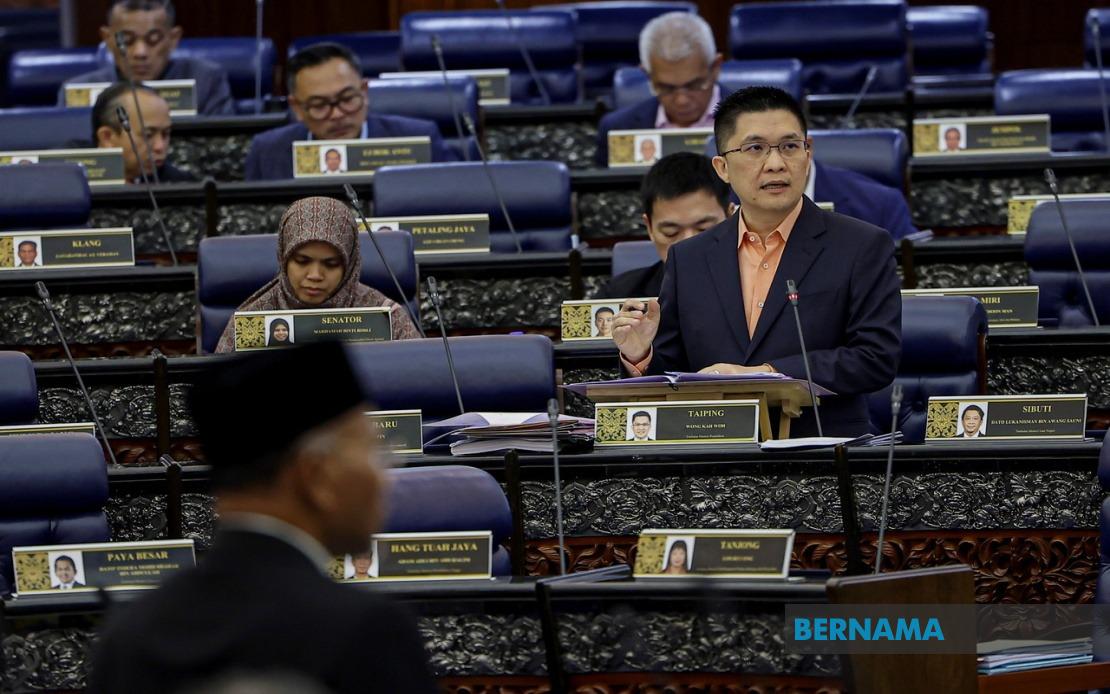
Malaysia's Education Ministry is undertaking a substantial infrastructural push to manage a historic shift in primary school intake, with Deputy Education Minister Wong Kah Woh announcing that the ministry will construct 2,596 new classrooms and recruit 3,150 contract of service teachers to handle the simultaneous entry of six-year-old and seven-year-old cohorts into Year One from 2027 onwards. The ministry's preparations come in response to a significant surge in applications, with 478,419 Year One registrations received for the upcoming school year—a notable 12.07 per cent increase compared with 2026 enrolment numbers, which drew exclusively from the seven-year-old age bracket.
The registration figures underscore the scale of this educational restructuring. The ministry received 73,386 applications from six-year-old children, the cohort newly eligible for Year One entry under the reformed intake system, whilst applications from seven-year-olds reached 405,033. This means Malaysia's schools will need to absorb both age groups simultaneously, a transition that requires coordinated planning across infrastructure, human resources, and curriculum implementation. The decision to lower the entry age into formal primary education represents a deliberate policy shift, reflecting evolving thinking about child development and early learning standards across Southeast Asia.
To address the physical space constraints, the ministry has devised an ambitious construction timeline centred on industrial building methods. Wong outlined that classrooms will be built using the Industrialised Building System, a modular construction approach that reduces construction timelines whilst maintaining quality standards. These projects are being distributed across 838 schools nationwide, with completion targeted for later this year, ensuring that facilities will be ready well before the 2027 intake begins. This decentralised approach across hundreds of schools demonstrates the nationwide scope of the adjustment, rather than concentrating new capacity in urban centres alone.
The staffing dimension is equally critical. Recruiting 3,150 contract of service teachers addresses an immediate shortfall, though the ministry also plans to deploy reserve candidates from the Education Service Commission to supplement contractual hires and meet evolving demand across states. This multi-layered recruitment strategy reveals awareness that teacher availability varies geographically, with some states likely to face steeper shortages than others. The ministry has developed five-year projections for teacher requirements at both national and state levels, enabling targeted deployment and preventing localized staffing crises that could compromise teaching quality.
Beyond bricks and bodies, the ministry recognises that accommodating younger learners demands pedagogical recalibration. Wong noted that the ministry will strengthen professional training specifically to prepare teachers for working with six-year-old pupils, whose developmental needs and learning rhythms differ measurably from seven-year-olds. Additionally, the 2027 school curriculum is being tailored to align with pupils' developmental levels, ensuring that content, pacing, and teaching methods are age-appropriate. A Year One transition programme will support children's adjustment to formal schooling, acknowledging that a smoother introduction benefits learning outcomes and reduces dropout risk.
The decision to lower entry age also carries broader social implications, particularly regarding access to early education. Wong disclosed that the ministry has significantly increased pre-school class capacity, adding 350 new pre-school classes this year compared with an average of roughly 150 classes annually in previous years. This expansion directly addresses equity concerns, targeting B40 households who lack resources to afford private kindergarten fees. By bolstering public pre-school provision, the ministry aims to level the playing field for disadvantaged children before they enter formal primary education, a recognition that early academic gaps widen substantially if not addressed early.
Parents will retain agency in the transition. Rather than mandating automatic placement based on age alone, the ministry permits families to decide whether their six-year-old child is ready for Year One entry or should remain in kindergarten an additional year. This flexibility acknowledges that maturation varies individually, and that some children benefit from additional time in early childhood education settings. Such parent-centred choice aligns with contemporary thinking on child readiness, though it also risks widening disparities if wealthier, more informed families opt to delay entry whilst disadvantaged families feel pressure to comply with formal timelines.
The private kindergarten sector faces disruption from this policy. Since the six-year-old cohort will transition directly into government schools, private kindergartens will lose a revenue stream as enrolments drop. The ministry is actively reviewing sustainability implications and engaging stakeholders to mitigate disruption, yet the outcomes remain uncertain. Some private operators may consolidate or exit, potentially reducing choice in some regions, whilst others may adapt by offering specialised services. This sector-wide uncertainty represents a significant if understated consequence of the policy shift, particularly in middle-class suburbs where private kindergartens have traditionally thrived.
The coordination between early childhood education and formal primary schooling will prove decisive to implementation success. Teachers working with six-year-olds must account for heterogeneous pre-school backgrounds—some children will have attended structured kindergartens with early literacy exposure, whilst others will arrive from informal home environments or less rigorous facilities. The curriculum must therefore bridge these gaps without boring advanced learners or frustrating those needing remediation. The transition programme Wong referenced will be critical to identifying such disparities early and providing targeted support.
From a regional perspective, Malaysia's dual-cohort intake system positions the nation differently within ASEAN's educational landscape. Neighbouring countries maintain various starting ages for primary education—some earlier, some later—meaning Malaysia's adjustment reflects both local priorities and comparative international practice. For Malaysian education researchers and policymakers, this represents a significant natural experiment in age-inclusive primary education, with outcomes that may influence thinking across the region regarding optimal entry ages and inclusive classroom practices.
Financial implications, whilst not explicitly quantified by Wong, merit consideration. The construction costs for 2,596 classrooms, even using cost-efficient modular methods, will consume considerable budgetary resources. Teacher salary commitments for 3,150 new staff represent ongoing fiscal obligations. These expenditures coincide with broader pressures on Malaysia's education budget, raising questions about opportunity costs—whether funds directed toward new classroom construction could alternatively support teacher professional development, special education provision, or digital learning infrastructure. Policymakers must balance immediate needs against longer-term educational quality concerns.
Looking ahead, the 2027 intake will generate valuable empirical data on the policy's effectiveness. If outcomes demonstrate that six-year-old entrants progress comparably to older cohorts without requiring remediation, the policy gains legitimacy. Conversely, if early data reveal developmental readiness concerns or learning gaps, the ministry may need to adjust curriculum pacing or transition support. This implementation phase will test not merely infrastructure and staffing capacity, but the underlying pedagogical assumptions underpinning the policy itself, making the coming years pivotal for Malaysia's primary education trajectory.

