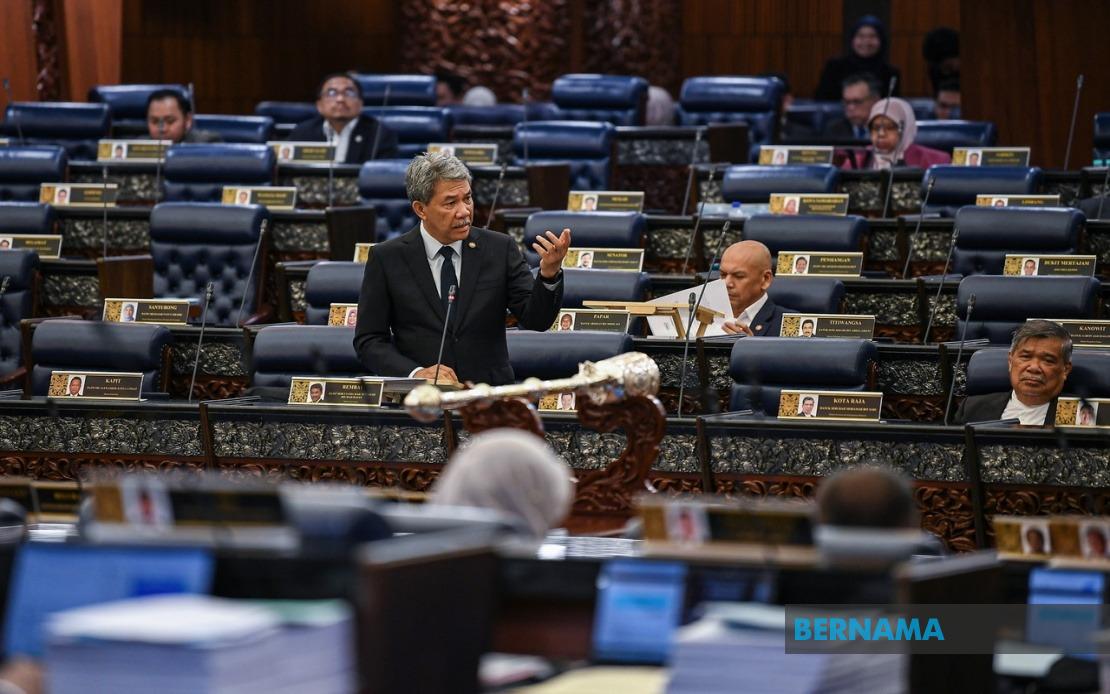
Malaysia's Humanitarian Trust Fund for the People of Palestine operates under rigorous government oversight and transparent management practices, according to Foreign Minister Datuk Seri Mohamad Hasan, who moved to counter recent claims questioning how the fund is administered. Speaking during parliamentary Question Time on June 23, Mohamad emphasised that the AAKRP—established to channel humanitarian assistance to Palestinians—functions as a state-managed trust account subject to multiple layers of accountability rather than operating independently under any single organisation's control.
The minister's clarification addressed growing public concern about aid distribution mechanisms, particularly following the circulation of unverified social media allegations regarding fund management. Mohamad stressed that such claims fundamentally misrepresent how the AAKRP operates, citing established audit procedures and Cabinet-level reporting as evidence of institutional discipline. The Foreign Ministry's assurances underscore Malaysia's commitment to ensuring that humanitarian resources designated for Palestinian relief reach their intended beneficiaries without diversion or misuse.
To guarantee assistance reaches those who need it most, Malaysia channels funds exclusively through internationally recognised humanitarian organisations with established credibility and operational presence in conflict zones. The United Nations Relief and Works Agency for Palestine Refugees in the Near East (UNRWA) forms a cornerstone of this distribution network, alongside the Jordan Hashemite Charity Organisation (JHCO), the Palestine Red Crescent Society, and King Hussein Hospital. This multi-channel approach dilutes concentration risk and leverages the operational expertise of specialised agencies with longstanding engagement in Palestinian communities.
Beyond financial transfers, Malaysia has supplemented direct monetary assistance with tangible humanitarian commodities addressing immediate needs in Gaza. Food provisions, medical supplies, and health equipment have been dispatched to alleviate acute shortages resulting from the conflict. The ministry noted that several earlier shipments, temporarily constrained by border closure, have now reached their destinations following the reopening of overland humanitarian corridors. These logistical improvements resulted from coordination with the Egyptian government, reflecting regional cooperation in addressing the humanitarian crisis.
The Gaza humanitarian situation remains dire, with civilian infrastructure systematically damaged by ongoing conflict. Hospitals operating at severely reduced capacity struggle to provide basic medical services, while schools remain shuttered and religious institutions have been destroyed or rendered unusable. This context makes transparent fund management increasingly critical, as accountability builds public confidence and encourages sustained contributions to relief efforts. For Malaysian taxpayers and the broader public, clear evidence of proper administration becomes essential to maintaining political support for humanitarian initiatives.
The minister's parliamentary response directly addressed supplementary questions from Ahmad Tarmizi Sulaiman (PN-Sik) regarding aid delivery mechanisms. This inquiry reflected parliamentary scrutiny of public resource allocation, a normal function of Westminster-style legislative oversight. By providing detailed explanation of the AAKRP's structure, audit arrangements, and distribution pathways, the Foreign Ministry demonstrated responsiveness to legitimate accountability concerns while reaffirming commitment to efficient assistance delivery.
For Malaysia's regional standing, transparent humanitarian fund management carries implications beyond immediate relief provision. Southeast Asia's middle-power status partly derives from maintaining moral authority and credibility in international affairs. Demonstrated commitment to rigorous aid administration strengthens Malaysia's diplomatic voice on humanitarian issues and reinforces its positioning as a responsible development partner to other nations. This credibility extends beyond Palestine-focused initiatives to broader perceptions of institutional integrity and professional governance.
The emphasis on Auditor-General oversight represents institutional architecture designed to prevent misappropriation while maintaining political independence. Regular Cabinet reporting ensures senior government officials remain apprised of fund status and distribution progress, allowing corrective action if implementation challenges arise. These mechanisms reflect best-practice standards for public trust funds, aligning Malaysian procedures with international norms governing humanitarian finance.
Public scepticism regarding aid distribution, often amplified through social media, poses genuine challenges to humanitarian financing. Unsubstantiated claims, regardless of origin, can undermine donor confidence and reduce contributions precisely when need is greatest. By systematically addressing allegations through authoritative parliamentary statements, the Foreign Ministry attempts to restore public assurance while demonstrating that institutional mechanisms exist to validate claims of proper administration. This transparency-focused approach acknowledges that humanitarian effectiveness depends partly on sustained public trust.
Looking forward, Malaysia's experience with the Gaza humanitarian fund illustrates broader challenges facing middle-income countries attempting to maintain credible aid programmes amid conflict and geopolitical tensions. The balance between rapid assistance delivery and rigorous accountability mechanisms remains delicate, yet both elements prove essential to legitimate and sustainable humanitarian engagement. Malaysia's approach—combining institutional oversight with pragmatic partnership with established international organisations—offers a model potentially applicable to future humanitarian crises throughout the region and beyond.

