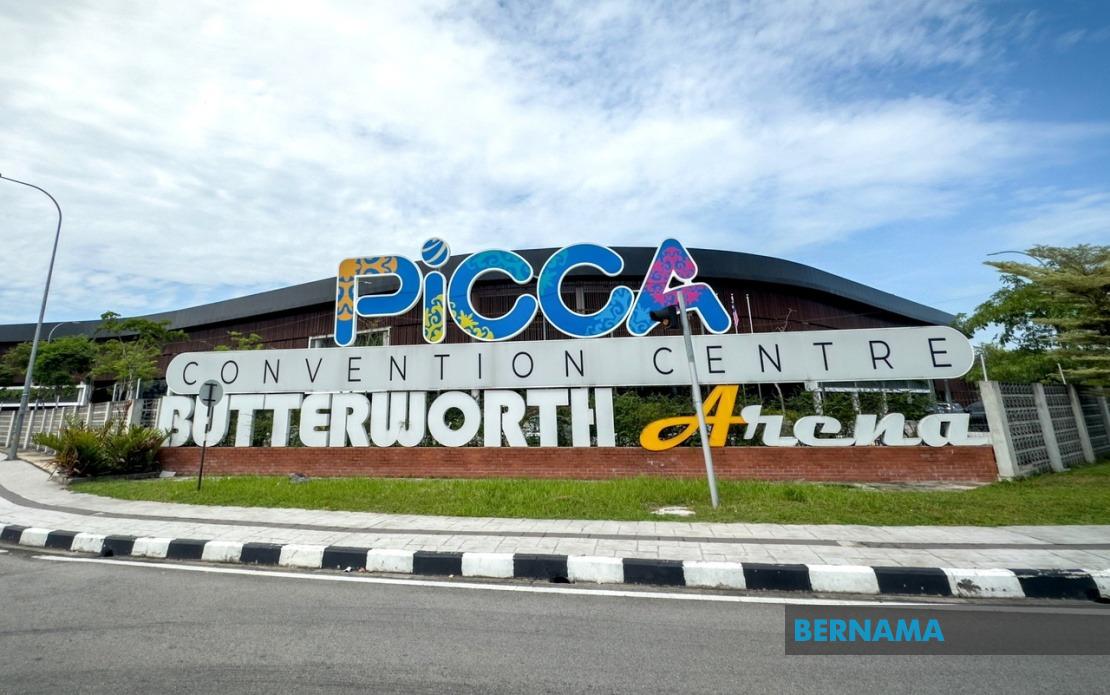
The sixth edition of Malaysia's National Journalists' Day (HAWANA) reaches its climax today at the PICCA@Arena Butterworth Convention Centre, drawing approximately 1,000 journalists, broadcasters, and news industry professionals from across Malaysia and abroad. Prime Minister Datuk Seri Anwar Ibrahim will formally open the grand finale at 3 pm, underscoring the government's commitment to recognising the media's pivotal role in democratic societies. This year's celebration carries particular significance as it emphasises the theme 'Media Integrity Strengthens Credibility', a message especially resonant in an era marked by growing public scepticism towards news sources and the spread of misinformation across digital platforms.
The event represents a symbolic convergence of Malaysia's political leadership and its journalism community. Alongside the Prime Minister, Penang Chief Minister Chow Kon Yeow and Communications Minister Datuk Fahmi Fadzil will grace the occasion, along with senior officials from the Ministry of Communications and Bernama, Malaysia's national news agency. This high-level attendance reflects how seriously the government views the relationship between credible journalism and effective governance. The presence of Bernama Chairman Datuk Seri Wong Chun Wai and Chief Executive Officer Datin Paduka Nur-ul Afida Kamaludin further underscores the national importance attached to fostering professional journalism standards across the industry.
A particularly noteworthy dimension of this year's celebration is the substantial international participation, which transforms the event from a domestic occasion into a regional media gathering. News organisations from Indonesia's Antara News Agency, Vietnam News Agency, and China's Xinhua News Agency, alongside the Indonesian Journalists Association and the Malaysia-Indonesia Journalists Friendship Association, have sent delegations to Penang. Such cross-border representation demonstrates the interconnectedness of Southeast Asia's media landscape and provides an opportunity for journalists across the region to exchange perspectives on shared challenges including combating disinformation, maintaining editorial independence, and adapting to rapid technological change.
The centrepiece of the ceremony involves the presentation of prestigious awards recognising excellence and significant contributions to journalism. Prime Minister Anwar Ibrahim will present both the HAWANA Award and the Special HAWANA Award to individuals whose work has demonstrably advanced journalistic standards and shaped public discourse. Additionally, the Tabung Kasih@HAWANA initiative will distribute contributions to media veterans facing financial hardship, reflecting the profession's commitment to supporting its own. These awards ceremonies serve a dual purpose: acknowledging individual achievement whilst simultaneously reinforcing the values the journalism community aspires to uphold.
Extending beyond the formal proceedings, the three-day RIUH Pi HAWANA Carnival has transformed the PICCA Convention Centre parking area into a vibrant celebration of Malaysian creative culture and entrepreneurship. The lineup of local artists including Exists, Bunkface, Masdo, Sakura Band, Budak Nakal Hujung Simpang, and Chelsea Ng reflects the broader cultural context within which journalists operate. More significantly, the carnival features over 24 local creative product brands and 20 food and beverage vendors, creating a marketplace atmosphere that brings media professionals and the general public into closer contact. This deliberate integration of entertainment, commerce, and interactive workshops demonstrates an evolution in how professional commemorations engage contemporary audiences.
The broader calendar of HAWANA 2026 activities reveals a carefully structured engagement strategy extending far beyond this single day. The Media Forum held on May 7 provided a platform for substantive discussion of industry issues, whilst the Strategic Partners Engagement Event on June 4 strengthened relationships between news organisations and their stakeholders. The Fun Walk on June 14 encouraged public participation in celebrating journalism, transforming what might otherwise remain an insider profession into something the broader community could feel invested in. This multi-week approach to celebration ensures that the principles underlying HAWANA receive sustained attention rather than being confined to a single ceremonial moment.
The historical roots of HAWANA remain deeply embedded in Malaysia's media identity. The observance specifically commemorates May 29, 1939, when Utusan Melayu newspaper published its first edition, marking the emergence of organised journalism in the Malay-speaking world. This annual commemoration thus carries cultural weight beyond mere professional recognition, connecting contemporary journalists to a lineage of predecessors who established journalistic practice in Malaysia during the pre-independence era. Understanding this historical foundation helps contextualise why the government allocates resources to celebrating journalism and why the profession itself attaches symbolic importance to this particular date.
Official descriptions characterise HAWANA as a platform for recognising the dedication and professionalism of practitioners who serve as conveyors of accurate, verified, and authoritative information. This language is intentionally specific: accuracy, verification, and authority stand as core professional values that distinguish journalism from other forms of communication. In Malaysia's contemporary media environment, where online platforms and social media have democratised publishing whilst simultaneously enabling the rapid spread of unverified claims, these distinctions acquire heightened importance. The government's emphasis on these values through HAWANA celebrations signals its view that professional journalism institutions remain essential infrastructure for informed democratic participation.
The Ministry of Communications' decision to implement HAWANA through Bernama ensures coordination across government and media sectors. This structural arrangement facilitates not only the logistical execution of the celebration but also reinforces official messaging about the value of journalism to nation building. Throughout Malaysia's development since independence, journalism has been conceptualised as contributing to nation-building efforts by informing citizens about government initiatives, facilitating public discourse, and documenting historical events. The rhetoric surrounding HAWANA consistently invokes this nation-building framework, positioning journalists as participants in Malaysia's collective development rather than as external commentators or critics.
For Malaysian readers and the regional media landscape, HAWANA 2026's emphasis on integrity and credibility carries immediate practical implications. Southeast Asian journalists across Indonesia, Vietnam, and Malaysia face remarkably similar pressures: government scrutiny of coverage, commercial pressures from declining advertising revenues, technological disruption of traditional business models, and increasing competition from social media platforms. By bringing together practitioners from multiple countries, HAWANA creates space for discussing these shared challenges and exploring collaborative responses. The international delegations' presence suggests that Malaysia views journalism not as a zero-sum competition between news organisations but as a collective professional enterprise requiring mutual support and shared standards.
Looking forward, the principles articulated through HAWANA 2026 will shape how Malaysia's media institutions approach their responsibilities in coming years. The emphasis on credibility gains particular relevance as artificial intelligence, deepfakes, and sophisticated misinformation campaigns pose unprecedented challenges to journalism's traditional gatekeeping functions. Professional bodies and celebratory occasions like HAWANA become crucial venues for reaffirming commitment to standards that distinguish professional journalism from other information sources. For Malaysian newsrooms navigating these complex terrain, the government's explicit recognition of journalism's value through such celebrations may provide institutional support and political cover for editorial decisions prioritising accuracy and verification over speed and sensationalism.

