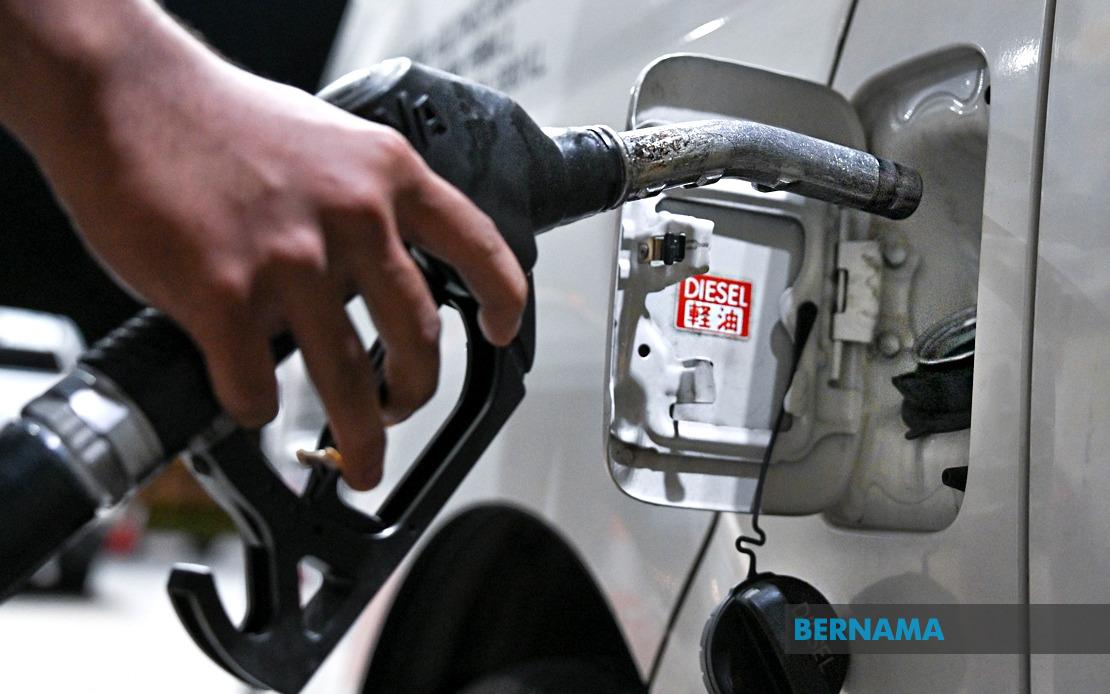
Malaysia's government is launching an ambitious diesel subsidy reform programme designed to recapture billions in lost revenue while maintaining affordable fuel access for genuine domestic users. The BUDI MADANI Diesel initiative, set to take effect on July 1, will standardise the nationwide diesel subsidy mechanism through a single, transparent system that verifies eligibility using MyKad technology. According to Second Finance Minister Datuk Seri Amir Hamzah Azizan, the measure is projected to recover up to RM2 billion in annual savings by plugging massive leakages that have drained the government's coffers and created instability in domestic fuel supplies.
The impetus for reform is stark. Malaysia's monthly fuel subsidy burden ballooned from an already-substantial RM800 million to RM4.7 billion in March and RM4.9 billion in April as global oil prices surged, straining the fiscal position at a time when the government is attempting to consolidate its finances. More alarming still is the surge in diesel consumption patterns that cannot be explained by legitimate domestic demand. Monthly diesel offtake jumped abnormally from approximately 624 million litres to nearly 1.2 billion litres, a near-doubling that signals widespread diversion of subsidised fuel intended for eligible users into grey markets and cross-border smuggling channels. Sabah and Sarawak present particularly acute problems, with current annual diesel usage approaching two billion litres against an estimated genuine requirement of around one billion litres, suggesting leakages of one billion litres yearly in these two states alone.
The mechanics of these leakages reveal a systemic vulnerability in the previous subsidy architecture. Parties that should have been procuring unsubsidised diesel were instead exploiting petrol station channels to obtain subsidised fuel at favourable rates. This not only redirects scarce government resources away from intended beneficiaries but threatens the stability of domestic diesel supplies by creating artificial demand pressures. Cross-border smuggling, particularly via Sabah and Sarawak's maritime and land borders, has become organised enough to distort national consumption statistics meaningfully. The government recognised that addressing these losses required a fundamental redesign rather than marginal adjustments to the existing system.
Under BUDI Diesel, the subsidised rate is fixed at RM2.10 per litre, accessible exclusively to eligible Malaysian vehicle owners verified through MyKad at participating petrol stations nationwide. The scheme will encompass approximately 700,000 private diesel vehicle owners, a carefully managed cohort compared to the much broader population that has historically benefited from generalised diesel subsidies. This represents a deliberate policy shift from universal subsidies toward targeted support, mirroring the architecture of the BUDI RON95 petrol subsidy programme that has already proven effective in controlling costs while maintaining affordability for priority users. The transition to this mechanism should, in theory, eliminate the ability of ineligible purchasers, cross-border smugglers, and commercial operators to access subsidised diesel through ordinary retail channels.
For Malaysians already receiving diesel subsidies through the existing BUDI Diesel Individual scheme, the transition will be seamless and automatic. The current RM400 monthly cash assistance will be discontinued, with eligible recipients instead receiving direct diesel subsidies via MyKad verification at the pump. No additional applications or re-registration will be required; the government will migrate existing beneficiaries to the new system administratively. Early access to BUDI Diesel is scheduled to commence on June 27, 2026, initially for eligible private diesel vehicle owners in Peninsular Malaysia, allowing a brief operational testing period before nationwide rollout on July 1. This phased approach provides opportunity to identify and resolve technical or administrative bottlenecks before full implementation.
The fiscal stakes of this reform are substantial for Malaysia's budget management. Recovering RM2 billion annually in subsidy leakages represents meaningful relief for a government balancing developmental spending against fiscal consolidation objectives. These recovered funds can be redirected toward other priority areas—infrastructure, healthcare, education—or applied toward further fiscal discipline. For consumers, the fixed RM2.10 per litre rate provides price certainty and predictability, insulating qualified users from volatility in global crude oil markets within defined parameters. Domestic Trade and Cost of Living Minister Datuk Armizan Mohd Ali and Treasury Secretary-General Tan Sri Johan Mahmood Merican's participation in the announcement underscores the cross-government coordination required to implement such a structural change successfully.
The BUDI Diesel reform carries implications extending beyond Malaysia's immediate fiscal situation. The scheme demonstrates a policy approach to subsidy management increasingly adopted across Southeast Asia: moving away from indiscriminate subsidies that benefit wealthy and ineligible cohorts, toward targeted mechanisms that verify genuine need while controlling costs. As regional governments grapple with commodity price volatility and fiscal pressures, Malaysia's experience with this MyKad-based verification model may serve as a template for neighbouring countries confronting similar subsidy-leakage challenges. The programme also addresses a critical vulnerability in Malaysia's border security and economic integrity—the organised diversion of subsidised fuel through cross-border smuggling—by making subsidised diesel accessible only through verified domestic channels.
Implementation risks remain. The MyKad verification system must function reliably across Malaysia's 1,800-plus petrol stations, with adequate backend infrastructure and training for retail staff. Petrol stations must be equipped to process MyKad authentication at scale without creating bottlenecks that frustrate eligible users. Smuggling networks that have profited from subsidy arbitrage may attempt to adapt by targeting unsubsidised diesel supplies or exploiting verification gaps in remote areas. The government will need sustained enforcement capacity to police boundary enforcement and investigate suspicious consumption patterns in states like Sabah and Sarawak, where geographical factors and historical smuggling routes complicate oversight.
Looking forward, the success of BUDI Diesel will likely influence the trajectory of broader subsidy reform in Malaysia. The government has already signalled commitment to systematic subsidy rationalisation as part of fiscal consolidation efforts, and a successful diesel programme that demonstrably recovers lost revenue while maintaining public support could accelerate similar measures across other subsidised commodities. Simultaneously, the programme reflects a policy consensus that effective subsidy targeting requires technology integration—MyKad verification, national identity systems, digital verification infrastructure—that aligns subsidy administration with Malaysia's broader digital economy development agenda. If BUDI Diesel achieves its projected two-billion-ringgit annual recovery while ensuring uninterrupted access for eligible users and maintaining domestic fuel supply stability, the model will have validated a approach to fiscal sustainability that balances budgetary discipline with social protection objectives.

