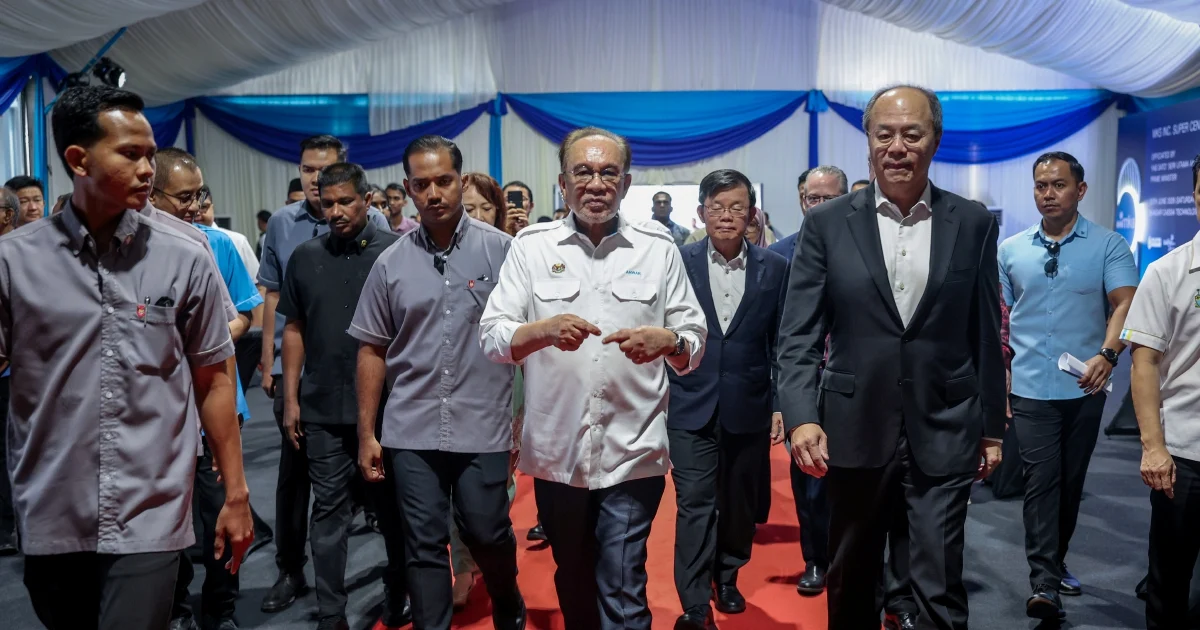
Prime Minister Datuk Seri Anwar Ibrahim has underscored how Malaysia's commitment to engaging with all major powers while preserving its strategic independence is becoming a key draw for global investors seeking stability and predictability in the region. Speaking in Batu Kawan, Anwar articulated the competitive advantage this diplomatic posture provides, positioning the nation as a reliable economic partner unconstrained by rigid geopolitical alliances that could deter diverse investor bases from committing capital to Malaysian ventures.
The Prime Minister's remarks reflect a deliberate recalibration of Malaysia's international standing in an era of intensifying great-power competition. By refusing to be locked into exclusive relationships with any single superpower or bloc, Malaysia signals to multinational corporations and institutional investors that the country's business environment will remain stable regardless of shifting global alignments. This non-alignment doctrine, rooted in Malaysia's post-independence tradition, has been recast not merely as a foreign policy principle but as an economic asset capable of generating competitive returns.
Anwar's framing carries particular significance given the regional context. Southeast Asia faces mounting pressure from Washington and Beijing to choose sides on critical issues ranging from technology standards to security arrangements. Malaysia's explicit commitment to dialogue with all nations—evident in its maintained diplomatic channels, bilateral investments with both Western and Asian powers, and refusal to participate in cold-war-style blocs—distinguishes it from neighbours perceived as tilting toward one camp or another. This positioning appeals to investors who fear supply chain disruptions, sanctions exposure, or reputational damage associated with geopolitical polarisation.
The doctrine also resonates with multinational enterprises increasingly pursuing diversified manufacturing and operational bases to mitigate concentration risk. Malaysia's track record as a neutral arbiter and pragmatic trader makes it an attractive node in resilient supply chains. When investors evaluate regional locations for new facilities or expansions, political stability and the absence of external pressure to conform to competing ideological frameworks become crucial considerations. Anwar's emphasis on this approach suggests the government recognises that investor confidence flows partly from perceptions of sovereignty and independence from external coercion.
Economically, this strategy translates into tangible benefits. Companies benefit from access to markets across competing blocs without fear of indirect sanctions or diplomatic backlash. Malaysia's position as neither wholly aligned with the West nor dominated by Beijing creates space for its own agency in negotiating favourable investment terms. Furthermore, the nation can attract talent and capital fleeing jurisdictions perceived as trapped in geopolitical competition, from entrepreneurs relocating regional headquarters to sovereign wealth funds seeking safe havens in politically neutral territory.
The investment dimension extends beyond corporate boardrooms. Malaysia's stability appeals to governments establishing strategic reserves and diversifying sovereign assets. Neutral nations typically enjoy stronger terms from trading partners wary of economically weaponising their relationships. This translates into better financing conditions, trade access, and investment terms compared to nations perceived as partisan. Anwar's communication of this advantage signals to the investment community that Malaysia intends to leverage neutrality as a permanent structural feature, not a temporary expedient.
However, maintaining this balance requires sustained diplomatic finesse. Malaysia must continually reassure all major powers of its non-exclusivity while demonstrating that neutrality serves Malaysia's own development interests rather than disadvantaging any particular party. China, the United States, India, Japan, and the European Union all maintain significant stakes in Malaysia's stability and economic trajectory. Each expects respectful treatment and reliable partnership terms. Anwar's repeated articulation of this policy may reflect efforts to reinforce these assurances as geopolitical tensions rise elsewhere in the region.
The timing of Anwar's comments carries weight. Global investors increasingly factor geopolitical risk into allocation decisions, seeking jurisdictions where national leadership demonstrates commitment to conflict avoidance and relationship pluralism. Countries perceived as ideologically rigid or externally pressured face capital outflows and higher borrowing costs. By contrast, Malaysia's explicit embrace of multi-directional engagement lowers the perceived risk premium for investors, reducing the cost of capital and widening the pool of available funding sources for development projects and corporate expansions.
Looking forward, maintaining investor confidence through a neutral posture requires consistent action beyond rhetoric. This means ensuring Malaysian regulatory frameworks remain transparent and predictable, protecting property rights and contract enforcement regardless of investor origin, and avoiding regulatory capture by any single power's interests. It also requires that the government demonstrate capacity to mediate regional disputes without bias, enhancing Malaysia's reputation as a trusted partner for stakeholders across competing camps. When foreign investors evaluate long-term commitments to Malaysia, they assess whether this proclaimed neutrality will persist through successive administrations and external crises.
The economics of neutrality thus become inseparable from the politics of maintaining that position. Anwar's emphasis on this theme in economic forums signals that the government views strategic independence as integral to Malaysia's growth strategy, not merely a matter of diplomatic principle. As regional tensions persist and global corporations reconsider their investment footprints, Malaysia's deliberate positioning as an engaged but uncommitted actor offers distinct commercial advantages. This approach, effectively communicated to the investment community, has become a cornerstone of efforts to maintain competitive economic momentum.

