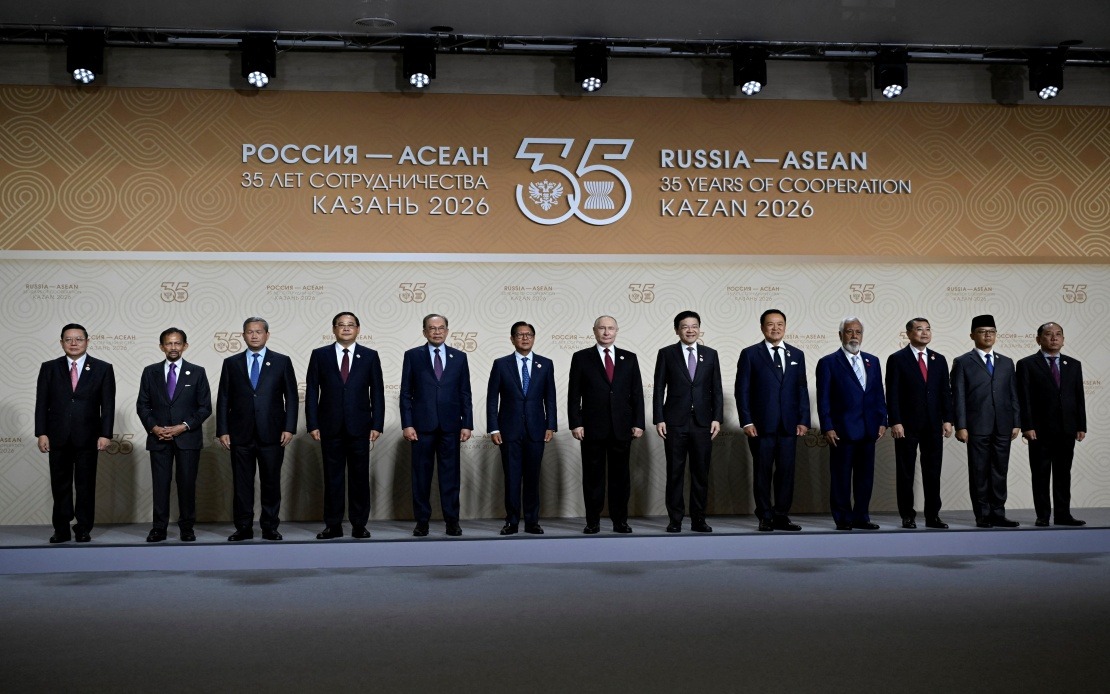
Philippine President Ferdinand R. Marcos Jr has identified significant scope for broadening the relationship between Southeast Asia's regional bloc and Russia, particularly through collaborative ventures in high-growth sectors that were absent from the traditional economic relationship. Speaking following his attendance at the ASEAN-Russia Commemorative Summit held in Kazan, Marcos emphasised that whilst the 35-year dialogue framework has produced steady progress, both sides have failed to capitalise on emerging opportunities that technological advancement has created.
The Philippines leader outlined how the partnership, which spans over three decades, has evolved at a measured rather than accelerated pace. However, he acknowledged significant variation across ASEAN member states, with some nations having progressed far beyond others in their bilateral engagement with Moscow. This uneven development suggests that a more coordinated regional approach, backed by stronger institutional mechanisms and clearer strategic objectives, could unlock considerably greater mutual benefit and closer alignment across the bloc.
Marcos specifically highlighted advanced technology, artificial intelligence, data centres, and energy infrastructure as fields offering substantial untapped commercial and developmental potential. These sectors represent a fundamental departure from historical trading patterns that emphasised commodities, conventional manufacturing, and resource extraction. The recognition that Russia possesses growing capacity and expertise in these domains opens doorways for collaborative projects that could strengthen ASEAN's technological resilience and diversify its sources of knowledge transfer and investment.
The shift towards technology-driven cooperation reflects broader regional recalibration within ASEAN itself. According to Marcos, Southeast Asia is consciously diversifying its partnerships and reconsidering traditional alignment patterns that characterised the Cold War and post-Cold War eras. This strategic pivot acknowledges that the region's rapid development requires access to multiple sources of innovation, capital, and expertise. Rather than adhering rigidly to historical partnerships, ASEAN states increasingly recognise the value of pragmatic engagement with diverse actors based on complementary capabilities and mutual interest.
Marcos characterised this phase as a "new day" for ASEAN diplomacy, marked by expanding dialogue frameworks and shifting priorities toward science and technology-driven collaboration. This language suggests a conscious departure from geopolitical competition that sometimes constrained Southeast Asian choices, allowing greater strategic autonomy in navigating relationships with major powers. For countries like Malaysia, which sit within ASEAN yet maintain multiple international partnerships, such flexibility serves crucial interests by enabling selective engagement without forcing exclusive alignments.
The commemorative summit itself validated the institutional foundation supporting the relationship. The gathering produced the Kazan Declaration 2026, the ASEAN-Russia Comprehensive Plan of Action spanning 2026-2030, and additional agreements targeting cultural and energy sector collaboration. These formal instruments provide concrete frameworks for implementation rather than aspirational statements, suggesting both sides intend substantive follow-through on cooperation objectives. The energy agreements particularly merit attention given Southeast Asia's expanding electricity demand and Russia's significant reserves and technical expertise in hydrocarbon and nuclear sectors.
Marcos's observations carry particular relevance for Malaysian policymakers given Malaysia's own interests in diversifying energy sources, advancing technological capacity, and maintaining strategic flexibility within an increasingly multipolar international environment. The ASEAN bloc collectively represents a substantial market and labour pool that attracts investment and partnership overtures from multiple quarters. However, realising this collective potential requires institutional coordination that ASEAN has historically struggled to achieve, given divergent national interests and varying capability levels among member states.
The timing of this emphasis on untapped potential coincides with broader geopolitical recalibration occurring across the Indo-Pacific region. Rising competition between major powers has prompted most ASEAN members to adopt hedging strategies rather than exclusive partnerships. Marcos's framing of ASEAN-Russia cooperation as part of this diversification narrative suggests the Philippines itself is pursuing strategic autonomy despite pressures from competing alliances. This positioning carries implications for regional integration and suggests that ASEAN members increasingly view external partnerships through pragmatic rather than ideological lenses.
Energy cooperation deserves particular scrutiny given climate transition imperatives and regional energy security concerns. Russia possesses technical expertise in nuclear and advanced fossil fuel technologies whilst ASEAN states require substantial additional capacity to meet development demands. Collaboration frameworks could facilitate knowledge transfer and technology adaptation suited to regional conditions. However, such projects would need careful structuring to address environmental concerns and ensure arrangements contribute meaningfully to energy transition objectives rather than perpetuating fossil fuel dependence.
The recognition that certain cooperative domains "simply did not exist" in earlier eras highlights how technological disruption reshapes international relations. Artificial intelligence, data centre development, and digital infrastructure represent fundamentally new categories of economic competition and collaboration. ASEAN states possess geographic advantages, developing labour markets, and expanding consumer bases that render them attractive partners for technology development and deployment. Russian capabilities in specific technical domains could complement ASEAN's demographic and market advantages.
Marcos's emphasis on momentum and changing outlooks suggests ASEAN itself is undergoing identity reassessment regarding its international positioning. The region increasingly resists categorisation as a space where external powers compete for influence, instead asserting agency through selective partnership that serves defined national and collective interests. This maturation process carries implications for Malaysia and other smaller ASEAN members seeking to influence bloc positions and protect national interests within evolving strategic arrangements.
The concrete implementation of these frameworks will ultimately determine whether the Kazan agreements represent genuine deepening or merely diplomatic posturing. Success requires sustained political commitment, institutional capacity for managing complex technical collaboration, and willingness to navigate inevitable disputes. Given ASEAN's mixed record of actualising ambitious statements, scepticism regarding implementation remains warranted. Nevertheless, the identification of concrete priority areas and formal planning mechanisms suggest more substantive intent than sometimes characterises regional declarations.

