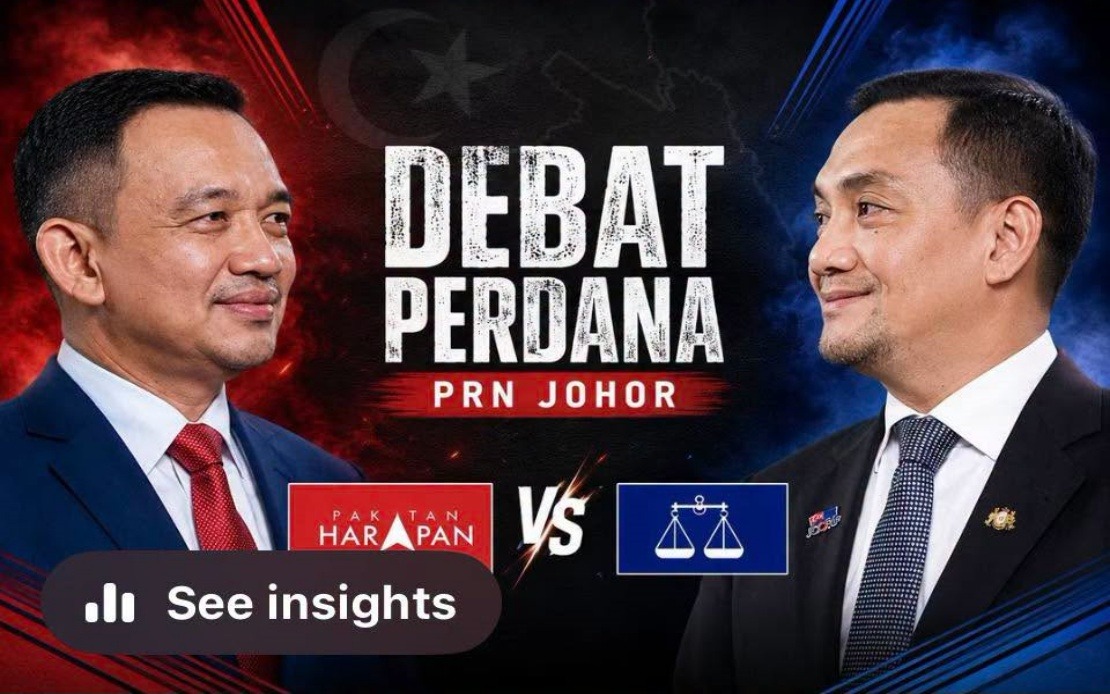
Ahead of Johor's upcoming state election, former Education Minister Maszlee Malik has confirmed his willingness to engage in a televised debate with Johor Menteri Besar Onn Hafiz Ghazi. The announcement comes after Maszlee's nomination as Pakatan Harapan's (PH) standard-bearer for the Puteri Wangsa constituency, signalling that the election campaign is likely to feature direct confrontation between major political figures on substantive policy matters.
Maszlee's public acceptance of the challenge reflects a broader shift in Malaysian electoral politics towards more interactive formats that allow candidates to articulate their positions directly. In his Facebook statement, the former minister emphasised that his agreement stemmed from a commitment to democratic values and his conviction that such exchanges could elevate the standard of political engagement among voters. He framed the debate not merely as a competitive event but as an educational opportunity, suggesting that quality discourse serves a civic function beyond campaign messaging.
The debate proposal originated from social media influencer Muhamad Harris Nasril and gained traction after being shared through the Redaksi.com platform, indicating growing grassroots demand for more transparent political conversations. This groundswell of public interest, which Maszlee noted had prompted numerous enquiries about his participation, underscores voter appetite for alternatives to conventional campaigning. The momentum generated by these discussions may set expectations for other candidates across the peninsula to demonstrate similarly open engagement with opposition figures.
Packatan Harapan has fielded a substantial slate of 56 candidates across Johor, drawn from its three constituent parties: PKR contributes 20 candidates, Amanah provides 19, and DAP fields 17 representatives. This distribution reflects an agreed formula aimed at ensuring balanced representation within the coalition while maximizing electoral competitiveness. The broad candidate base suggests PH is attempting to contest vigorously across diverse constituencies rather than concentrating resources on winnable seats alone.
The electoral timeline established by the Election Commission provides a compressed campaign period of considerable intensity. With nomination day scheduled for this Saturday, early voting on July 7, and polling day on July 11, candidates and parties have limited time to mobilise supporters and shape voter perceptions. The proposed debate, if scheduled during this window, would serve as a high-impact moment capable of influencing undecided voters and generating significant media coverage.
Maszlee's participation carries particular significance given his previous tenure as Education Minister under the Pakatan Harapan federal government between 2018 and 2019. His record in that portfolio, including curriculum reforms and attempts to modernise the education system, provides substantive material for debate. Voters familiar with his past initiatives will assess his performance and future proposals, while those less acquainted with his work may use the debate as an introduction to his political philosophy and competence.
Onn Hafiz, meanwhile, leads the Johor state government as Menteri Besar under the Barisan Nasional (BN) coalition. His administration's performance on state-level issues such as infrastructure development, healthcare delivery, and economic management will likely feature prominently in any substantive exchange. The contrast between Maszlee's progressive platform and Onn Hafiz's incumbent governance record provides genuine material for differentiation and debate rather than mere partisan posturing.
The willingness to engage in direct debate represents a departure from earlier Malaysian electoral cycles characterised by more cautious candidate behaviour and reliance on party machinery. International research suggests that televised debates can shift voter preferences, particularly among undecided populations and younger demographics. If executed professionally with neutral moderation, such an event could raise the sophistication of Johor's electoral campaign and establish benchmarks for political discourse elsewhere in the country.
For PH, the debate offers an opportunity to demonstrate policy depth and present a credible alternative governance narrative after their loss of federal power in 2020. For BN and the incumbent Menteri Besar, it provides a platform to defend the state government's record and contest PH's proposals directly. The framing of the debate as a tool for voter education rather than partisan combat, as Maszlee emphasised, may encourage both sides to engage substantively rather than resort to personal attacks or soundbite politics.
The institutional mechanics of organising such a debate—securing venue, arranging broadcast access, establishing moderation protocols, and ensuring fair representation—remain to be confirmed. Nevertheless, the fact that both candidates appear willing to participate suggests the event may materialise during the campaign period. This development could influence how subsequent state and federal elections are contested, potentially establishing public expectations for similar formats across Malaysian politics and encouraging broader participation in electoral debates.

