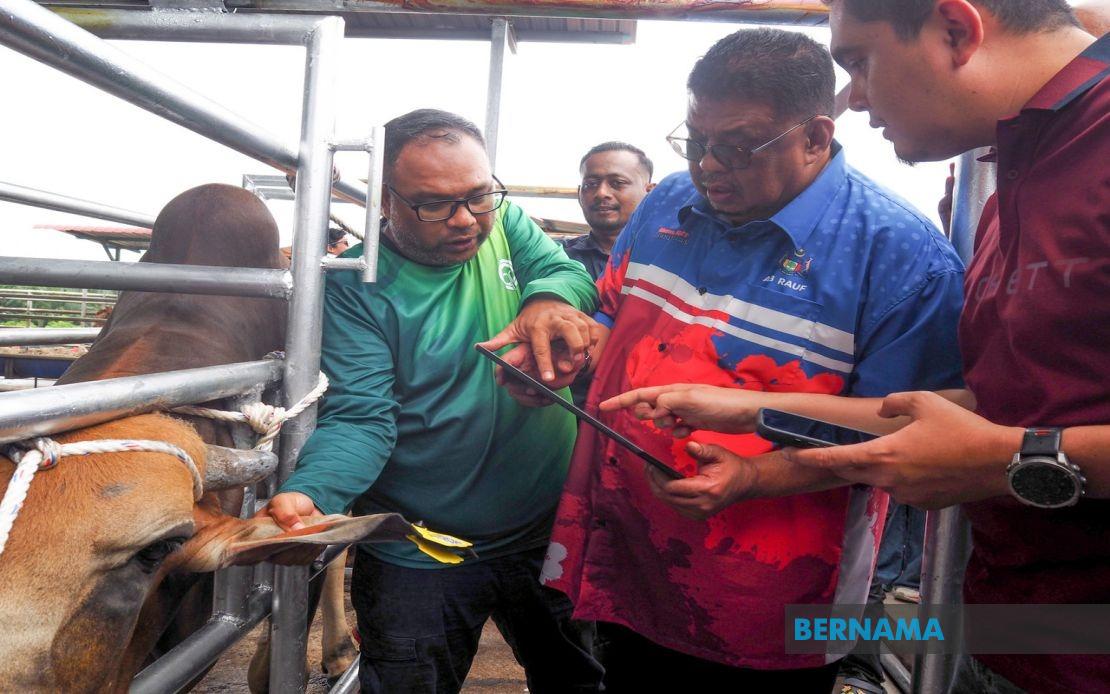
Melaka has rolled out a digitalised livestock identification system using Quick Response (QR) tags, marking a significant shift toward technology-enabled animal management in the state. The initiative, developed through collaboration between the Melaka Chief Minister Department and the state's Veterinary Services, represents an effort to solve persistent problems related to stray livestock while modernising agricultural oversight. Officials view the scheme as central to Melaka's broader agenda of becoming a digitally integrated and livable state, leveraging mobile technology to enhance accountability among farmers and improve public safety.
The system works by embedding QR codes and unique identification numbers into tags fitted to each animal. Authorities or members of the public can scan these codes using a smartphone to instantly retrieve essential information, including the breeder's name, the registered farm's premises identification, and the location of the holding. This immediate access to owner details addresses a critical operational gap that has long hampered law enforcement responses to stray animal incidents and accidents involving livestock. The tagging approach effectively transforms each animal into a traceable asset within a networked registry, enabling seamless communication between veterinary authorities, local councils, and farm owners.
The urgency of such a system becomes apparent when examining recent incident data. Since 2023, Melaka has recorded 835 accidents involving livestock on its roads, alongside more than fifty formal complaints concerning stray animals. These figures underscore the tangible risks that unmanaged livestock pose to the public, from traffic disruptions and safety hazards to property damage and public nuisance. The rising frequency of such events has prompted the state government to seek preventive mechanisms rather than merely reactive enforcement, recognizing that traditional methods of tracking animal ownership have proven inadequate during emergencies.
As of early June this year, approximately 2,000 animals across Melaka had been fitted with QR tags. The state government has set an ambitious target to eventually cover the entire registered population of cattle and buffalo in the state, which authorities estimate at over 32,000 animals. This phased rollout allows the system to be refined based on early feedback whilst gradually scaling operations across different districts and farm types. The measured approach acknowledges practical constraints such as coordination with dispersed farming communities and the need to ensure reliable data entry into the underlying registry.
Beyond owner identification, the system serves multiple livestock management functions. It facilitates tracking of animal movements, supporting disease surveillance efforts and enabling rapid response to biosecurity threats. The tagging mechanism also strengthens enforcement capacity, as officials can now promptly locate and contact responsible breeders when stray animals are reported or involved in incidents. This capability is particularly valuable in a state where livestock farming, though not dominant, remains culturally significant and legally regulated, requiring ongoing compliance monitoring.
The tags are designed to remain permanent throughout an animal's lifetime, carrying the same identification even if ownership changes. However, the underlying registry—the eVetPermit Malaysia system—allows authorities to update ownership records to reflect sales or transfers. This separation between the physical tag and the ownership database ensures administrative accuracy whilst maintaining the integrity of the animal's long-term identification history. Such a design prevents administrative confusion that might arise if tags had to be physically replaced with each ownership change.
Cost considerations have been carefully structured to encourage participation. Until the end of this year, the Melaka state government is subsidising the entire installation expense, charged at RM6.50 per tag, allowing breeders to register animals and receive tags at no cost. From 2027 onwards, new installations or replacements will be charged at RM5 per animal, shifting the cost burden to farmers. This gradual transition balances the government's interest in rapid uptake during the critical initial phase with long-term financial sustainability, ensuring that breeders become accustomed to the system before bearing its full operational cost.
The farming community's response to the initiative has been encouraging, according to state officials. Breeders reportedly recognise the system as a protective mechanism for their own interests, enhancing their professional standing and reducing the likelihood of their animals being impounded or subjected to enforcement action due to inadequate identification. Many view the digital tagging as a modernisation that elevates the industry's profile and professionalises livestock management practices across the state. This positive sentiment is crucial for implementation success, as voluntary compliance and active participation from farmers will ultimately determine the system's effectiveness.
The initiative reflects a broader regional trend toward technology adoption in agricultural governance. Southeast Asian states have increasingly recognised that digital solutions can address longstanding rural management challenges more effectively than traditional administrative methods. By embedding livestock identification within a smartphone-accessible digital ecosystem, Melaka is positioning itself as a progressive jurisdiction whilst simultaneously tackling practical governance problems. The approach offers insights for other Malaysian states considering similar upgrades to their own animal monitoring infrastructure, potentially establishing a replicable model for coordinated livestock management.
Successful implementation hinges on sustained coordination between multiple stakeholders. The state government, veterinary services, and local authorities must maintain consistent data quality, ensure reliable access to the central registry, and respond promptly to incidents reported through the system. Training programmes for enforcement personnel and extension services for farmers will be equally important, as will public awareness campaigns explaining how the system benefits both animal owners and the broader community. The state government has publicly committed to expanding technology integration across agricultural and service sectors, signalling that QR tagging represents an opening phase in a longer-term digital transformation agenda.
Looking forward, the success of this pilot phase may influence policy discussions at the national level regarding standardised livestock identification across Malaysia. If Melaka achieves meaningful reductions in stray animal incidents and improves the timeliness of owner identification whilst maintaining high registration rates, neighbouring states and federal agricultural bodies may explore similar systems. This could eventually lead to interoperable national or regional livestock databases, enhancing Malaysia's capacity to manage animal health, track disease outbreaks, and enforce welfare standards across state boundaries. For now, Melaka's QR tag initiative stands as a focused, technology-driven response to specific local challenges that demonstrates how digital innovation can address persistent agricultural governance problems.

