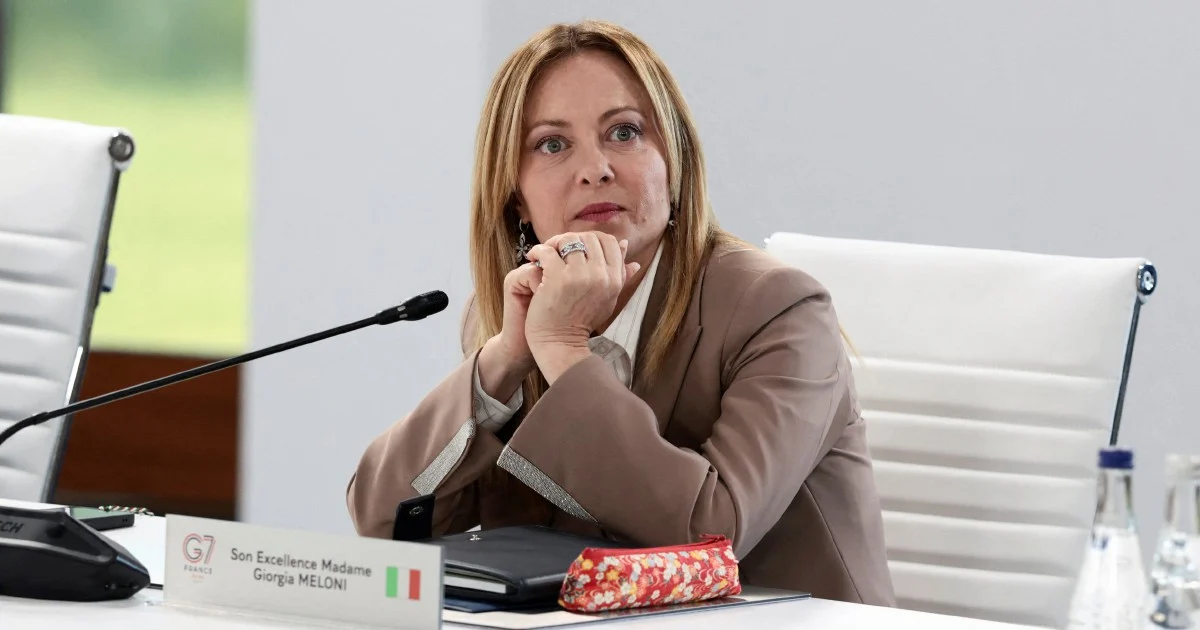
When Donald Trump took office for his second term as United States president in 2025, Italian Prime Minister Giorgia Meloni received a singular honour among European leaders—an invitation to the presidential inauguration in Washington. This gesture appeared to herald a period of exceptional diplomatic warmth and aligned interests between Rome and the Trump administration, seemingly positioning Italy as a privileged conduit between Washington and the European Union.
Meloni's prominence at that ceremonial moment reflected the cultivated relationship she had built with Trump over the preceding months. Her conservative government shared ideological common ground with the American leader on issues ranging from border security to national sovereignty, and both leaders positioned themselves as defenders of traditional values against perceived progressive overreach. The Italian premier had carefully positioned herself as a bridge-builder, someone who could communicate effectively with Trump and translate his concerns to her European counterparts.
However, the strategic partnership that seemed so promising at Trump's inauguration has unravelled dramatically in the months since. What began as a relationship built on shared political instincts and personal rapport has deteriorated into public disagreement and mutual criticism. Meloni, who initially appeared content to serve as Trump's sympathetic interlocutor within Europe, has increasingly found herself at odds with his administration's policies and pronouncements.
The shift reveals the inherent contradictions in Meloni's attempted balancing act. As leader of a significant NATO member state and EU nation, she operates within structural constraints that limit how far she can align with Washington, especially when Trump's policies diverge from European interests. The United States remains Italy's security guarantor through NATO, yet the EU remains its primary economic partner and political framework.
For Southeast Asian observers, Meloni's trajectory offers instructive lessons about the challenges of playing diplomatic middleman. Nations seeking to maintain relationships with multiple major powers—whether the United States and China, or the United States and Russia—often discover that neutrality or attempted equidistance becomes increasingly untenable. Public statements that placate one power inevitably alienate another, while perceived disloyalty generates swift and visible consequences.
Meloni's initial positioning as Trump's favoured European interlocutor created expectations in Rome, Washington, and Brussels that proved impossible to meet simultaneously. Trump expected consistent backing for his policies; EU partners expected Meloni to defend European interests; and Italian domestic constituencies demanded that their government prioritise national welfare. These competing pressures inevitably produced the current friction.
The deterioration also reflects deeper structural tensions within the Western alliance under Trump's second administration. The president's transactional approach to international relations, emphasis on bilateral agreements over multilateral frameworks, and scepticism toward traditional alliances create instability for leaders like Meloni who depend on predictable institutional relationships. European leaders cannot simply replicate the domestic political strategies that made Trump attractive to American voters; they operate within different constitutional contexts and face electorates with different priorities.
Italy's experience carries particular significance for understanding how Europe might fracture under renewed American isolationism. If even a conservative premier sympathetic to Trump's worldview finds sustained alignment impossible, the prospects for trans-Atlantic cohesion appear limited. This fragmentation could create opportunities for others—including China and Russia—to pursue influence among European states seeking to hedge their bets.
For Malaysian policymakers navigating between American and Chinese interests, Meloni's trajectory suggests that elaborate relationship-building with great powers requires constant maintenance and can collapse rapidly when structural interests diverge. The Italian case demonstrates that personal rapport between leaders, while valuable, cannot overcome institutional constraints or fundamental interest misalignment. Malaysia's own careful diplomacy would benefit from studying how Meloni's gamble backfired and what that implies for smaller nations attempting similar strategies.
The current strain between Meloni and Trump also illustrates how European unity, tenuous though it often is, remains preferable to individual nations attempting bilateral accommodation with Washington. Countries abandoning collective EU positions to curry American favour risk isolation and loss of negotiating leverage. Italy's position as a relatively significant European power provides more negotiating capacity than most nations possess, yet even this advantage has proven insufficient to maintain the golden-age relationship Meloni envisioned.
Looking forward, the Meloni-Trump dynamic will likely continue oscillating between periods of public tension and backstage negotiation. Neither side can afford complete rupture, given NATO commitments and transatlantic economic ties. However, the initial promise of special relationship has definitively evaporated, replaced by the difficult pragmatism of managing divergent interests within an increasingly strained alliance structure. For observers throughout Asia watching how major powers manage troubled relationships, the Meloni case provides a sobering illustration of the limitations of diplomatic charm when geopolitical interests fail to align.

