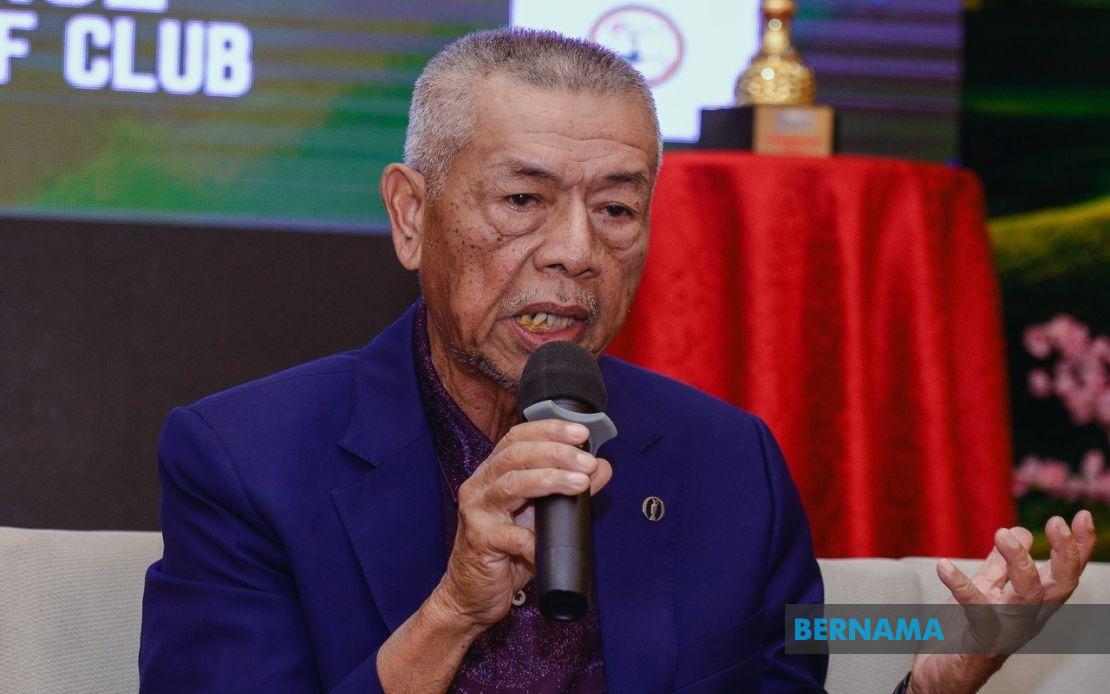
The Malaysian Golf Association has moved to shore up its competitive position ahead of hosting the 2027 SEA Games by requesting the Ministry of Youth and Sports establish a dedicated full-time coaching post. The push represents a strategic effort to professionalise the national programme and build a more systematic approach to athlete development at a critical juncture for Malaysian golf on the regional stage.
Tan Sri Mohd Anwar Mohd Nor, president of the MGA, raised the coaching vacancy during a recent meeting with KBS secretary-general Datuk Rahimi Ismail. The organisation views the appointment as essential scaffolding for a comprehensively planned preparation roadmap spanning the months before September 2027, when the biennial Games will come to Malaysian shores. Without such institutional continuity in coaching leadership, Mohd Anwar suggested, the national team risked falling short of the coordinated development trajectory necessary to compete effectively.
The MGA's overture to government underscores a broader vulnerability in Malaysian golf's administrative capacity. By seeking to elevate the coaching infrastructure through ministerial channels, the association acknowledges that sustainable competitive improvement requires state-level backing beyond what the federation alone can mobilise. This reflects a pattern seen across other sports where semi-professional structures have given way to fully integrated national programmes backed by government investment.
Mohd Anwar articulated his vision during the launch of the 100PLUS MGA National Junior Development Programme Junior Series 2026 at The Mines Resort & Golf Club in Serdang. The junior initiative represents a complementary strand of the federation's planning, targeting youth pathways that can feed emerging talent into the senior squad. By coupling junior development with senior coaching enhancements, the MGA appears to be constructing a pipeline approach designed to ensure continuity and progression through the ranks.
The calibre of coaching talent represents another dimension of the challenge. Mohd Anwar explicitly flagged the intention to recruit a high-calibre golf coach, signalling that the MGA is not settling for any available candidate but is committed to sourcing expertise capable of delivering measurable performance gains. Such selectivity demands both financial resources and international recruitment networks that typically require government facilitation to execute successfully.
Coordination between the MGA, the Ministry of Youth and Sports, and the National Sports Council appears central to the federation's strategy. Rather than pursuing isolated initiatives, the three stakeholders have begun mapping out collaborative frameworks through which governmental resources and oversight can amplify the MGA's operational capacity. This institutional alignment is crucial in emerging economies where sporting investment often requires alignment across multiple bureaucratic layers to materialise.
The federation has also begun scouting regional training opportunities as part of its preparation blueprint. Mohd Anwar recently met with Sarawak's Minister of Youth, Sports and Entrepreneur Development, Datuk Seri Abdul Karim Rahman Hamzah, to explore whether the state might serve as a training venue. The possibility of conducting intensive preparation camps in Sarawak reflects a recognition that geographic diversity in training environments can broaden player exposure to different course conditions and competitive pressures, ultimately enhancing adaptability.
For Malaysian golf, the 2027 SEA Games represents both opportunity and obligation. As the host nation, Malaysia faces implicit pressure to demonstrate competitive excellence on home soil—a dynamic that typically galvanises government support and public investment. The federation's proactive approach in structuring coaching requirements and development pipelines suggests it is attempting to capitalise on this heightened attention to secure resources that might otherwise prove elusive.
The timing of these initiatives also reflects broader Southeast Asian trends in sports governance. As regional nations have professionalised their programmes, competitive standards have risen markedly. Malaysia's commitment to upgrading coaching infrastructure mirrors similar investments elsewhere in the region, where nations recognise that volunteer-dependent or part-time coaching models no longer suffice to maintain regional competitiveness.
The broader implications for Malaysian golf extend beyond the 2027 Games. Establishing a permanent coaching position would represent structural embedding of professional standards into the national programme—a shift that could reshape the sport's trajectory for years beyond the immediate preparation cycle. Such institutional changes, once adopted, rarely revert, creating lasting improvements in systematic training and athlete welfare.
Mohd Anwar's advocacy also reflects the practical realities of modern competitive golf. Elite players now operate within globalised circuits where training standards, sports science integration, and coaching methodologies have become increasingly sophisticated. Malaysian golfers attempting to compete regionally or internationally require exposure to these standards domestically to progress meaningfully. A full-time national coach capable of orchestrating such professional infrastructure could meaningfully narrow the development gap.
The MGA's multifaceted approach—combining junior pathway development, senior coaching enhancements, interstate collaboration, and strategic government partnership—suggests a federation thinking systematically about sustainable competitive improvement rather than isolated tournaments. This longer-term orientation, if matched by commensurate government commitment, could position Malaysian golf for meaningful advancement in the regional hierarchy beyond 2027.

